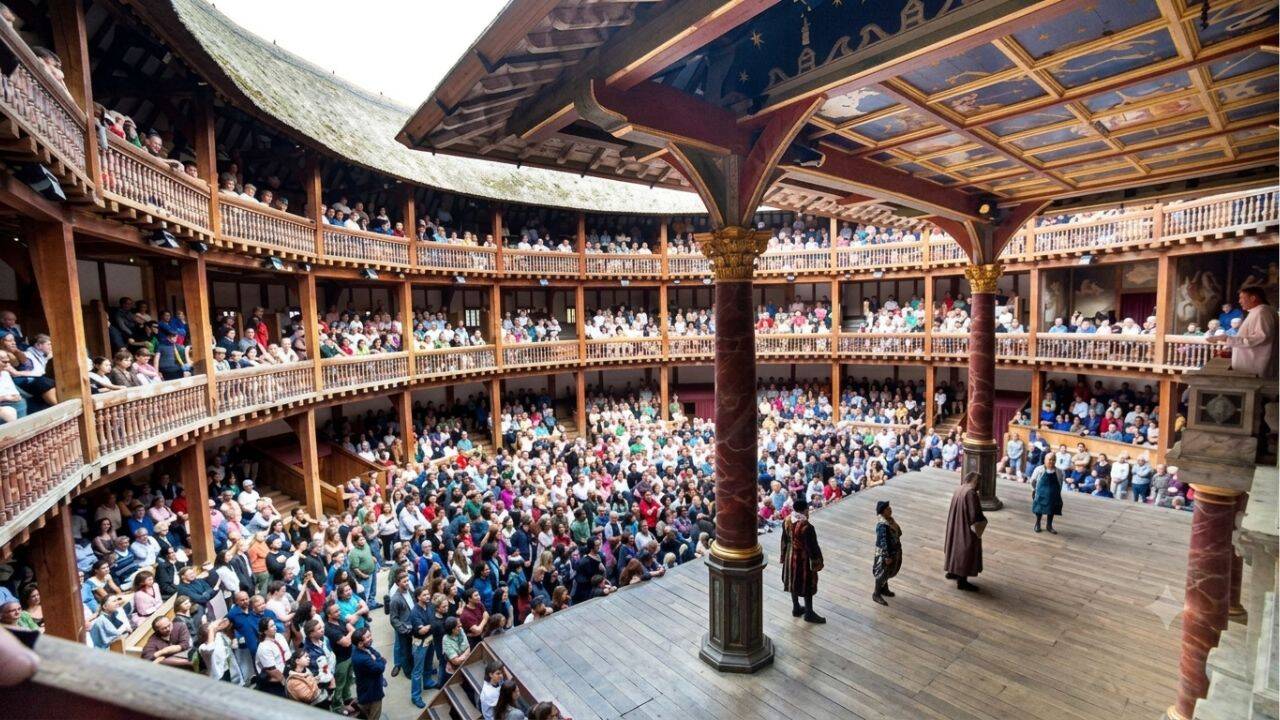
You stand on the South Bank of the Thames, look up at Shakespeare’s Globe, and see a historic illusion. It feels entirely Elizabethan. Yet that iconic thatched roof is approaching its thirtieth birthday, and it needs a complete overhaul.
The venue is launching a massive ten million pound project to strip away the old thatch and install fourteen thousand new reed bundles. If you think fixing a roof is straightforward, try doing it on the only building in London legally permitted to wear thatch since the Great Fire of 1666.
Let's look at why this project costs a fortune and why traditional master craftspeople are scrambling to source the materials.
The Thatch Exception in Central London
When visionary American actor Sam Wanamaker pushed to reconstruct the Globe in the late twentieth century, he insisted on absolute authenticity. That meant rejecting modern steel and asphalt in favor of green oak, lime plaster, and water reed.
There was just one tiny legal hurdle: London banned thatched roofs outright after the devastating fire of 1666. Securing special planning permission required extraordinary persistence.
Nearly three decades later, that original roof has weathered London’s unpredictable climate, soot, and millions of curious tourists. Thatch doesn't last forever. Water eventually penetrates the layers, and organic decay sets in. Waiting any longer risks compromising the timber structure underneath.
Sourcing Fourteen Thousand Reed Bundles
Finding fourteen thousand bundles of thatch isn't as simple as calling up a local hardware store. Good quality water reed is scarce. When the Globe was first built back in the nineties, it took about six thousand bundles sourced mainly from Norfolk reed beds.
Those specific Norfolk beds only yield about four thousand bundles a year. That means the original construction consumed roughly a year and a half of total regional output. Scaling up for a ten million pound replacement means logisticians have had to cast a much wider net.
Thatching is a dying art. It requires skilled manual labor, specialized seasonal timing, and traditional machinery that manufacturers stopped building decades ago. You can't just send a combine harvester into a wetland. Master thatchers have to hand-comb and tie these materials to ensure they withstand wind and rain while maintaining that distinct, storybook silhouette.
Why Modern Materials Wont Work Here
Some critics always ask why historic sites don't just use fire-retardant synthetic substitutes. The answer comes down to heritage integrity and acoustics.
The Globe's open-air design relies heavily on organic textures to absorb and bounce sound naturally. Modern corrugated iron or slate would bounce noise wildly, ruining the intimate acoustics required for Elizabethan verse spoken without amplification. Furthermore, historic preservation bodies like Historic England guard these structural choices jealously. Changing the material palette strips away the educational magic that draws millions of students and theatergoers to the South Bank every year.
When you buy a five-pound groundling ticket and stand under that open sky, you are participating in a living experiment in architectural archaeology. The ten million pound price tag covers more than just grass and stems. It pays for the continuation of a centuries-old craft that refuses to die out.
Expect work to progress meticulously over the coming months. The Globe won't lose its rustic soul anytime soon.