The air inside a command center does not circulate like regular air. It feels heavy, sterilized, and permanently chilled by rows of servers humming in the background. For months, that cold air carried a distinct, electric tension. Officers stared at screens tracking the precise trajectories of American ordnance cutting through the night sky over the Middle East. The machinery of retaliation was loud, constant, and devastating.
Then, the screens went quiet.
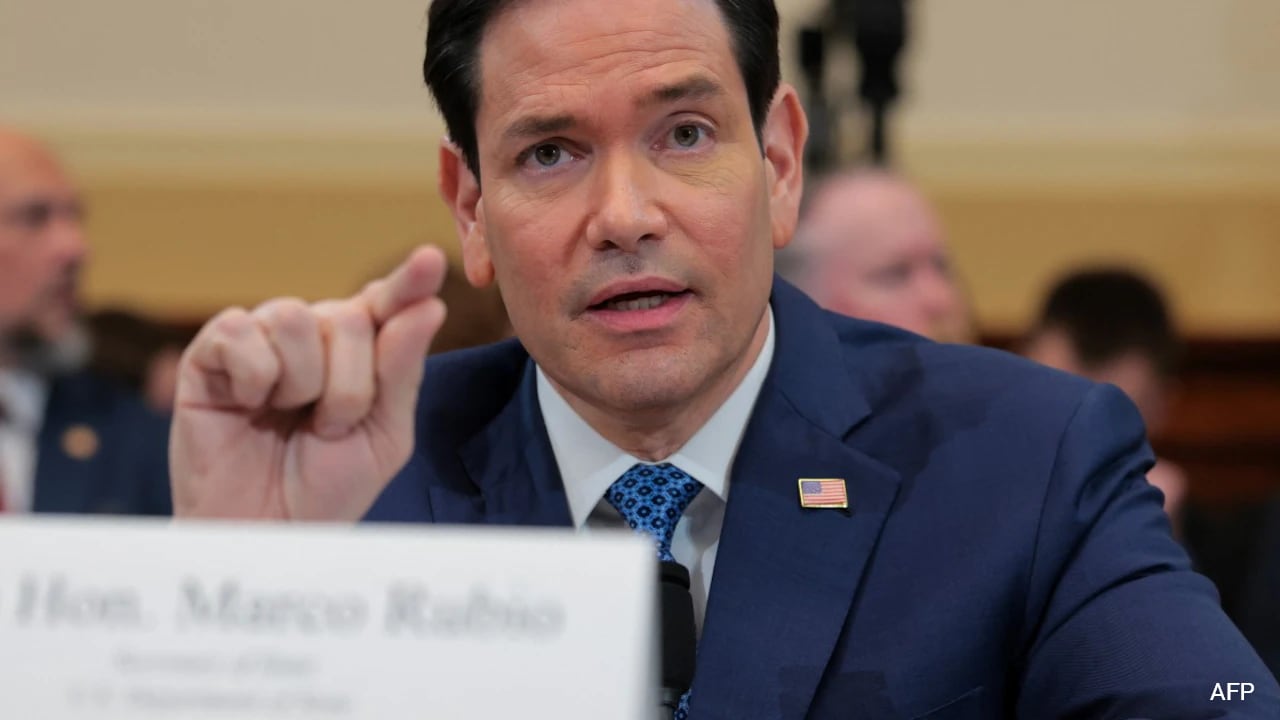
When Secretary of State Marco Rubio announced that the United States had ceased its retaliatory strikes against Iran-backed groups, the words landed with the weight of a sudden atmospheric shift. He declared that "Epic Fury"—the operational framework of overwhelming force—was over. To the casual observer tracking the news between stock updates and sports scores, it sounded like a standard bureaucratic transition. A policy pivot. A press release.
But talk to the people who actually live under the flight paths, or those who wear the uniform, and you quickly realize that policy shifts are never just words. They are measured in the sudden, eerie absence of thunder.
The Weight of the Kinetic Option
To understand why this silence matters, we have to look at what came before it. For a long stretch of recent history, foreign policy was dictated by the rhythm of the "kinetic option." That is the sanitized, military term for dropping bombs. When an adversary struck, the response was mathematically pre-determined: hit back harder, faster, and with more visual impact.
Consider the perspective of a radar operator or a drone pilot stationed thousands of miles away. Their reality is a series of green glowing lines, thermal images of trucks exploding into plumes of white heat, and coordinates typed into a terminal. It feels sterile. It feels like a video game until you remember that every coordinate represents a square of earth, a building, a localized geopolitical earthquake.
For a long time, the prevailing wisdom in Washington was that deterrence could only be maintained through this continuous loop of action and reaction. The campaign known informally as "Epic Fury" was the apex of this philosophy. It was designed to send a message written in fire. If American assets or personnel were touched, the sky would fall.
But a strange thing happens when you use overwhelming force as your primary language. The recipient of that force begins to develop a tolerance.
The human mind, whether sitting in a bunker in Tehran or a command post in Baghdad, adapts to chaos. What was once terrifying becomes the baseline. The strikes intended to end the conflict instead became the rhythm of the conflict itself. A grim, predictable choreography emerged: a drone strike here, a retaliatory missile volley there, followed by a press briefing detailing the damage assessments.
We became trapped in a loop of escalating certainty, where the only variable was how many targets would be on the list tomorrow morning.
The Pivot to the Invisible Chessboard
When the decision was made to pull back the levers of "Epic Fury," it wasn't because the threat had magically dissolved into the desert air. Iran-backed militias didn't suddenly decide to take up peaceful hobbies. The regional ambitions of Tehran didn't change overnight.
Instead, the calculus shifted from the cinematic to the invisible.
The real problem with relying entirely on kinetic strikes is that they are incredibly loud but fundamentally short-sighted. A bomb can destroy a command center, but it cannot destroy the supply chain of ideas, finances, and covert networks that built that center in the first place. By calling an end to the strikes, the administration effectively admitted a hard truth that many career diplomats have known for decades: you cannot bomb your way into a permanent peace.
The strategy has moved from the sky to the shadows. It has moved to the banking systems, the cyber networks, and the grinding, unglamorous work of diplomatic isolation.
Think of it as a shift from a sledgehammer to a scalpel. A sledgehammer makes a great sound. It shatters things spectacularly. It satisfies the immediate, primal urge to see justice delivered in real-time. But a scalpel operates without a sound. It cuts off the oxygen quietly.
By choking off the financial pipelines that fund these proxy groups, the U.S. is attempting a far more difficult experiment. It is trying to starve the machine rather than trying to break its individual cogs. This means freezing assets before they can buy the components for a one-way attack drone. It means using intelligence sharing to disrupt shipments before they ever reach a launch pad.
It is a slow, agonizing process. It lacks the instant gratification of a satellite photo showing a demolished compound. For a public conditioned on fast-paced resolutions and definitive victories, this shift can look like weakness. It can look like a retreat.
The Nervous Silence on the Ground
But ask the infantry squads stationed at remote outposts in Iraq or Syria if this feels like weakness. For them, the end of "Epic Fury" brings a different kind of tension.
When the bombers are active overhead, you know exactly where the enemy’s attention is focused. They are digging in. They are hiding. They are surviving. But when the skies go quiet, the operational environment changes completely. The silence is not peaceful; it is watchful.
Every rustle of the wind against the perimeter fencing, every unexpected vehicle approaching a checkpoint, carries a renewed sense of ambiguity. The troops know that the policy has changed, but they also know that the enemy gets a vote in how that policy plays out. They are the ones living in the gap between high-level diplomatic strategy and the gritty reality of the sandbox.
This is the vulnerability inherent in any major policy pivot. You are asking the people on the front lines to trust that the invisible levers of economic and cyber warfare are doing their job. You are asking them to believe that the pen, the sanction, and the firewall are currently shielding them more effectively than a squadron of F-15s.
It requires a massive leap of faith. The subject of national security is terrifying precisely because the metrics of success are often invisible, while the metrics of failure are catastrophically loud. If a sanction works, nothing happens. The news cycle remains empty. The day passes without incident. But if that sanction fails, the consequence is measured in smoke and casualties.
Beyond the Horizon
The transition announced by Rubio signals a broader acknowledgment that the global landscape has become too complex for single-dimension responses. We are no longer in an era where a superpower can simply dictate terms through the sheer volume of its conventional arsenal. The world has fractured into a multi-polar game of chicken, where economic leverage, technological dominance, and narrative control are just as lethal as kinetic payloads.
The ending of these strikes isn't a closing chapter; it is the opening of a much more complicated, unpredictable volume. The U.S. has stepped off the escalator of daily military retaliation, choosing instead to stand on a platform of strategic patience.
Whether this silence holds depends entirely on how the adversary interprets the quiet. If they view it as a vacuum, they will inevitably try to fill it. If they view it as the gathering of a different, more sophisticated kind of storm, they may think twice.
The monitors in the command center remain illuminated, casting a cold blue glow over the faces of the watch officers. The targets haven't disappeared from the maps. The coordinates are still logged in the system. The capability to unleash fury remains just a few keystrokes away, suspended in the quiet air, waiting to see if the silence will teach the world a new way to behave.