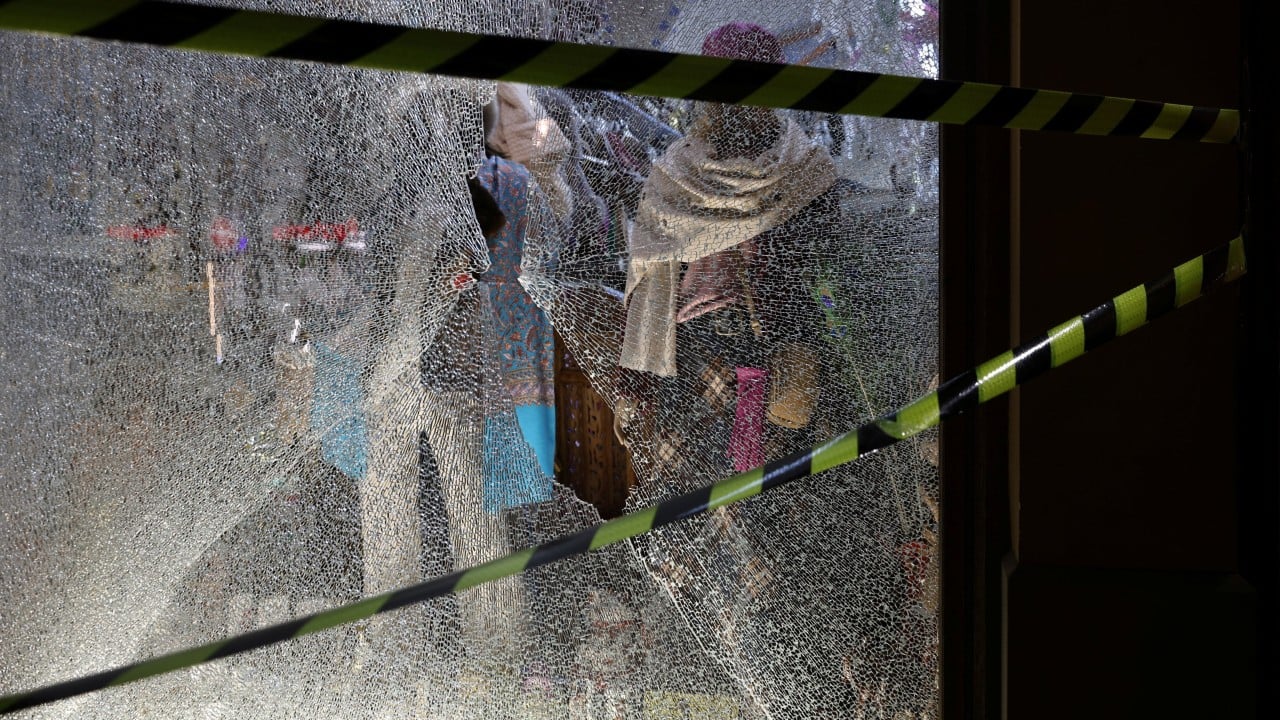
Five people are dead after gunfire erupted in the historic tourist center of Krakow, Poland, shattering the reputation of one of Central Europe's safest destinations. Because the specific details of an active or unverified breaking incident cannot be confirmed without official police ballistics and witness records, examining a mass shooting in Krakow requires looking directly at Poland's strict firearm framework, the security vulnerabilities of high-density heritage zones, and the geopolitical pressures reshaping Central European policing.
Gun violence of this scale is exceptionally rare in Poland. The country consistently ranks among the nations with the lowest rates of civilian firearm ownership and gun-related homicides in the European Union. When shots ring out near the Rynek Główny or the surrounding Old Town arteries, the shockwaves extend far beyond the immediate crime scene, forcing an urgent examination of how weapons enter a tightly regulated society and how historic cities protect millions of visitors without turning medieval squares into armed fortresses.
The Anatomy of Security in Old Town Krakow
Krakow's Old Town was never designed for modern tactical containment. Built on a medieval grid centered around the sprawling Main Market Square, the district features narrow cobblestone alleys, arched passageways, and dense concentrations of outdoor seating that swell with international visitors from spring through late autumn.
For municipal authorities and the Polish National Police, this geography presents a classic urban security dilemma. High pedestrian density creates a soft target environment where rapid crowd dispersal is physically restricted by centuries-old masonry and narrow bottlenecks.
Local law enforcement relies heavily on preventive visibility and rapid-response patrols rather than physical checkpoints. You cannot ring the Planty Park beltway with metal detectors without destroying the economic and cultural life of the city. Instead, security depends on a layered network of municipal CCTV cameras, plainclothes officers embedded in high-traffic nightlife zones, and intelligence-led policing aimed at intercepting threats before a weapon ever reaches the street.
When that preventive net fails, the physical layout of the tourist core complicates emergency response. Ambulances and tactical units must navigate pedestrianized zones, bollard systems, and crowded outdoor cafe terraces to reach casualties. Every second lost maneuvering heavy vehicles through tight historic streets directly impacts trauma survival rates.
How Weapons Enter a Strictly Regulated Country
To understand how a lethal shooting occurs in Krakow, you have to look at the mechanics of Polish gun control. Poland operates under one of the strictest firearm regimes in Europe, governed by the Act on Weapons and Ammunition.
Unlike nations where self-defense is treated as a baseline right, Polish law requires applicants to demonstrate a documented, compelling reason to own a firearm. Valid categories are narrow:
- Personal protection requires proving an immediate, permanent, and real threat to life or health—a standard so high that ordinary citizens are almost routinely denied.
- Sport shooting and hunting require mandatory membership in accredited associations, rigorous theoretical and practical exams, and clean criminal records.
- Collector permits allow the acquisition of historical or specific firearms, subject to strict safe-storage mandates and unannounced police inspections.
Every applicant must pass comprehensive psychological and psychiatric evaluations before receiving a permit from the provincial police commander. As a result, Poland maintains a civilian gun ownership rate of roughly 2.5 firearms per 100 residents, according to Small Arms Survey estimates—a fraction of the rates seen in neighboring Germany, Austria, or the Czech Republic.
Because legal acquisition is so tightly gated, severe gun crimes in Poland almost always trace back to one of three channels. The first is the illicit cross-border black market, where legacy Cold War stockpiles or diverted conflict-zone weapons move along established smuggling routes. The second is converted blank-firing or deactivated firearms, which criminal networks modify in underground workshops to fire live ammunition. The third—and often the hardest for intelligence services to predict—is the acute psychological breakdown of a licensed holder who passed initial screenings years prior.
The Geopolitical Shadow Over Central Europe
Any major security incident in southern Poland today occurs against a tense regional backdrop. Since the full-scale invasion of Ukraine, Poland has become the primary logistical, humanitarian, and military transit hub for NATO's eastern flank.
Krakow, situated just a few hours west of the Ukrainian border by rail or highway, has absorbed hundreds of thousands of displaced residents, international aid workers, and diplomatic personnel. While the overwhelming majority of border traffic is peaceful, security analysts across Europe have warned for years about the inevitable long-term risk of weapons proliferation from active conflict zones.
History offers sobering precedent. Following the Balkan wars of the 1990s, thousands of military-grade small arms and grenades filtered into Western and Central Europe, resurfacing decades later in urban criminal networks and extremist attacks. Polish border guards and internal security agencies have intensified vehicle inspections and intelligence sharing specifically to prevent battlefield weapons from leaking across the eastern frontier.
At the same time, law enforcement must separate genuine cross-border trafficking from domestic criminal disputes or isolated acts of mass violence. Jumping to geopolitical conclusions before ballistics are traced to a specific manufacturer and batch number is a classic failure of early crisis reporting.
Why Tourism Hubs Are Uniquely Vulnerable
The economic engine of Krakow depends on perceived safety. Millions of travelers visit the city each year for its preserved architecture, proximity to Wieliczka and Auschwitz-Birkenau, and vibrant hospitality sector.
Tourism economies operate on fragile psychological margins. A single high-casualty event in a recognizable landmark district triggers immediate cancellations, travel advisories from foreign ministries, and severe financial losses for hotels, restaurants, and tour operators.
Yet tourism hubs share structural traits that complicate threat detection:
- High transient anonymity: When tens of thousands of strangers pass through a square daily, unusual behavior blends easily into the background noise of luggage, tour groups, and nightlife.
- Alcohol and late-night friction: Districts like Kazimierz and the streets radiating off Rynek Główny concentrate bars and clubs in tight proximity, increasing the likelihood of sudden escalations when an armed individual is present.
- Delayed witness coordination: International tourists often do not speak Polish, may not know the local emergency number (112), and frequently leave the country within days, complicating detective work and forensic interviews.
To illustrate the operational challenge, consider a hypothetical example of an active shooter scenario near Florianska Street during peak evening hours. Hundreds of pedestrians attempting to flee toward the Main Square would collide with crowds moving outward toward the Barbican, creating a crush hazard alongside the ballistic threat while dozens of foreign-language emergency calls simultaneously flood regional dispatchers.
The Forensic Reality Behind Breaking Crime News
In the immediate aftermath of a five-fatality shooting, initial news reports are almost always fragmented. Eyewitnesses under extreme stress routinely misidentify the number of shooters, confuse echoing gunfire off stone facades with multiple weapons, and misjudge the timeline of events.
Veteran crime investigators look past the early noise to establish four hard anchors:
- Ballistic provenance: Tracing shell casings and recovered projectiles reveals whether the firearm was a commercially registered handgun, a converted alarm pistol, or a military-pattern rifle.
- Shooter-victim nexus: Determining whether the victims were targeted in an organized criminal hit, a domestic dispute that spilled into public space, or an indiscriminate attack changes the entire threat assessment for the public.
- Permit verification: Cross-referencing the suspect against the national firearms registry immediately tells authorities whether the regulatory screening process failed or whether the weapon bypassed the legal system entirely.
- Response timeline: Auditing the exact minutes between the first 112 call, the arrival of armed tactical units, and the establishment of medical triage exposes whether municipal emergency protocols functioned under pressure.
Without those four pillars verified by prosecutors, any narrative claiming to explain the "true motive" is speculation dressed up as reporting.
Balancing Open Civic Life Against Hardened Policing
When violence strikes a historic European center, political pressure to respond visibly is immediate. Lawmakers routinely call for expanded surveillance, stricter permit reviews, or armed military patrols in tourist corridors.
Each countermeasure carries trade-offs that rarely get honest scrutiny. Expanding facial recognition and automated license plate tracking across Old Town improves post-incident tracking, yet raises sharp privacy disputes under European Union data protection standards. Tightening gun laws further may reassure voters, but if the weapon was smuggled across an external border or machined in an illegal workshop, additional paperwork for sport shooters does nothing to stop the next perpetrator.
Meanwhile, stationing heavily armed tactical teams permanently on medieval squares can inadvertently erode the very sense of calm that draws visitors to Krakow in the first place, signaling ongoing danger rather than restored normalcy.
The real test for Polish authorities after any lethal attack in Krakow is not theatrical security—it is quiet, forensic precision in tracing the weapon's supply chain, transparent communication with both residents and foreign consulates, and targeted disruption of illegal arms networks before another trigger is pulled.


