The morning air in Negombo smelled of salt, damp earth, and the sweet, heavy perfume of jasmine flowers pressed into hair for Easter mass. It was April 21, 2019. Across Sri Lanka, families woke to a tropical dawn painted in strokes of gold and turquoise. Children laced up their newest shoes, stiff and white against dusty roads. Mothers smoothed the pleats of traditional sarees. Fathers checked wristwatches, eager to arrive at the pews before the choir began its opening hymn. There was an ordinary, sacred rhythm to the day—a quiet choreography of faith and community honed over generations in an island nation that had already known too much sorrow.
Then came the thunder.
It did not arrive from the sky. It erupted from the sanctuary.
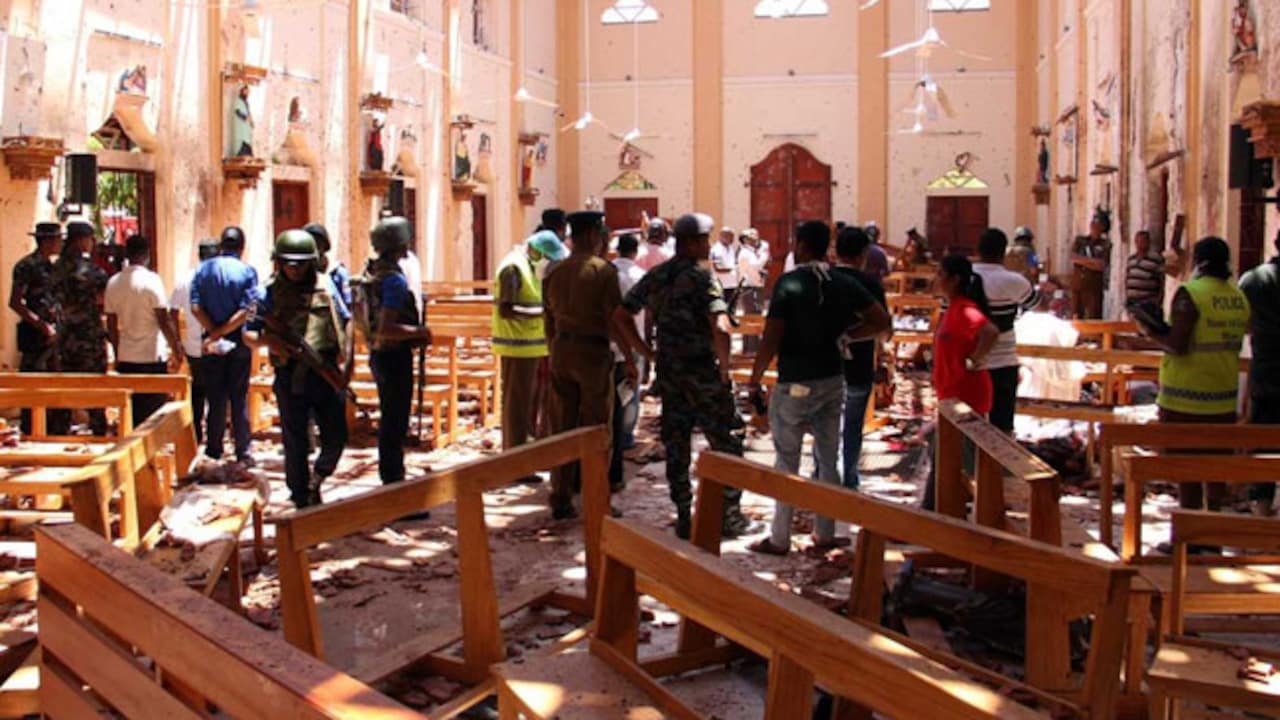
In a matter of heartbeat-fractions, the sanctuary at St. Sebastian’s Church in Negombo, alongside St. Anthony’s Shrine in Colombo and the bustling dining halls of luxury hotels, became zones of absolute devastation. Synchronized suicide bombers, fueled by radical ideology and shielded by profound institutional blindness, detonated explosives designed to maximize human carnage. When the smoke finally cleared and the dust settled over shattered stained glass and blood-slicked stone, the toll stood at a staggering 279 dead. Hundreds more carried shrapnel in their flesh and permanent silence in their ears.
Numbers are cold instruments. Two hundred seventy-nine is a statistic that fits neatly into a headline, a tidy digit recited by foreign news anchors before cutting to commercials. But numbers cannot measure the exact weight of an empty kitchen chair. They cannot quantify the terror of a mother searching through rows of charred bodies at a crowded hospital morgue, calling out a child’s name until her voice breaks into dry sobs. They fail to capture the sudden, suffocating panic that grips an entire island whenever a stray package is left unattended on a commuter train platform.
To understand what happened in Sri Lanka that Easter morning, and what it means years later now that fourteen individuals have finally been convicted for their roles in the conspiracy, one must look past the police reports and judicial briefs. One must step into the lives of those who stayed behind.
Consider a hypothetical father named Rohan, whose daily routine was rewritten in an instant. Picture him walking down a sunlit street in Colombo, his mind anchored in a past where his nine-year-old daughter still ran ahead of him, her laughter bouncing off colonial-era walls. Rohan survived the blast at one of the targeted hotels, shielded momentarily by a heavy mahogany pillar that shattered into splinters. He woke up under a gray hospital ceiling with a ringing in his ears that has never truly stopped. For months, the silence in his home was heavy, physical, almost predatory. Every morning, he looked at her small yellow schoolbag hanging untouched by the doorway, a monument to a future that was canceled without warning.
Rohan’s grief is not unique. It is multiplied hundreds of times over in living rooms across the island, shared by neighbors of different faiths—Christians, Buddhists, Muslims, and Hindus—who locked arms in shared horror and grief. Because the tragedy of 2019 was not merely an attack on a specific denomination; it was an assault on the fragile social fabric of a country trying desperately to heal from decades of ethnic civil war that had officially ended a decade prior. Just as people were learning to trust the peace, trusting that neighbors could coexist without suspicion, the Easter bombings struck at the very heart of that fragile trust.
The shockwaves quickly turned into a storm of public outrage. How did this happen? How could an extremist cell operate in plain sight, stockpiling explosives and radicalizing young men, while intelligence agencies remained asleep at the wheel? Foreign intelligence warnings had filtered into local channels days before the blasts, detailed and alarming, yet bureaucratic inertia and political infighting ensured those warnings died in transit. The failure was not just tactical; it was systemic, moral, and institutional.
For years, the quest for accountability felt like an uphill battle against a thick wall of fog. Victims' families marched through dusty streets, holding framed portraits of smiling children and young brides, their faces weathered by sun and sorrow. They demanded answers, not just from the perpetrators who pulled the triggers or strapped on the vests, but from the leaders whose negligence permitted the slaughter. Investigations dragged on. Commissions were formed, testimony was heard, and thousands of pages of reports were compiled, yet true judicial closure remained frustratingly out of reach. The wheels of justice ground down by procedural delays, political shifts, and the sheer complexity of untangling a transnational extremist network operating beneath the surface of everyday life.
Behind the scenes, investigators faced monumental hurdles. Piecing together charred circuits, deciphering encrypted messaging apps, and tracking international financial flows required meticulous forensic work. Witnesses had to be protected, testimonies cross-examined against shifting alibis, and legal arguments tested in courts operating under intense public scrutiny. Every delay felt like an insult to the memory of the fallen, feeding a cynical narrative that true accountability was impossible in a system plagued by political patronage.
Time passed, as time always does, indifferent to human agony. Palm trees swayed in the coastal breeze. Monsoons arrived, washing the streets clean of dust only to leave humidity hanging heavy in the air. People returned to work, caught buses, haggled in markets, and tried to rebuild a semblance of normalcy. Yet beneath the surface, a low-frequency hum of unresolved trauma remained. Every time the bells chimed for Sunday service, congregations felt a phantom tremor beneath their feet. Fear had become an uninvited guest at every dinner table, every wedding, every baptism.
Then came the courtroom verdict. Fourteen individuals found guilty. Fourteen lives tied directly to the carnage that altered the trajectory of a nation.
A conviction in a courtroom is a curious thing. It does not resurrect the dead. It does not mend shattered collarbones or restore sight to eyes blinded by shrapnel. To an outside observer, a sentence handed down by a judge in a high-security tribunal might look like a neat period at the end of a long, dark sentence. But for those who lived through the nightmare, the gavel’s strike is heavier and more complicated.
Consider what that verdict means on an emotional level. For Rohan and thousands like him, the court ruling provides a measure of institutional validation. It officially records what they already knew in their bones: that the horror inflicted upon them was not an act of random nature, like a tsunami or an earthquake, but the calculated outcome of human malice. It establishes a historical record, a shield against historical revisionism or denialism. It declares, in the formal language of the law, that lives were stolen and crimes were committed.
Yet, justice delivered years after the fact often carries a bittersweet aftertaste. The delay itself serves as a reminder of how fractured the path to truth can be. People ask: Why did it take so long? Why were the masterminds so difficult to bring to justice? These questions linger in the tropical heat, refusing to evaporate with the morning mist. They point to the ongoing challenge of building dependable institutions—institutions that can protect citizens before tragedy strikes, rather than offering remedies long after the graves have been filled.
Moreover, the conviction of these fourteen individuals does not mark the end of the story. Justice in the wake of mass terror is never a single event; it is an ongoing practice of remembrance, resilience, and radical empathy.
Look closely at the churches today. St. Sebastian’s stands restored, its white walls freshly painted, its stained-glass windows replaced through community donations and quiet, stubborn devotion. When parishioners gather there on Sunday mornings, they do not enter with naive optimism. They walk through the doors knowing the fragility of the world. They know that safety is an illusion, yet they choose to worship anyway. That choice—to sit in the pews, to sing hymns, to pass the peace to the person sitting next to them despite the ghosts that linger in the corners—is an act of profound courage.
It is easy, from the comfort of distant shores, to view events like the Sri Lankan Easter bombings through the lens of geopolitics, radicalization indices, and counter-terrorism metrics. Analysts pore over data points, mapping out how local grievances intersect with global extremist ideologies. But reducing human suffering to a policy brief strips away the very essence of what it means to be human.
Behind every statistic in that grim tally of 279 is a universe of unfulfilled potential. There are bedtime stories left half-told, anniversaries celebrated in solitude, and recipes passed down to children who will never get to cook them. There are empty spaces at wedding tables and quiet tears shed in the dark of night when the world outside has gone to sleep.
When we consider the weight of what happened, we are reminded that societies are held together not by laws alone, but by a shared commitment to one another’s humanity. The extremists who plotted the 2019 attacks sought to weaponize difference, to ignite a cycle of sectarian retaliation that would burn the country to ash. They wanted Buddhists to suspect Muslims, Christians to fear their neighbors, and the nation to fracture into permanent paranoia.
They failed.
They failed because ordinary people—the shopkeepers in the bazaar, the fishermen pulling nets from the Indian Ocean, the teachers standing in crowded classrooms—refused to take the bait. In the immediate aftermath of the explosions, even as blood was still being washed from sanctuary floors, stories emerged of Muslim neighbors opening their homes to displaced Christian families, of interfaith vigils held under heavy security, and of a collective, stubborn refusal to let hatred dictate the future. The convictions handed down to the fourteen conspirators are a legal milestone, but the true victory belongs to the resilience of a population that chose solidarity over vengeance.
Justice, in its truest sense, is not merely about locking away the guilty. It is about restoring dignity to the victims and ensuring that the conditions which allowed such hatred to flourish are systematically dismantled. It requires transparency from leaders, vigilance from citizens, and an unyielding commitment to truth, no matter how uncomfortable that truth might be.
As the sun sets over the coastline of Negombo, casting long shadows across golden sands and weathered fishing boats, the bells of the local churches begin their evening chime. The sound carries across the rooftops, echoing against walls that remember fire and smoke, yet refusing to be silenced. It is a sound of mourning, yes, but also of endurance. It reminds anyone listening that while human beings possess an infinite capacity for cruelty, they possess an equally staggering capacity to heal, to rebuild, and to stand together in the dark, waiting for the dawn.