The radio didn’t stop buzzing, but it ceased making sense.
For weeks, the noise had a predictable, terrifying cadence. The thud of artillery. The sharp crack of small arms fire. The frantic coordinates shouted over tactical frequencies. You knew where you stood because the danger had a clear direction. Then, the political machinery thousands of miles away shifted its gears, a paper was signed, and the command came down the line: Ceasefire.
But peace does not descend like a curtain at the end of a play. It bleeds in slowly, confusingly, leaving those on the ground trapped in a gray zone where the old rules are dead and the new rules haven't been written yet.
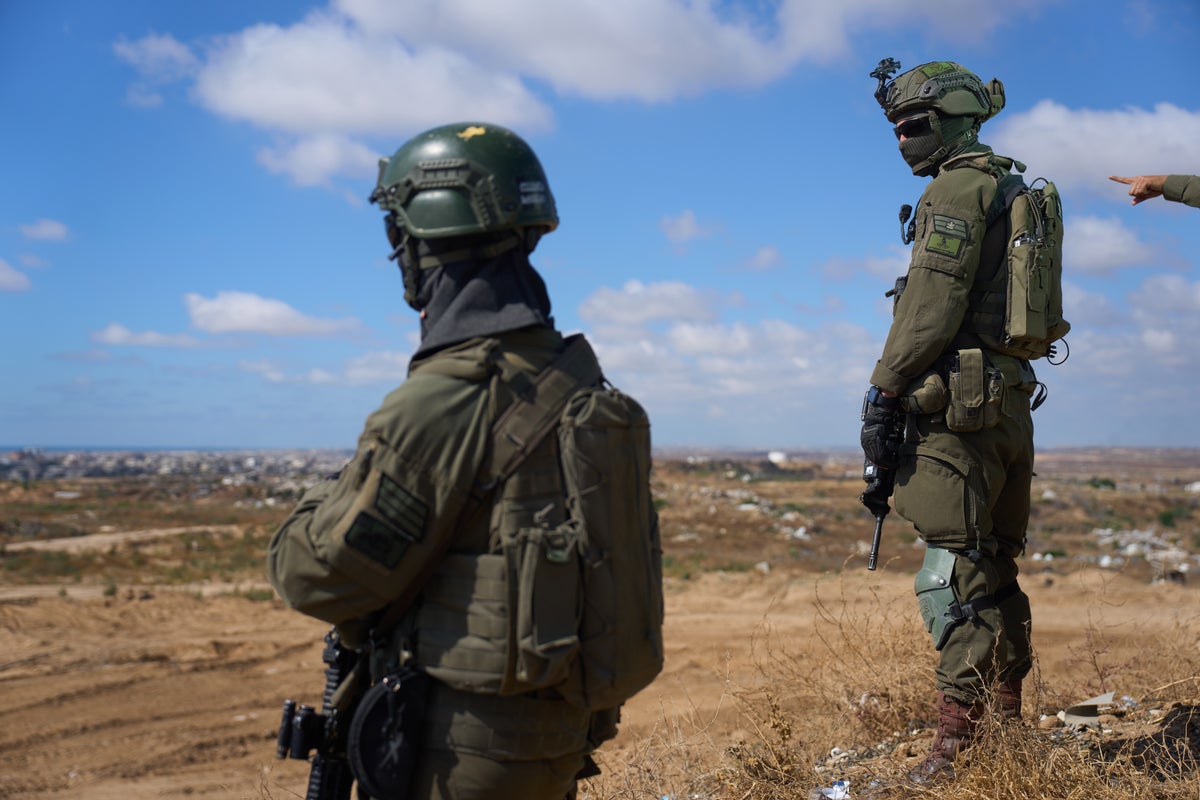
When the engines cut out and the bombardment paused along the perimeter near Gaza, a heavy, suffocating quiet settled over the dunes. It wasn't relief. It was a dense, tactical fog. On paper, the geopolitical chess pieces had stopped moving. In the dirt, young soldiers stood by their vehicles, squinting through the heat haze, trying to figure out if the shadow moving three hundred meters away was a farmer returning to a ruined homestead or a fighter with an anti-tank missile.
The official briefings called it a cessation of hostilities. The men in the mud called it a jungle.
The Geography of Disorientation
Imagine driving down a highway you’ve known your entire life, but every single road sign has been stripped away, the map in your lap is written in a language you don’t speak, and the person in the passenger seat keeps changing their mind about whether you should turn left or right.
That is the administrative reality of a sudden truce in a modern asymmetric conflict.
In the immediate aftermath of the pause, frontlines dissolved into a patchwork of ambiguity. Soldiers who had spent days viewing every movement through a thermal scope as an existential threat were suddenly told to hold their fire. But the human brain is not a light switch. You cannot flip it from survival mode to peacekeeping mode in the span of a single radio transmission.
Reports from the perimeter painted a picture of deep systemic friction. Units found themselves isolated, lacking clear directives on engagement. If a crowd approaches a perimeter fence, at what distance do they become a threat? If a drone hovers overhead, is it monitoring the peace or targeting a vulnerability? The absence of clear answers creates a paralysis that is just as dangerous as active combat.
Consider the friction of a young platoon commander. He is twenty-four years old. He has the lives of thirty others in his hands. The radio crackles with contradictory guidance from higher-ups who are themselves trying to interpret the vague language of a diplomatic agreement. One voice tells him to maintain a strict defensive posture. Another warns him not to provoke the adversary. Meanwhile, the physical reality in front of his eyes remains stubbornly, terrifyingly unpredictable.
The Invisible Toll of the Unseen Threat
Combat is exhausting, but waiting in uncertainty is corrosive.
When the shooting stops, the adrenaline that sustained the human body for days drops precipitously. In its place comes a profound, heavy fatigue, compounded by a hyper-vigilance that refuses to disengage. Every rustle of dry grass, every distant engine backfire, every shadow cast by the afternoon sun triggers the same physiological spike as an incoming mortar round.
[The Psychological Spectrum of the Gray Zone]
Active Combat   -->   Hyper-Vigilance   -->   The Ambiguity Paradox   -->   Emotional Exhaustion
(Clear Threat)        (Adrenaline Drop)       (Friend or Foe?)              (The Jungle Effect)
The human element of these deployments is often lost in the macro-narratives of international diplomacy. We read statistics about troop movements, ceasefire durations, and diplomatic leverage. We rarely talk about the soldier sitting on an upturned ammunition crate, staring at a static-filled screen, wondering if his next decision will land him in a military tribunal or a cemetery.
This ambiguity is not accidental; it is a feature of modern warfare. The space between war and peace is weaponized. By keeping the parameters of a ceasefire vague, adversaries test boundaries, probe defenses, and psychological wear down the opposition without technically violating the terms of an agreement. It is a game of chicken played with live ammunition and human nerves.
When the Dust Refuses to Settle
The real problem lies elsewhere, far from the tactical command posts and the political backrooms. It rests in the fundamental mismatch between political timelines and operational reality.
A politician can declare a ceasefire effective as of 08:00 hours. But it takes hours, sometimes days, for that reality to stabilize on a fluid, chaotic landscape. Information must trickle down through layers of command, across scattered units, and into the minds of individuals who have spent weeks expecting death around every corner.
During this transition, the landscape becomes a funhouse mirror. Trust is nonexistent. Miscalculation is the default state of affairs. A single nervous finger on a trigger, a single misunderstood gesture across a buffer zone, can cause the fragile structure of diplomacy to shatter instantly.
The troops on the border near Gaza found themselves operating in this precise crucible. They were observers of a peace they did not entirely trust, guardians of a line that seemed to shift with the wind, waiting for a clarity that standard military doctrine simply could not provide.
The sun dips below the Mediterranean horizon, casting long, distorted shadows across the sand. The tanks sit idling, their heavy diesels rumbling in the twilight, a constant, low-frequency reminder that the machinery of war is merely sleeping, its eyes wide open in the dark.