The coffee in the paper cup was already cold, tasting faintly of cardboard and burnt chicory, but Elena held it tighter anyway. It was something to do with her hands. Outside the massive, reinforced glass of the terminal viewing gallery, the predawn sky over the desert was the color of a bruised plum.
For three hours, the world inside the terminal had maintained its usual polished hum—the low murmur of rolling luggage, the mechanical chime of boarding calls, the scent of cardamom and expensive perfume drifting from the duty-free shops. Then came the sound. Not a thunderclap, but a heavy, concussive thud that rattled the heavy window frames and made the overhead digital flight boards flicker into a nervous black.
Passengers froze. A trolley of duty-free liquor bottles rattled as the floor vibrated. Then the alarms began to wail, cutting through the murmurs with a sterile, insistent rhythm.
In an instant, the architecture of ordinary travel collapsed.
Modern airports are designed to create the illusion of frictionless movement. We step onto gleaming tiles, surrender our coats to security bins, and trust in an invisible machinery of schedules, fuel lines, radar screens, and baggage sorters. We treat the sky as a highway, forgetting that beneath the calm routine lies a fragile logistical choreography. When that choreography is violently interrupted, the veneer vanishes, leaving behind raw human vulnerability.
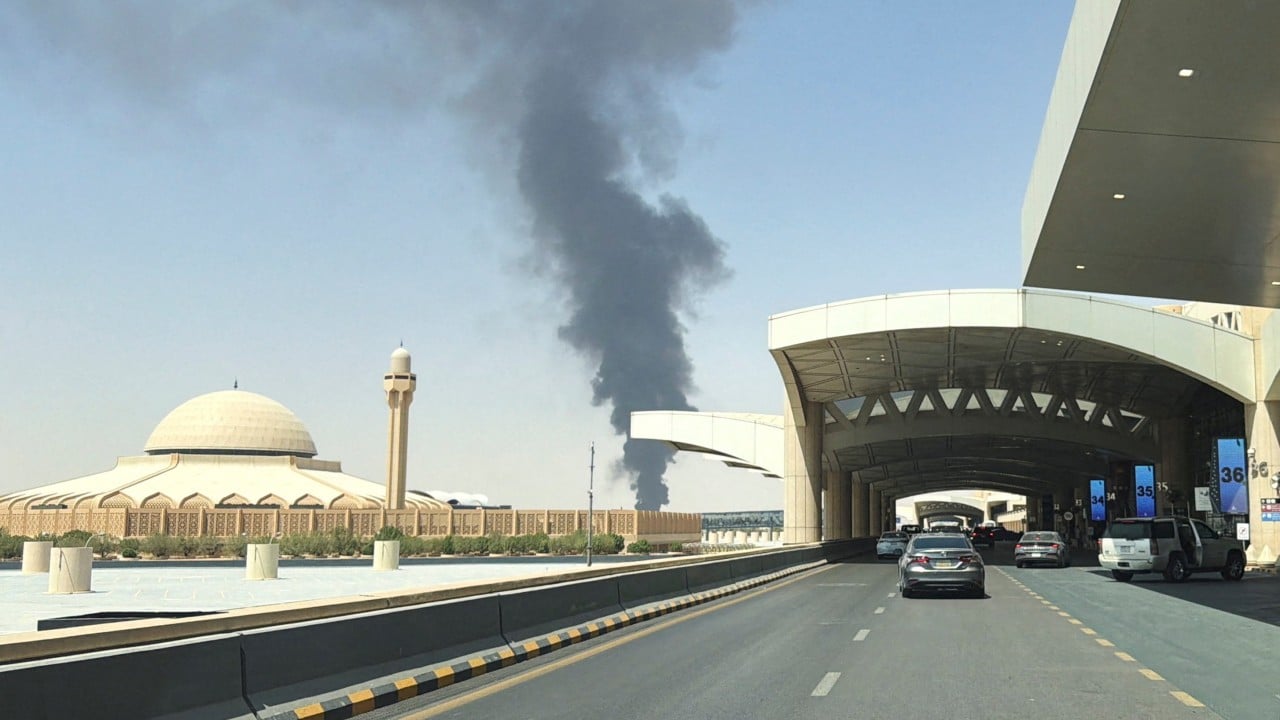
Reports would later confirm what the smoke on the horizon already whispered: an attack had struck the perimeter, leaving several wounded and forcing an immediate, total halt to operations.
But statistics do not capture the weight of a grounded city.
Consider what happens to a major aviation hub when the lights go red. Thousands of travelers, suddenly suspended between where they were and where they hoped to be, crowd the concourses. Families with sleeping toddlers find themselves camping out on carpeted corners. Business travelers pace near closed gates, their phones glowing with frantic emails to offices in distant time zones.
The immediate danger passes quickly, replaced by a different kind of tension—the psychological weight of waiting in uncertainty.
Elena looked down at her boarding pass. Flight 402, delayed indefinitely. Around her, strangers began sharing what little information they had, trading rumors whispered on social media feeds against the official silence of the PA system. A young man offered her a stale croissant from his backpack; an elderly woman traveling alone quietly recited prayers under her breath. In moments of crisis, proximity breeds a fragile, temporary community. We lean on the nearest shoulder, seeking reassurance in faces that look just as bewildered as our own.
Outside, emergency vehicles traced red arcs across the tarmac, their sirens muted by the thick double-paned glass. Ground crews guided the final incoming aircraft safely away from the affected zones, while air traffic controllers quietly managed the redirection of dozens of flights currently airborne, scattering them across regional alternates like marbles rolling off a tilted table.
It is a reminder of how deeply interconnected our modern lives have become, and how quickly the systems we rely upon can transform from engines of connection into islands of isolation.
The wounded had already been rushed away to local hospitals, their names unknown to the crowd murmuring in the terminal, yet their presence lingered in the collective breath of everyone waiting. Every delayed flight board, every blinking red light on the tarmac, carried a silent acknowledgment of lives abruptly altered.
As the first true rays of sunlight finally broke over the desert horizon, piercing through the faint haze hanging above the runway, the terminal remained entirely still. No engines roared. No announcements echoed through the halls. There was only the quiet rustle of paper cups, the hum of fluorescent lights, and the collective, patient watch of people waiting for the world to start turning again.