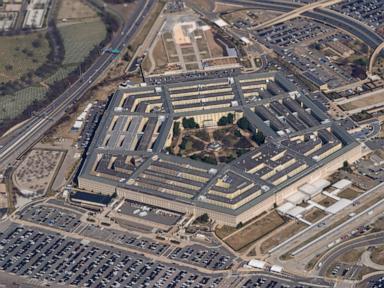
The air in a secure facility—what the military calls a SCIF—is different. It feels recycled, heavy with the hum of cooling fans and the weight of secrets that can never leave the room. Somewhere in the windowless corridors of the Pentagon, a technician stares at a screen, heart hammering against their ribs. This isn't a movie set. This is the new front line.
For decades, the backbone of national security was steel and gunpowder. Today, it is code. But not just any code. We are talking about the kind of artificial intelligence that can sift through oceans of satellite imagery or decrypt signals in the blink of an eye. The problem has always been trust. How do you take a tool built by a private company in Silicon Valley and plug it into a system that controls the most sensitive data on the planet?
The answer arrived quietly this week. Seven companies—the architects of our digital future—inked deals to move their most advanced AI models behind the heavy iron curtains of the U.S. military’s classified networks.
The Invisible Hand on the Trigger
Consider a hypothetical intelligence analyst we will call Sarah. Sarah’s job is to identify threats before they happen. In the old world, she would spend fourteen hours a day squinting at grainy photos, her eyes burning, her mind slipping into the fog of fatigue. Humans are brilliant, but we are also biological. We blink. We get tired. We miss the one pixel that indicates a missile silo is being fueled.
Now, imagine Sarah has a partner that never sleeps. This partner isn't a robot with a face; it’s a series of neural networks that can cross-reference fifty years of historical data against a live feed in milliseconds. When the U.S. military reached these agreements with companies like Microsoft, Amazon, and Google, they weren't just buying software. They were buying time.
Time is the only resource that matters when a crisis breaks.
The mechanics of these deals are as complex as the math behind the models themselves. The military isn't just "using" ChatGPT to write memos. They are deploying Large Language Models (LLMs) and specialized analytical AI into air-gapped environments. These are digital islands, disconnected from the public internet, where the data stays local and the "learning" happens in a vacuum. It is a marriage of convenience between the agility of the private sector and the iron-clad security of the Department of Defense.
The Weight of the Black Box
There is a pervasive fear that AI is a "black box"—a system where we see what goes in and what comes out, but the middle part is a mystery. For a general responsible for lives, that mystery is unacceptable. If an AI suggests a course of action, the human in the loop needs to know why.
The seven companies involved—including names that have become household staples and others that operate in the shadows of high-end defense contracting—had to prove more than just "it works." They had to prove it is predictable. They had to demonstrate that their models wouldn't hallucinate or invent facts when the stakes are measured in human lives.
This isn't about shiny gadgets. It’s about a fundamental shift in how power is projected. Historically, a nation's strength was visible: carriers in the Pacific, tanks in the desert. Now, strength is invisible. It lives in the weight of the weights and biases of a transformer model. It’s the ability to predict a supply chain disruption weeks before a single truck stops moving.
The Human Toll of Automation
We often talk about AI as something that replaces people. That is a simplified, almost lazy, way of looking at it. The reality is far more nuanced. By automating the "drudge work" of data analysis, these systems are actually putting more pressure on the humans who make the final calls.
If an AI flags a target with 99% certainty, the burden of that remaining 1% falls squarely on the shoulders of the person holding the mouse. The emotional weight doesn't vanish; it concentrates. We are entering an era where our leaders will be forced to make decisions at a speed that the human brain wasn't evolved to handle. The AI provides the clarity, but the human provides the conscience.
There is an inherent tension here. Silicon Valley moves fast and breaks things. The military moves deliberately and secures things. Merging these two cultures is like trying to weld water to fire. Yet, the deals struck this week suggest that the welding is finally holding. The military has realized it cannot build these tools alone, and the tech giants have realized that their innovations are now a matter of national survival.
Beyond the Silicon Horizon
What happens when the code becomes the combatant? We aren't talking about "Killer Robots." We are talking about something much more subtle. Digital warfare is a game of whispers. It’s about disrupting a radar signal so slightly that the operator thinks it’s just weather. It’s about a deepfake video that starts a riot before the truth can lace up its boots.
By integrating these seven AI platforms into classified systems, the U.S. is essentially building a digital immune system. These models are being trained to recognize the fingerprints of enemy interference long before a human could spot the pattern.
But there is a cost. Not just a financial one—though the contracts involve billions of dollars—but a philosophical one. We are handing over the keys to our most sensitive vaults to algorithms. We are trusting that the logic of the machine aligns with the values of the republic.
The technicians in those windowless rooms aren't just monitoring screens anymore. They are gardeners, tending to a digital intelligence that is growing more complex by the hour. They check for drift. They watch for bias. They ensure that the tool remains a tool and doesn't become the master.
The deals are signed. The servers are humming. The code is moving into the darkness of the classified world.
Somewhere, a pixel changes color on a screen. An AI notices. It alerts a human. The human takes a breath, looks at the data, and decides what happens next. The shield is no longer made of bronze or steel; it is made of logic, etched into silicon, guarded by those who know that in the modern age, the most powerful weapon is the one you never see coming.
The humming of the servers continues, a low, constant vibration that feels less like machinery and more like a pulse.


