A monsoon downpour is hammering against the glass of a high-rise in New Delhi. Six thousand miles away, a neon-lit alley in Tokyo is slick with a midnight drizzle.
On the surface, these two worlds share little more than a map of Asia. But underneath the pavement, through fiber-optic cables pulsing across the ocean floor, they are whispering to each other in a language made entirely of ones and zeros. Recently making waves recently: Why the Government Boycott of X is a Cowardly Surrender Not a Victory for Democracy.
We often treat international diplomacy like a chess game played by people in tailored suits, shaking hands in front of heavy velvet curtains. We read headlines about bilateral agreements and assume it is just more political theater—bureaucrats signing pieces of paper that will inevitably gather dust in a government archive.
That assumption is wrong. Additional information regarding the matter are explored by TechCrunch.
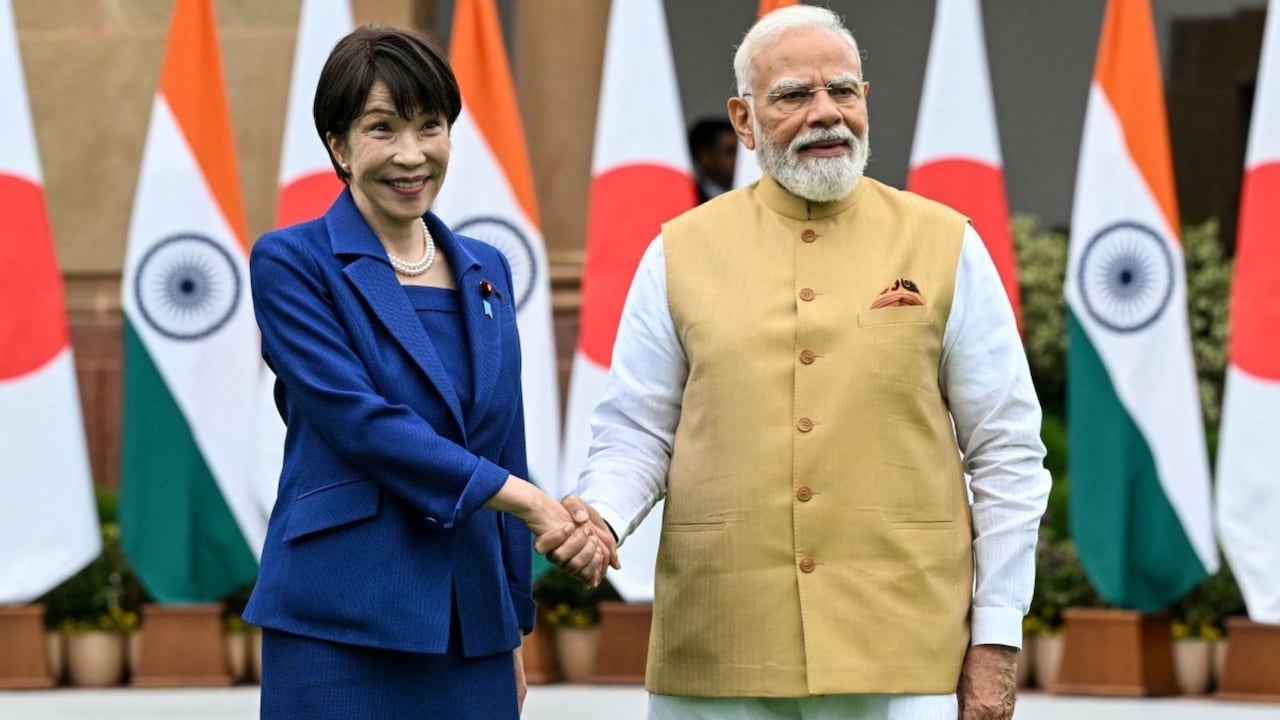
When Indian Prime Minister Narendra Modi and Japanese Minister for Internal Affairs and Communications Sanae Takaichi sit down to discuss artificial intelligence and technological collaboration, they are not just talking about microchips or cloud computing. They are drawing the blueprint for who owns the future.
To understand why this matters, you have to look past the press releases. You have to look at a hypothetical engineer named Akira in Tokyo, staring at a screen until his eyes burn, trying to solve a data bottleneck that threatens to crash a smart-grid system. At the exact same moment, imagine a developer named Priya in Bengaluru, rewriting a machine-learning algorithm that could predict crop failures for millions of farmers.
Separately, they are brilliant. Together, they are an unstoppable economic engine.
The Gravity of the Invisible
For decades, the alliance between India and Japan was built on steel and concrete. Japan poured billions into India’s infrastructure, funding high-speed rail lines and massive industrial corridors. It was tangible. You could see the progress in the skeletal structures of new train stations rising against the sky.
Now, the infrastructure is invisible.
The modern world does not just run on physical roads; it runs on data highways. If those highways are built on values that suppress freedom, the future becomes incredibly dark. That is the quiet anxiety driving this partnership. India possesses something Japan desperately needs: an ocean of human talent and an unfathomable volume of daily digital interactions. Japan possesses what India craves: unparalleled precision engineering, hardware dominance, and deep capital.
It is a jigsaw puzzle where the pieces finally click.
Consider the sheer scale of India’s digital footprint. Every second, millions of digital payments flash across the country, creating a massive, living laboratory for AI development. Machine learning thrives on chaos and volume. It needs data to learn, to grow, to become smart. India has that data in abundance.
Japan, conversely, faces a demographic crisis. Its population is shrinking, meaning its workforce is contracting. To maintain its status as a global tech powerhouse, Japan cannot rely solely on human hours anymore. It must automate. It must build systems that can think, adapt, and predict.
When these two forces combine, the equation changes.
Moving Beyond the Silicon Valley Shadow
For the past twenty years, the global tech narrative was dictated by a single sliver of land in California. Silicon Valley told us what the future would look like, and the rest of the world followed.
But that monopoly is fracturing.
The collaboration between New Delhi and Tokyo represents a distinct philosophy. It is not about building the next viral app designed to hijack your attention span for ad revenue. Instead, the focus is shifting toward industrial AI, cybersecurity, and secure semiconductor supply chains.
Think about the cars we drive. A modern electric vehicle is less of a mechanical machine and more of a supercomputer on wheels. If the microchips powering that car are manufactured in a region prone to political volatility, the entire global supply chain can grind to a halt overnight. We saw glimpses of this vulnerability during the supply crunches of the early 2020s. Empty factory floors. Unfinished vehicles sitting in parking lots.
By deepening ties on semiconductor research and AI architecture, India and Japan are constructing a fortress against that vulnerability. They are ensuring that the brains of tomorrow’s technology are built on stable, democratic ground.
The Friction in the Machine
It sounds beautiful on paper. But as anyone who has ever tried to coordinate a project between two different cultures knows, the reality is messy.
Japan’s corporate culture is legendary for its meticulousness. Every detail must be scrutinized, every risk calculated, every contingency planned for. It is a system that produces flawless hardware but can sometimes move with agonizing slowness.
India’s tech ecosystem is the exact opposite. It thrives on agility, rapid iteration, and a cultural concept known as jugaad—finding frugal, innovative solutions to complex problems on the fly. It is fast, sometimes chaotic, and deeply resilient.
When these two corporate philosophies collide, the sparks can be blinding.
There are moments of profound frustration. Japanese executives want absolute certainty before deploying an AI model. Indian developers want to launch the beta version today and fix the bugs tomorrow. It is a cultural tightrope walk.
Yet, this exact friction is where the magic happens. The Japanese obsession with perfection tempers the Indian urge for speed, resulting in technology that is both rapidly deployed and remarkably stable.
The Stakes We Do Not See
We must confront a difficult truth. This technological alliance is not happening in a vacuum. It is being forged under the shadow of an aggressive, state-controlled digital authoritarianism rising elsewhere in Asia.
If democratic nations do not build the standards for artificial intelligence, someone else will.
Those standards dictate how algorithms make decisions. Will an AI system respect individual privacy, or will it be used as a tool for total state surveillance? Will it encourage open communication, or will it become the ultimate censor?
The agreements struck between leaders like Modi and Takaichi are the defensive lines drawn in this quiet war for the soul of the internet. They are championing an "Open, Safe, and Trusted" framework for AI. It is a commitment to ensuring that technology remains a tool for human empowerment, rather than human subjugation.
The Human Bottom Line
At the end of the day, we can talk about billions of dollars in investment, geopolitical balance, and algorithmic efficiency until the words lose all meaning.
But the true measure of this alliance is found in the ordinary.
It is found in a medical clinic in rural Rajasthan, where a diagnostic AI tool, developed through Japanese-Indian collaboration, detects a life-threatening anomaly in a patient’s scan hours before a human doctor could see it.
It is found in a Tokyo logistics hub, where autonomous systems co-engineered by minds from Bengaluru ensure that food and medicine flow seamlessly to an aging population without delay.
The rain continues to fall in New Delhi and Tokyo. The screens stay lit. The code keeps compiling, line by line, weaving an invisible web between two ancient civilizations that have decided they will not let the future just happen to them. They are going to build it together.