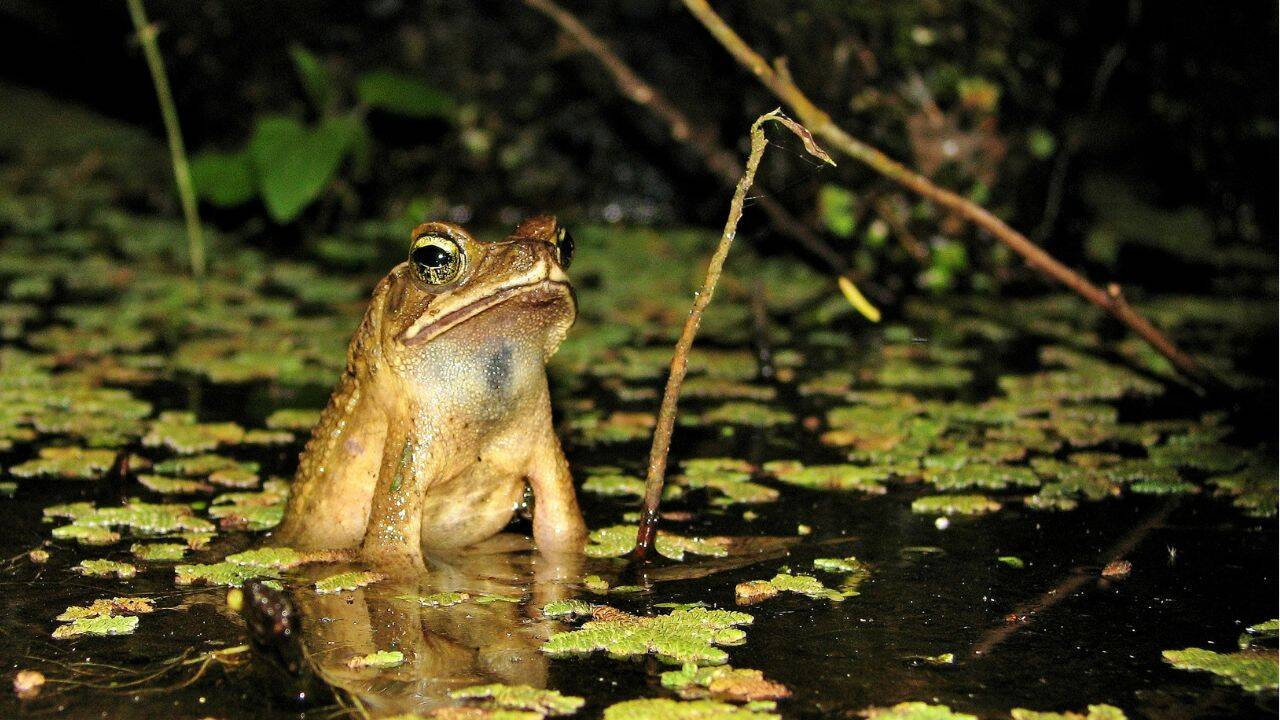
Between 1979 and 1982, an invisible epidemic tore through the cloud-draped mountains of Brazil’s Atlantic Forest, triggering one of the earliest and most severe vertebrate mass extinction events ever documented. Long before conservationists sounded the global alarm over disappearing amphibians in the late 1980s, dozens of frog species in southeastern Brazil vanished almost overnight. The culprit was Batrachochytrium dendrobatidis, a microscopic aquatic fungus commonly known as Bd or the amphibian chytrid fungus, which silently suffocated its hosts through their own skin while researchers stood by powerless, lacking even the vocabulary to describe what they were witnessing.
For decades, the timeline of the global amphibian crisis was largely written backward from the late 1980s, anchored by famous collapses in Costa Rica’s Monteverde Cloud Forest and the mountain streams of Queensland, Australia. Yet archival specimens sitting quietly in Brazilian natural history museums tell an older, darker story. By swabbing preserved frogs collected across the Serra do Mar and Serra da Mantiqueira mountain ranges over a span of a century, biologists reconstructed a forensic timeline that pushed the outbreak back a full decade.
The numbers from that three-year window are staggering. Species that had been abundant in the late 1970s simply ceased to exist in field surveys by 1983.
The Forensic Trail Inside Museum Jars
Understanding how a fungal outbreak went undiagnosed for nearly twenty years requires looking at the state of herpetology in the late twentieth century. In 1979, field biologists working in protected reserves like Boracéia and Itatiaia noticed something deeply wrong. Stream-dwelling frogs—species that had thrived in pristine, untouched watersheds—were turning up dead on rocks, lethargic and unresponsive, or simply failing to call during peak breeding seasons.
There were no bulldozers clearing the canopy above them. There was no chemical runoff poisoning the headwaters.
Because the declines occurred inside well-protected biological stations, scientists initially blamed localized weather anomalies. Severe frosts in the southern highlands during the late 1970s became the convenient scapegoat. Researchers assumed populations would bounce back once normal rainfall and temperature cycles returned. They never did.
Years later, after Batrachochytrium dendrobatidis was finally isolated and formally described in 1998, researchers returned to those museum collections with modern molecular tools. Using quantitative polymerase chain reaction (qPCR) testing on skin swabs taken from ethanol-preserved specimens, teams analyzed thousands of frogs collected between the 1890s and the 2000s.
The genetic evidence revealed a sharp, unmistakable spike in fungal prevalence and infection intensity starting right around 1979. Prior to that window, Bd existed in the Atlantic Forest at low, enzootic levels—present on the skin of frogs, yes, but rarely fatal, coexisting with native hosts in an evolutionary stalemate. Then, between 1979 and 1982, the pathogen transitioned into an epizootic wave, sweeping across mountain ridges and wiping out entire genera of stream-breeding amphibians before field notes could even be published.
How a Microscopic Fungus Kills an Amphibian
To grasp why Bd proved so lethal, you have to understand amphibian biology. Unlike mammals or birds, frogs do not rely solely on their lungs to breathe or their mouths to drink. Their skin is a dynamic, semi-permeable organ responsible for gas exchange, hydration, and maintaining precise internal electrolyte balances.
Batrachochytrium dendrobatidis targets keratin, the structural protein found in the outer layer of adult amphibian skin and the mouthparts of tadpoles. Microscopic, flagellated zoospores swim through cool mountain water, attach to a frog’s skin, and burrow inside. Once embedded, the fungus matures into a zoosporangium, multiplying rapidly and causing the outer layers of skin to thicken—a condition known as hyperkeratosis.
Thickened skin might sound minor. For a frog, it is a death sentence.
As the epidermis swells and sloughs off abnormally, the skin loses its ability to transport essential ions—specifically sodium and potassium—across cell membranes. Blood plasma levels of these electrolytes plummet. Without adequate potassium and sodium to regulate electrical signaling in muscle tissue, the frog’s heart loses its rhythm. Death occurs not from direct organ consumption, but from asystolic cardiac arrest. The animal essentially suffers a fatal heart attack triggered by severe electrolyte depletion, often while sitting motionless in the shallow water where it went to rehydrate.
Why Stream Breeders Paid the Highest Price
Not every frog in the Atlantic Forest suffered equally during the 1979–1982 crash. The mortality patterns followed strict ecological lines, hitting stream-associated species with devastating precision while leaving many terrestrial, direct-developing frogs relatively unscathed.
- Aquatic lifecycle exposure: Species in genera such as Cycloramphus, Hylodes, and Crossodactylus lay their eggs in fast-flowing, rocky mountain streams. Their tadpoles spend months or even years grazing on algae-covered stones in cool water—the exact thermal sweet spot where Bd zoospores thrive best, typically between 17°C and 25°C.
- Tadpole reservoirs: Because tadpoles only carry keratin in their mouthparts rather than across their entire bodies, they rarely die from the infection. Instead, they act as living incubators, shedding massive quantities of infectious zoospores into the water column while slowly grazing.
- Metamorphic vulnerability: The moment a tadpole undergoes metamorphosis and develops keratin across its entire skin surface, the infection explodes. Newly metamorphosed froglets emerge from the stream already carrying lethal fungal loads, dying within days or weeks before ever reaching reproductive maturity.
Terrestrial frogs that bypass the tadpole stage altogether—laying eggs in damp leaf litter that hatch directly into miniature frogs—had far less contact with waterborne zoospores. Many of those lineages survived the initial wave, creating a skewed ecological landscape where forest-floor species persisted while the voices along the mountain creeks went permanently silent.
The Origin Debate and the Global Trade Connection
When the 1979–1982 Atlantic Forest crash came into sharp focus, it forced evolutionary biologists to confront an uncomfortable question: Was Bd native to Brazil, or was it an invasive pathogen introduced by human commerce?
For years, competing theories divided the research community. One camp pointed to the Out of Africa hypothesis, suggesting the fungus originated in southern Africa and spread globally via the mid-twentieth-century trade in African clawed frogs (Xenopus laevis), which were exported worldwide by the tens of thousands for human pregnancy testing before modern chemical assays existed. Another camp argued that Bd had evolved alongside native amphibians in the Americas for millennia, only turning deadly when climate shifts or habitat fragmentation stressed host immune systems.
Whole-genome sequencing eventually cut through the speculation, though the picture remains nuanced. Genetic analyses of Bd strains collected worldwide traced the deepest evolutionary roots of the pathogen to the Korean Peninsula and East Asia, where diverse lineages coexist with native salamanders and frogs without causing mass die-offs. From East Asia, a hyper-virulent, globally distributed strain—known as the Global Panzootic Lineage (Bd-GPL)—emerged during the twentieth century, supercharged by international wildlife, food, and pet trades.
Yet Brazil occupies a uniquely complicated place in that genetic map. Alongside Bd-GPL, researchers discovered an ancient, endemic Brazilian lineage called Bd-Brazil, which appears to have existed quietly in South American forests for centuries without triggering mass extinctions.
The 1979–1982 catastrophe was likely driven by the arrival or sudden expansion of the hyper-virulent Bd-GPL strain—or potentially through hybridization between the invasive global strain and the native Brazilian lineage. In fact, laboratory work has confirmed that Bd-GPL and Bd-Brazil can recombine genetically in the wild, producing hybrid strains that exhibit heightened virulence against local frog populations. Trade routes, the importation of non-native amphibians like the American bullfrog (Lithobates catesbeianus) for commercial frog farming in Brazil during the mid-twentieth century, and increased human movement into remote highlands all converged to ignite a biological wildfire.
The Missing Role of Climate and Habitat Stress
Blaming the fungus alone tells most of the story, though field ecologists warn against ignoring the environmental stage on which the epidemic played out. By the late 1970s, Brazil’s Atlantic Forest had already been carved into a fragmented mosaic of coffee plantations, cattle pastures, timber operations, and expanding urban centers. Less than a fraction of the original coastal forest remained intact, leaving amphibian populations isolated on ecological islands with reduced genetic diversity and no corridors for recolonization.
At the same time, subtle shifts in regional climate patterns altered microhabitats inside even the best-protected reserves. Unusual temperature swings—specifically warmer nights paired with cooler daytime cloud cover in high-elevation forests—pushed ambient conditions straight into the optimal growth window for Batrachochytrium dendrobatidis.
Amphibians are ectotherms; their immune systems depend directly on ambient temperatures. Cold snaps suppress amphibian antibody production and antimicrobial skin peptides, while Bd continues replicating efficiently at lower temperatures where frog immunity stalls. When anomalous cold fronts hit southeastern Brazil between 1979 and 1981, frogs carrying low-level infections suddenly lost the physiological capacity to keep the fungus in check. What had been a manageable skin irritation became an unstoppable systemic collapse.
Ecological Ripple Effects Across the Forest
When dozens of frog species disappear from a mountain watershed in under four years, the damage does not stop at the water’s edge. Amphibians sit squarely in the middle of tropical food webs, acting as both voracious predators of invertebrates and primary prey for snakes, birds, and small mammals.
Tadpoles are the primary grazers in headwater streams. By scraping algae and organic matter off submerged rocks, they regulate nutrient cycling, prevent algal blooms, and keep stream beds oxygenated for aquatic insects. Once stream-breeding tadpoles vanished from Atlantic Forest creeks after 1982, algae choked the rocks, altering water chemistry and reducing populations of grazing insects.
Higher up the food chain, the consequences were equally stark. Studies tracking tropical snake communities following chytrid outbreaks have documented steep declines in frog-eating snakes—species that evolved specialized diets dependent on abundant amphibians. Even snakes that did not eat frogs directly suffered as prey availability shifted across the forest floor. An entire trophic cascade unfolded silently beneath the canopy, stripping biodiversity out of ecosystems that looked healthy on satellite imagery.
Why Surviving Frogs Offer a Fragile Blueprint
More than four decades after the 1979–1982 crash, Brazil’s Atlantic Forest remains one of the most heavily studied laboratories for infectious wildlife disease on Earth. A handful of species once feared extinct—such as Hylodes and Crossodactylus populations in isolated mountain pockets—have been rediscovered in tiny numbers, clinging to survival in streams where Bd is still permanently established.
How are they surviving? The answers point toward rapid evolutionary adaptation rather than the disappearance of the pathogen.
- Symbiotic skin bacteria: Surviving populations carry higher concentrations of beneficial cutaneous bacteria, such as Janthinobacterium lividum, which produce natural antifungal compounds like violacein that inhibit Bd zoospore growth on the skin.
- Antimicrobial peptides: Some lineages have selected for stronger innate immune defenses, secreting potent peptides from granular glands that puncture fungal cell walls before zoospores can establish deep infections.
- Behavioral fever: Certain terrestrial and semi-aquatic frogs actively seek out warmer microhabitats—sunlit rocks or open canopy gaps—raising their body temperatures above 28°C, a threshold that slows or kills Bd cells.
None of these adaptations constitute a permanent cure. Batrachochytrium dendrobatidis cannot be eradicated from open mountain watersheds; antifungal chemical treatments work in captive breeding facilities, yet pouring fungicides into wild streams would devastate native aquatic fungi, invertebrates, and fish. Conservation teams now focus on probiotic bioaugmentation—inoculating vulnerable frogs with native antifungal bacteria—alongside strict biosecurity protocols to prevent the introduction of an even deadlier sister pathogen, Batrachochytrium salamandrivorans (Bsal), through the international pet trade.
The collapse in Brazil’s Atlantic Forest between 1979 and 1982 proved that a single microscopic pathogen can erase millions of years of evolutionary history inside a protected national park without a single tree being cut down. Today, billions of live amphibians still move across international borders every year with minimal pathogen screening, repeating the exact conditions that turned a quiet mountain fungus into a continental extinction engine.