Rumors claiming an Nvidia executive admitted to an affair with a suspected Chinese intelligence operative have circulated across social media feeds and sensationalist news aggregators, fueled by misattributed headlines and fabricated quotes. In reality, no verified public admission or federal indictment connects Nvidia’s top leadership to such a scandal—though the viral panic highlights a very real, documented counterintelligence crisis currently gripping the semiconductor industry.
Falsehoods travel faster than silicon wafers. When a headline combining a multi-trillion-dollar tech giant, marital infidelity, and foreign espionage hits the internet, it taps directly into modern geopolitical anxiety. People click because the premise feels plausible. For years, U.S. counterintelligence officials have warned that foreign adversaries increasingly target executives at critical technology firms using classic human intelligence tactics, commonly known as honeytraps, to bypass technical cybersecurity defenses.
To understand why this specific rumor gained traction, you have to look at the intersection of corporate governance, social media virality, and the intense scrutiny currently aimed at Nvidia. As the primary supplier of the graphics processing units powering the global artificial intelligence boom, Nvidia sits at the exact center of the technological cold war between Washington and Beijing. Any whisper of compromised leadership at the Santa Clara chipmaker carries massive market-moving potential.
Anatomy of a Viral Tech Hoax
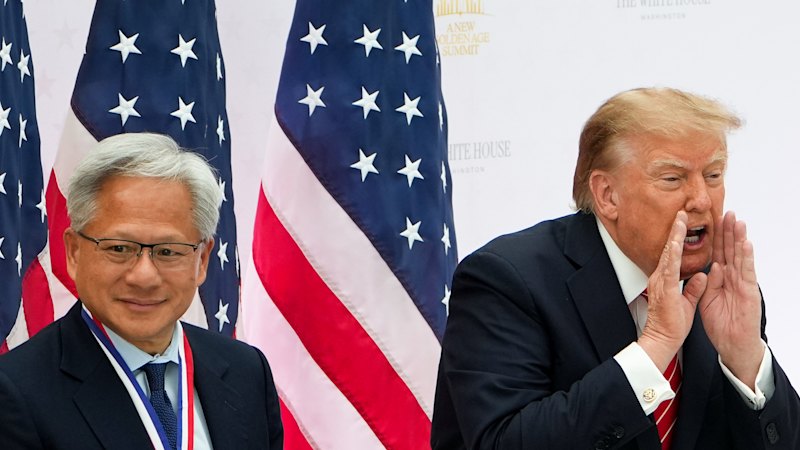
The mechanics behind fabricated corporate scandals rarely vary. An obscure domain or a hyper-partisan social media account publishes a dramatic headline lacking verifiable sourcing, often pairing a real photograph of a prominent executive with a completely invented quote. Automated content scrapers and engagement-farming bots then amplify the text across platforms before human fact-checkers even notice the spike in search volume.
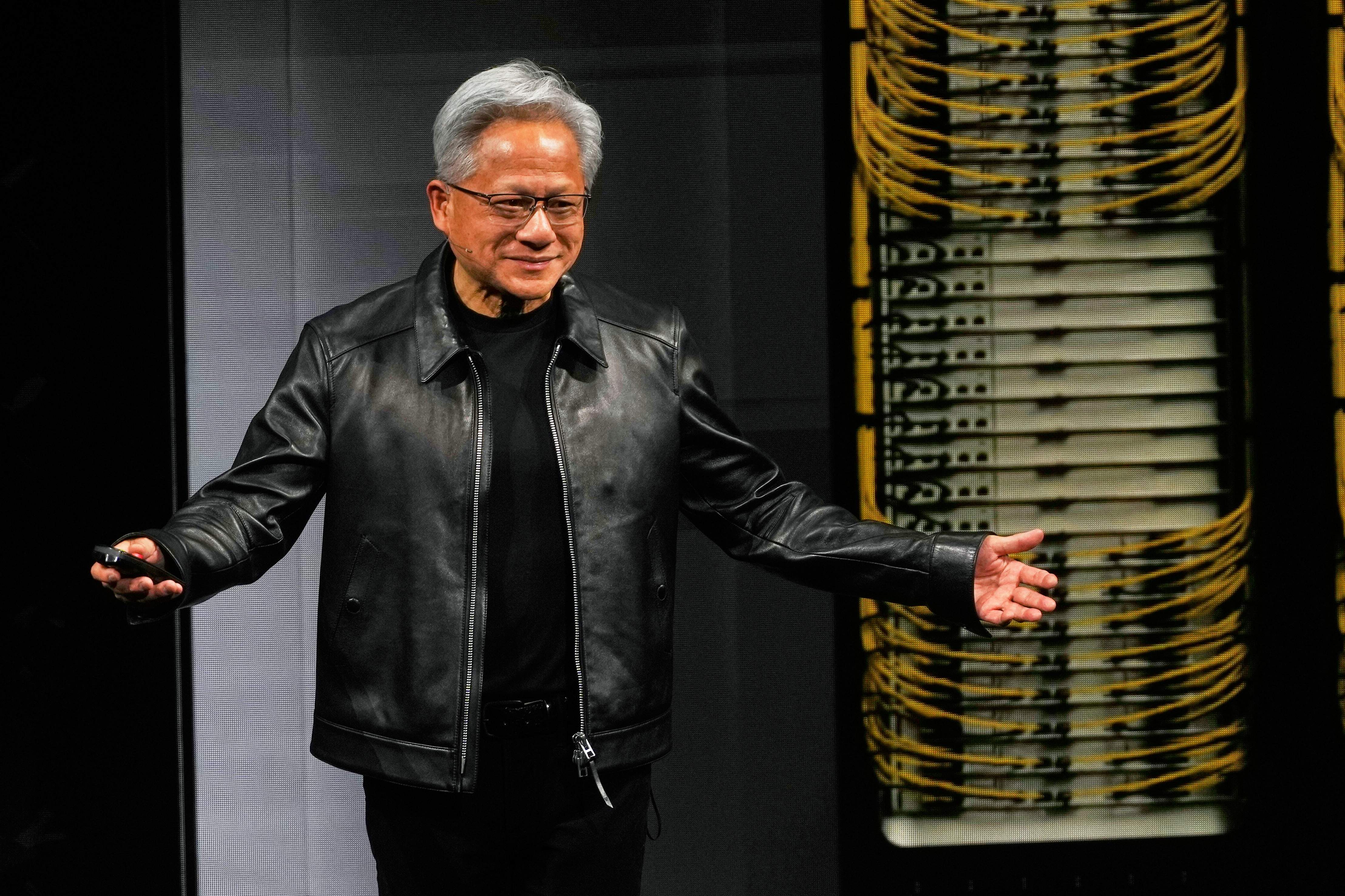
In the case of the supposed Nvidia executive admission, the viral headline relied on ambiguity. By using the generic term "Nvidia boss" rather than naming a specific individual—such as co-founder and CEO Jensen Huang—the rumor bypassed immediate libel triggers while inviting readers to fill in the blank with the company's most recognizable face.
Disinformation researchers point out that financial markets are uniquely vulnerable to this kind of narrative warfare. Short-sellers and algorithmic trading bots scan news feeds for keywords like "affair," "spy," and "Nvidia." Even a brief dip in stock price caused by a fabricated scandal can yield millions of dollars for bad actors positioned to profit from sudden volatility. Once the initial wave of clicks subsides, the fake story lingers in search engine caches, creating a phantom trail that casual readers mistake for established fact.
Why Foreign Intelligence Targets Chip Executives
While the specific Nvidia tabloid headline lacks factual grounding, the underlying threat it exploits is entirely real. U.S. intelligence agencies, including the Federal Bureau of Investigation and the National Counterintelligence and Security Center, have spent the last decade sounding the alarm over foreign espionage targeting the American semiconductor sector.
You cannot easily hack an air-gapped server containing proprietary chip architecture. Modern cybersecurity protocols at tier-one hardware companies are extraordinarily difficult to penetrate remotely. Consequently, state-sponsored intelligence services revert to older, analog methods. Human vulnerability remains the weakest link in corporate security.
Counterintelligence professionals categorize these operations under elicitation and human-source recruitment. Instead of deploying malware, an operative builds a personal, romantic, or professional relationship with an engineer, board member, or C-suite executive. The goal is rarely to get the target to hand over a briefcase full of blueprints on day one. Instead, operatives use subtle psychological pressure, shared intimacy, or eventual blackmail to extract minor details over months or years—information about supply chain bottlenecks, upcoming product roadmaps, or internal reactions to export controls.
Historical Precedents in Tech Espionage
History offers clear examples of how personal relationships compromise corporate and national secrets, proving that intelligence agencies regularly deploy romantic and social manipulation against high-value targets.
Consider the documented case of Christine Fang, a suspected Chinese intelligence operative who spent years cultivating close personal and romantic ties with up-and-coming American politicians and local officials across California between 2011 and 2015. Federal investigators determined she used campaign fundraising, extensive networking, and romantic relationships to gain proximity to sensitive political circles before fleeing the country when the FBI closed in.
In the corporate sector, trade secret theft frequently involves insiders recruited through personal leverage rather than purely ideological alignment. In 2018, the U.S. Department of Justice indicted a former engineer from Micron Technology and several associates over the theft of proprietary dynamic random-access memory designs. While that case centered on financial inducements and corporate recruitment by state-backed entities, federal prosecutors emphasized how personal networks and trusted insiders were systematically exploited to hollow out American intellectual property.
More recently, federal authorities prosecuted former Apple engineers in separate incidents for attempting to exfiltrate autonomous vehicle trade secrets to competitors in China. In each instance, the breach did not begin with a sophisticated cyberattack; it began with human decisions, divided loyalties, and personal relationships that bypassed digital firewalls entirely.
The Geopolitical Bullseye on Nvidia
To appreciate why Nvidia attracts so much speculative drama, consider its unique position in the global economy. A decade ago, Nvidia was primarily known to PC gamers and graphic designers. Today, its hardware forms the foundational infrastructure for artificial intelligence, defense modeling, and supercomputing.
Washington has spent the last several years tightening export restrictions designed to prevent advanced AI chips from reaching Chinese military and research institutions. Nvidia has found itself walking a geopolitical tightrope—complying with U.S. Department of Commerce regulations while attempting to preserve revenue from one of the world's largest technology markets by designing modified, export-compliant processors.
This high-wire act makes Nvidia executives prime targets for three distinct groups:
- Foreign Intelligence Services: State actors seeking to circumvent U.S. export controls desperately want insight into Nvidia’s next-generation architectures, software ecosystems like CUDA, and manufacturing allocations at foundries like TSMC.
- Geopolitical Saboteurs: State-aligned disinformation networks benefit from sowing distrust between Silicon Valley leadership and Washington lawmakers. Convincing regulators that American tech executives are personally compromised undermines public-private trust.
- Financial Opportunists: Tabloid farms and market manipulators exploit the public's intense fascination with AI dominance to generate ad revenue and trigger short-term stock swings.
When a company becomes synonymous with national power, its leadership loses the luxury of private obscurity. Every conference appearance, overseas trip, and personal association is scrutinized through the lens of national security.
How Corporate Boards Handle Executive Scandals
When genuine personal scandals do erupt in the C-suite, the fallout extends far beyond public relations embarrassment. For publicly traded defense contractors and critical technology firms, an executive’s undisclosed affair is treated as a severe governance and security failure.
Boards of directors evaluate these situations based on fiduciary risk and blackmail exposure. If a senior executive conceals a relationship—especially one involving a foreign national with ambiguous ties—that executive becomes an immediate liability. Even if no proprietary data was ever shared, the mere existence of a secret creates leverage that an adversary can exploit.
In documented cases across Silicon Valley and the defense sector, corporate boards rarely hesitate once an undisclosed relationship surfaces. In 2019, Intel forced out CEO Brian Krzanich after discovering he had engaged in a consensual relationship with an employee, violating company non-fraternization policies. Similarly, in 2012, defense giant Lockheed Martin terminated incoming CEO Christopher Kubasik prior to him taking the top job after an internal ethics investigation uncovered an undisclosed personal relationship with a subordinate.
Neither the Intel nor the Lockheed Martin cases involved foreign espionage, yet both boards executed immediate leadership changes. The underlying principle is straightforward: if an executive will hide a personal policy violation from the board, they cannot be trusted to safeguard the company's most sensitive operational secrets.
The Counterintelligence Vetting Gap
Despite strict corporate ethics codes, a massive blind spot remains in how private tech companies handle counterintelligence compared to traditional defense contractors.
Companies like Northrop Grumman or Raytheon operate under strict federal security clearance protocols. Executives holding Top Secret clearances undergo exhaustive background investigations, continuous evaluation, and mandatory reporting requirements regarding foreign travel and close personal contacts with foreign nationals. Failing to report a romantic relationship with a foreign citizen results in the immediate revocation of security clearances.
Silicon Valley firms, by contrast, build dual-use technologies—chips and software used by both commercial consumers and military agencies—without subjecting their entire leadership teams to Pentagon-style counterintelligence oversight. While Nvidia and its peers employ sophisticated corporate security teams, private companies lack the statutory authority and intelligence-gathering reach of federal agencies. They rely heavily on voluntary self-disclosure from executives who may be reluctant to admit personal indiscretions to general counsel.
Spotting Disinformation in Financial and Tech News
For investors, tech workers, and everyday readers, navigating an information environment saturated with fabricated scandals requires basic investigative discipline. Sensational headlines rarely survive thirty seconds of scrutiny if you know what to look for.
First, examine the specificity of the attribution. Legitimate investigative journalism names names, cites court filings, references corporate SEC disclosures, or quotes named sources with direct knowledge of the events. Headlines relying on vague labels like "tech boss" or "top executive" paired with dramatic first-person confessions are almost exclusively engineered for click-farming.
Second, cross-reference major corporate developments against regulatory filings. Under U.S. securities law, publicly traded companies must disclose material events—including sudden executive departures, internal investigations into misconduct, or government subpoenas—via Form 8-K filings with the Securities and Exchange Commission. If a Fortune 500 executive genuinely admitted to an affair with a suspected foreign spy, the company's legal obligation to notify shareholders would trigger immediate, verifiable documentation across major financial wire services like Reuters, Bloomberg, and the Wall Street Journal.
Third, pay attention to the source domain and publication history. Disinformation networks routinely register domains designed to mimic legitimate business outlets, using generic names that sound authoritative at a glance. Checking whether an outlet has an actual masthead, verifiable reporters, and a history of original reporting immediately separates real journalism from automated outrage bait.
The semiconductor industry is currently fighting a real, high-stakes battle to protect its intellectual property from foreign state actors, and human vulnerability remains a central front in that conflict. Treating unverified tabloid fiction as serious analysis only distracts from the genuine structural vulnerabilities facing Silicon Valley’s leadership today.