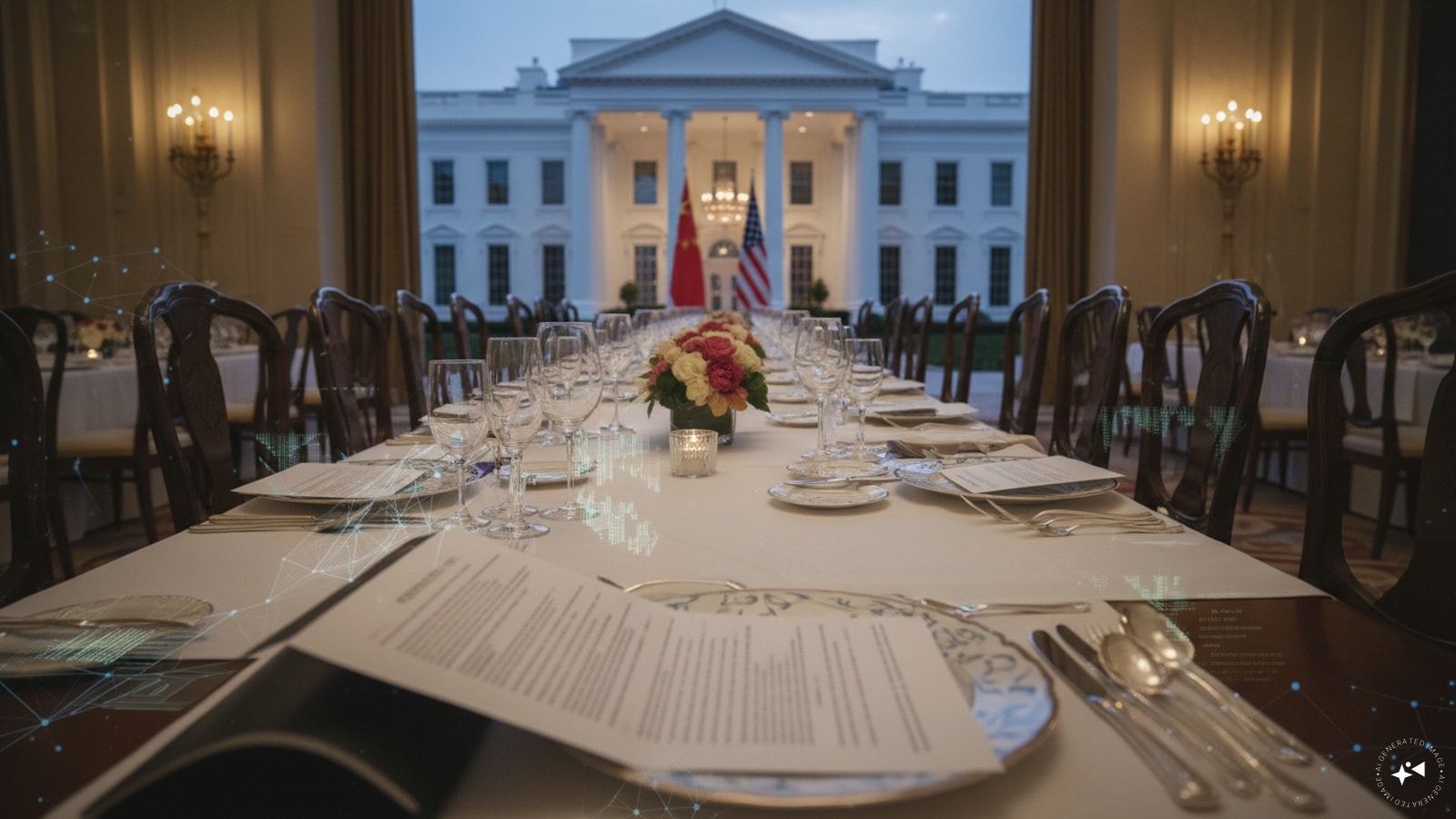
Power dinners in Washington rarely feature chief executive officers of competing technology behemoths sharing a table with foreign heads of state. Yet recent high-profile gatherings have brought figures like Apple chief Tim Cook and OpenAI leader Sam Altman into the same room as political heavyweights and international leaders, including discussions involving Chinese President Xi Jinping. This unusual mixing of corporate titans and geopolitical actors marks a major shift in how modern commerce operates. Tech leaders can no longer pretend they build software and hardware in a vacuum. Geopolitics is now their primary regulatory environment, product roadmap constraint, and existential threat.
The presence of these executives at diplomatic functions highlights a desperate scramble for stability. For years, Silicon Valley operated under the assumption that frictionless globalization would shield corporations from national borders. That illusion shattered permanently as supply chains fractured, export controls tightened, and data sovereignty laws multiplied. When leaders of artificial intelligence firms and consumer electronics giants sit down with policymakers from opposing superpowers, they are not attending social mixers. They are lobbying for survival, trying to decode policy shifts before quarterly earnings calls reflect them.
The Hardware Trap And The Supply Chain Reality
Consider the hardware side of this equation. Apple built its empire on an intricate, hyper-efficient manufacturing web anchored heavily in factories across China. That architecture made the company one of the most profitable enterprises in human history. It also created a massive vulnerability.
Diversification efforts toward India and Vietnam are progressing, but moving massive assembly lines takes years and billions of dollars. When trade restrictions fluctuate overnight, executives find themselves caught between two governments demanding absolute compliance. Sitting across from foreign leadership is the only way to gauge how hard the squeeze will get before manufacturing lines grind to a halt.
The Artificial Intelligence Arms Race
On the software side, the dynamics are even more volatile. Artificial intelligence development requires unprecedented amounts of computational power, advanced semiconductor chips, and capital. OpenAI and its competitors are racing to build foundational models that could reshape global economies.
However, chips are restricted. Export bans on advanced hardware designed to curb military applications have accidentally choked civilian research and development. Altman and other algorithmic architects must navigate export licensing regimes that change with political tides. A single stroke of a pen in Washington or Beijing can render a multi-billion-dollar data center plan obsolete.
Diplomacy has become a core competency for modern tech firms. Ten years ago, a startup or hardware giant hired lobbyists primarily to deal with copyright law or antitrust scrutiny. Today, corporate strategy meetings involve mapping out geopolitical flashpoints, trade tariffs, and national security directives.
The Illusion Of Neutrality
Tech executives spent decades promoting the myth that code and consumer gadgets transcend national boundaries. That narrative is dead. Every major breakthrough in artificial intelligence or consumer hardware is viewed through the lens of national security.
When foreign governments scrutinize data localization requirements, they are asserting control over the digital infrastructure that underpins global commerce. When domestic regulators investigate algorithmic bias or market dominance, they are also calculating whether local companies can compete globally against foreign rivals. Tech leaders attending these dinners are attempting to negotiate carve-outs, seeking reassurance that their enterprises will not become collateral damage in broader trade wars.
The stakes extend far beyond corporate boardrooms. Ordinary users rely on these platforms for communication, work, and daily navigation, yet the rules governing these tools are increasingly dictated behind closed doors by unelected executives and political operators. As the line between private enterprise and statecraft continues to blur, the future of the digital economy rests less on engineering brilliance and more on geopolitical appeasement.


