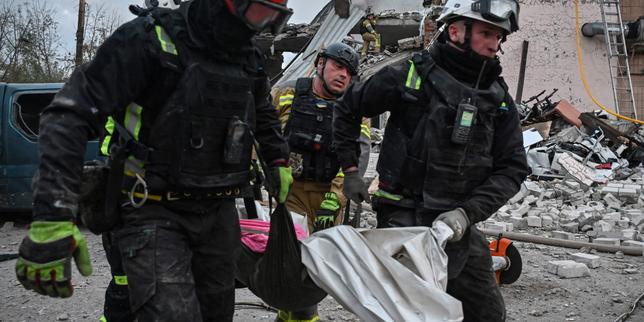
The air does not simply move in Kharkiv; it weights itself down with the iron smell of damp earth and old diesel, pressing against the lungs long before the first low whistle begins. There is a precise geometry to terror here. It lives in the seconds between the flash across the northern horizon and the concussive thump that rattles the double-paned glass of a Soviet-era kitchen, shaking the half-filled glass of tea on the oilcloth table.
Six lives ended in a Tuesday flash, compressed into the dry metadata of a morning report. Six distinct universes—the exact way an old man brewed his chicory coffee, the particular scuff on a schoolgirl's winter boot, the damp wool smell of a hallway coat rack—erased in the span of a ballistic arc.
To read a casualty list from a distance is to look at stars through a cracked lens. They appear as pinpricks of cold light, distant and untouchable. But ground level in Kharkiv is an exercise in gravity. The city is a sprawling organism of brick, concrete, and lime trees that has learned to hold its breath. When the air raid sirens finally shriek—that mechanical wail that has soundtracked a thousand nights—people do not run in cinematic panic. They move with the heavy, practiced exhaustion of factory shift workers. They descend into the subterranean damp of metro stations, clutching plastic bags with birth certificates and spare socks, carrying the quiet dignity of the abandoned.
Consider what happens when a residential block takes a direct hit. The physics are terrifyingly absolute. Concrete does not merely break; it shatters into a choking gray powder that coats eyelashes, tongues, and memories. Steel reinforcement bars twist into modern art pieces of pure agony.
In Saltivka, the northern district that hugs the frontline like a bruised shoulder, silence is never peaceful. It is pregnant. Every parked car with a blown-out rear window tells a story of an errand interrupted mid-thought. A loaf of bread rolling into the gutter. A glove left behind on a snowy curb. These are the details that formal bulletins omit. The bulletins deal in aggregates. Six dead. Dozens wounded. Infrastructure damaged. The numbers are clean, sterile, and entirely frictionless. They slide off the mind like water off oil.
Yet, behind each numeral stands an ordinary Tuesday morning that was supposed to resemble every other Tuesday. The baker who unlocked his metal shutters at dawn, hoping for flour that had doubled in price. The nurse walking her shift change through the slush, thinking only of sleep. The missile does not care about the mortgage, the love letters tied with string in the bottom drawer, or the upcoming birthday. It arrives with the blind, indifferent velocity of modern physics, turning a living room into an open-air grave in the time it takes to blink.
The resilience of Kharkiv is not a movie trope. It does not wear a cape. It wears muddy boots and thermal underwear under threadbare jeans. It is visible in the municipal workers who arrive with shovels and red-and-white tape before the smoke has even cleared, sweeping up shards of safety glass with brisk, mechanical efficiency. They do not weep on camera. They clear the road because the tram lines must run tomorrow, or the illusion of tomorrow must be maintained at all costs.
War in the twenty-first century is often discussed in the abstract language of macroeconomics, territorial integrity, and geopolitical leverage. We analyze supply chains and artillery shell production as if we were tracking commodities on a trading floor. But the true currency of this conflict is human breath. Every explosion spends it recklessly. Every ruined apartment block is a library of unwritten chapters.
When the dust finally settles over the crater in Kharkiv, and the sirens stutter into silence, the survivors step out into the gray light. They look at the sky not with defiance, but with the weary calculation of farmers assessing a frost. They check their phones. They call their mothers. They sweep the glass. And somewhere in the dark, the machinery of the night winds up for its next rotation.
The kettle on the stove is cold. The cup remains half-full. The silence that follows is heavier than any metal ever forged.