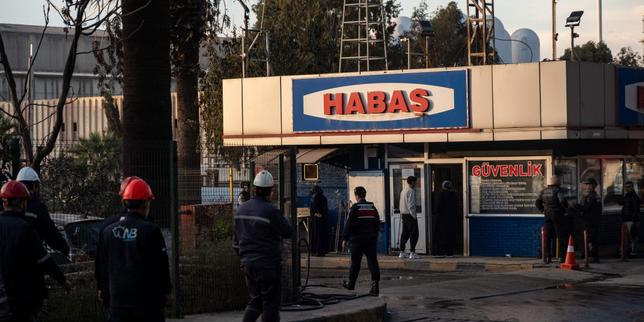
Turkish authorities have issued six arrest warrants in the immediate aftermath of a fatal factory explosion, a standard judicial reflex following major industrial accidents in the country. While prosecutors target plant managers and safety supervisors for immediate negligence, the blast exposes a far deeper structural problem within Turkey’s rapid manufacturing expansion. Weak regulatory enforcement, subcontracting chains, and chronic underinvestment in workplace safety turn preventable mechanical and chemical failures into recurring national tragedies.
The Anatomy of an Immediate Judicial Reflex
When a factory floor erupts in Turkey, the legal choreography rarely varies. Within twenty-four hours, local prosecutors secure arrest warrants for a handful of site-level personnel. Plant managers, shift supervisors, and contracted occupational safety specialists are detained, photographed in handcuffs, and paraded before television cameras as proof of swift state accountability.
It looks decisive. In reality, this rapid roundup often functions as a pressure valve designed to absorb public outrage before scrutiny reaches corporate boardrooms or state regulatory ministries.
Industrial explosions do not happen in a vacuum. Whether triggered by dust accumulation in a food processing plant, volatile solvent vapors in a chemical facility, or pressure vessel failures in heavy manufacturing, catastrophic blasts are almost always the final link in a long chain of deferred maintenance and ignored warnings. Arresting a shift supervisor addresses the symptom on the floor while leaving the financial incentives that created the hazard completely untouched.
The Scapegoat Mechanism in Workplace Safety
Under Turkish labor and occupational health laws, employers are legally required to hire certified safety specialists. On paper, the framework aligns closely with European Union standards. In practice, a massive conflict of interest undermines the entire system.
Safety specialists are paid directly by the factory owners they are supposed to police. If an inspector flags a critical ventilation failure or demands a costly shutdown to repair an overheating boiler, their contract can be terminated the next morning. Faced with losing their livelihood or signing off on a compromised facility, many sign the paperwork. When the inevitable disaster strikes, those very signatures become the primary evidence prosecutors use to lock them up.
Why Industrial Explosions Keep Happening in Turkey
Turkey has spent the last two decades positioning itself as Europe’s near-shoring manufacturing powerhouse. Textile mills, automotive parts suppliers, chemical plants, and metallurgy workshops have proliferated across industrial zones from Marmara to Anatolia. Growth has been relentless. Regulatory oversight has not kept pace.
To understand why these blasts recur with grim regularity, you have to look at the economics of mid-tier manufacturing. Operating margins in competitive export sectors are razor-thin. Factory owners face soaring energy costs, currency volatility, and aggressive pricing demands from international buyers. Workplace safety is treated as an overhead expense to be minimized rather than an operational necessity.
Consider a hypothetical scenario common across mid-sized chemical or packaging plants. A facility expands production by adding a third shift to meet an export deadline. The existing dust extraction and ventilation systems were calibrated for two shifts, leaving no downtime for filter cleaning or maintenance. Flammable particulates accumulate on overhead beams and inside electrical conduits. A single static spark or overheated motor bearing is all it takes to turn the building into a fuel-air bomb. Nobody intended for the building to explode, yet every financial decision made over the preceding six months guaranteed the outcome.
The Subcontracting Shield
Modern industrial supply chains rely heavily on layers of subcontracting to diffuse legal and financial liability. Major domestic conglomerates and international brands rarely own the factories where the most dangerous work occurs. Instead, they contract production out to smaller, undercapitalized operators operating in sprawling organized industrial zones.
When an explosion kills workers at a tier-two or tier-three supplier, the parent corporations express shock, offer condolences, and quietly shift their orders to another facility down the road. The legal firewall holds. Prosecutors focus on the immediate license holder—often a shell company with minimal assets—while the broader economic ecosystem that demanded impossible turnaround times at rock-bottom prices escapes examination.
Technical Failures Behind Factory Blasts
Industrial explosions generally fall into three technical categories, each entirely preventable through standard engineering controls that are routinely bypassed to save money.
- Combustible Dust Explosions: Flour, sugar, aluminum, wood, and plastics appear harmless in bulk. When pulverized into fine dust and suspended in the air within an enclosed space, they become violently explosive. Preventing this requires continuous industrial vacuuming, spark-detection systems, and explosion-relief venting—equipment that costs tens of thousands of dollars and requires halting production to maintain.
- Vapor Cloud Ignitions: Solvents, paints, adhesives, and fuels release heavier-than-air vapors that pool along factory floors. Standard electrical switches, non-rated forklifts, or a worker’s static-charged clothing can ignite the cloud. Proper mitigation demands ATEX-certified explosion-proof electrical hardware and high-volume air exchange systems.
- Pressure Vessel and Boiler Ruptures: Steam boilers and pressurized chemical reactors operate under extreme stress. Without regular ultrasonic thickness testing, functional pressure-relief valves, and certified operators, metal fatigue turns these vessels into shrapnel bombs capable of leveling reinforced concrete structures.
In almost every major Turkish industrial investigation over the past decade, forensic engineers have found that basic safety interlocks were deliberately bypassed. Pressure valves are welded shut because they leak. Ventilation fans are switched off during winter months to save on heating bills. Fire exits are padlocked from the outside to prevent inventory theft.
The Illusion of Regulatory Inspections
The Ministry of Labor and Social Security employs thousands of inspectors tasked with auditing workplaces across the country. Mathematically, the numbers do not work. There are millions of registered workplaces in Turkey, ranging from tiny workshops to massive petrochemical complexes. A factory can operate for years without ever seeing a state labor inspector.
When inspections do occur, they are frequently announced in advance or focus heavily on administrative paperwork rather than physical engineering audits. A factory can pass an inspection with flying colors if its binders are full of signed training logs and risk assessments, even while raw chemical drums sit ungrounded next to active welding stations.
Even when inspectors identify severe violations and issue fines, the financial penalties are often cheaper than the cost of fixing the hazard. A factory owner hit with a fine for inadequate ventilation can pay the penalty, absorb it as a minor cost of doing business, and keep the assembly line running. Until criminal liability and massive financial penalties reach the actual beneficiaries of corporate cost-cutting, the math will continue to favor negligence.
Labor Unions and the Erosion of Collective Pushback
Historically, the most effective frontline defense against dangerous working conditions has never been government inspectors; it has been organized labor. Workers on the floor are the first to smell a gas leak, notice a vibrating turbine, or realize that an emergency exit has been blocked with pallets.
In a healthy industrial environment, workers have the collective power to halt production until a hazard is fixed without fear of retaliation. Across much of Turkey’s private manufacturing sector, unionization rates remain severely depressed. Workers who raise safety concerns are routinely dismissed, blacklisted within local industrial zones, or replaced by desperate, informal laborers—including refugees and undocumented migrants—who have zero legal recourse and cannot afford to refuse hazardous assignments.
Silencing the shop floor removes the final early-warning system before a catastrophic failure. When workers are too afraid of losing their jobs to report a malfunctioning pressure gauge, the factory operates blind until the metal gives way.
What Genuine Accountability Would Actually Require
Issuing six arrest warrants makes for a strong evening news headline, yet the families of dead workers know how these cases usually end. Trials drag on for years. Mid-level managers serve brief pre-trial detentions before being released on bail. Expert witness reports contradict one another, shifting blame between equipment manufacturers, municipal zoning boards, and dead workers who supposedly violated safety protocols. Final sentences are routinely reduced for good behavior or converted into modest fines.
Breaking this cycle requires dismantling the structural incentives that make negligence profitable.
First, occupational safety specialists must be paid through an independent state-administered fund financed by employer taxes, severing the direct financial leash between factory owners and the inspectors tasked with policing them. An inspector cannot protect workers if the person violating the law signs their paycheck.
Second, corporate criminal liability must pierce the veil of subcontracting. If a major conglomerate or international brand sources products from a facility that lacks basic explosion-proofing or relies on locked emergency exits, legal and financial liability must travel up the supply chain. When procurement departments face criminal negligence charges alongside factory owners, compliance audits stop being a box-ticking exercise overnight.
Third, whistleblower protections must be backed by immediate, enforceable legal guarantees that allow any worker to trigger a surprise state engineering inspection without risking termination.
Until Turkish prosecutors stop looking exclusively at the bottom of the organizational chart for someone to handcuff, the six arrest warrants issued today will merely serve as a prelude to the next inevitable explosion.