Duct tape.
That is what saved the cardboard Darth Vader helmet in the back of my station wagon in October 2004, though nothing saved the shoes. I still remember the exact squelch of soaked canvas against wet asphalt as my eight-year-old self stood beneath a broken awning in Pasadena, watching a sheet of cold Pacific rain erase six weeks of painstaking paper-mâché work in under four minutes. Around me, dozens of neighborhood kids stood frozen in soggy capes and melting face paint, staring up at a black sky that had promised seventy-two degrees and a gentle breeze just forty-eight hours earlier.
In Southern California, we do not plan for rain. We treat weather the way most people treat lottery tickets—as an abstract statistical curiosity that happens to other people in places with basements and mudrooms. Between May and late October, the Los Angeles basin operates under an unspoken civic contract: the sun will shine, the marine layer will burn off by ten in the morning, and the dry creek beds cutting through our neighborhoods will remain dusty skateparks for stray shopping carts and dry eucalyptus leaves.
Then comes the final week of October.
Right now, meteorologists at the National Weather Service offices in Oxnard and San Diego are watching a familiar, unsettling signature take shape over the eastern Pacific. A cold low-pressure trough, detached from the main polar jet stream and sliding south along the California coast, is pulling subtropical moisture toward the Transverse Ranges just in time for Halloween night. On standard forecast maps, the numbers look deceptively polite. Quarter-inch totals along the coastal plain. Half an inch to an inch tucked against the south-facing slopes of the San Gabriel and San Bernardino mountains. Temperatures dropping into the low fifties after sunset, accompanied by gusty onshore winds pushing twenty-five to thirty-five miles per hour through the mountain passes.
To someone living in Seattle or Chicago, an inch of rain is Tuesday. To a region of twenty-four million people whose infrastructure, driving habits, and collective psychology are engineered for perpetual drought, an early-season Halloween storm is an ambush.
The Anatomy of a Dry-Ground Ambush
Consider what happens when water hits a surface that has been baked hard by six months of relentless ultraviolet light.
To understand why Southern California unravels during its first autumn storm, imagine pouring a glass of water onto a brand-new, bone-dry kitchen sponge. For the first few seconds, the water does not soak in; it beads up, skates across the rigid surface, and spills straight over the edge onto the counter. Only after the fibers soften does absorption begin.
Our hillsides, storm drains, and freeways behave the exact same way. From May through October, millions of vehicles deposit a microscopic, invisible film of motor oil, brake dust, tire rubber, and coolant onto the asphalt of the I-405, the I-5, and the 101. Because there is no summer rain to wash these highways clean, that petroleum residue accumulates like seasoning on a cast-iron skillet. When the first light drizzle of late October touches the pavement, it does not wash the oil away. Instead, it emulsifies it into a slick, nearly frictionless sheen that turns routine braking distances into ice-rink physics.
According to historical data compiled by the California Highway Patrol, traffic collisions across Los Angeles and Orange counties routinely spike by two hundred to three hundred percent during the first measurable rainfall of the autumn season. Not during the catastrophic January atmospheric rivers that make national cable news, when drivers stay home and sandbags line the driveways, but during the modest, deceptive half-inch storms of late October and early November.
People crash because their muscle memory is calibrated for July. They follow at two car lengths at seventy miles per hour, unaware that the dry pavement they trusted at four in the afternoon has become an oil-slicked hazard by the time trick-or-treaters step onto the curb at six-thirty.
The Invisible Stakes on Maple Avenue
Let us step away from the satellite loops and look at what this storm actually means at eye level. Picture a hypothetical family—call them Elena and Marcus—living in a 1950s ranch house in Altadena, tucked three blocks south of the San Gabriel foothills.
Their seven-year-old daughter, Maya, has spent three weeks obsessed with being a glowing jellyfish, a costume engineered from a clear bubble umbrella, battery-powered fairy lights, and six yards of iridescent tulle. For weeks, Elena’s primary Halloween concern was whether the evening would be too warm for a long-sleeved shirt underneath the tulle. She bought pumpkins in mid-October that have been sitting on the front porch steps in eighty-degree heat. She did not check the gutters along the roofline, which are currently choked with dry coast live oak leaves and pine needles dropped during the last Santa Ana wind event.
At five-thirty in the evening on Halloween, the marine layer does not merely roll in; it collapses. The barometric pressure drops, dragging chilly, damp air down from the foothills. Within twenty minutes, the temperature falls twelve degrees.
Here is the chain reaction that unfolds on Elena and Marcus’s block, and across thousands of blocks from Ventura to San Clemente:
First comes the wind. Before a single drop of rain reaches the pavement, gusts channel through the canyons, rattling the dry palm fronds and sending loose patio umbrellas cartwheeling across lawns. That clear bubble umbrella Maya is holding—designed as a cute costume prop rather than actual weather gear—catches a twenty-eight-mile-per-hour gust like a spinnaker sail, yanking her wrist before Marcus catches her shoulder.
Second comes the gutter overflow. Because those oak leaves were never cleared after the dry summer, the first quarter-inch of rain has nowhere to go. Instead of flowing down the downspouts and out to the street, water backs up under the eaves, pouring in cold sheets directly onto the front porch steps where neighborhood kids are climbing up to ring the doorbell. Wet pumpkin pulp, softened by two weeks of warm sun, smears across the concrete like grease.
Third—and most dangerous—comes the convergence of low visibility and distracted traffic. Halloween night already statistically ranks among the deadliest nights of the year for child pedestrians nationwide, with federal transportation studies consistently showing a sharp jump in pedestrian fatalities between five and nine in the evening. Add water-streaked windshields, worn wiper blades that have sat baking in the California sun since March, and streetlamps reflecting off wet asphalt, and a residential street becomes a maze of blind spots. A driver squinting through smeared glass while searching for house numbers cannot see a child in a dark costume darting between parked cars until the bumper is ten feet away.
I have stood on those exact residential corners with a flashlight and a soaked paper grocery bag, squinting through rain-blurred glasses at headlights glaring off wet streets. The sensory shift is disorienting. Southern California is built for crisp edges and hard shadows; when rain arrives at dusk, the entire landscape dissolves into neon smear and static noise.
Burn Scars, Storm Drains, and the Memory of Mud
Yet the most serious vulnerability of an early-season storm has nothing to do with ruined costumes or fender-benders on the freeway. It lies up in the dark silhouettes of the mountains watching over the basin.
Southern California’s geography is an ecological machine built on fire and water. When late-summer or early-autumn wildfires strip the chaparral from steep canyon walls—whether in the Santa Monica Mountains, the San Gabriels, or the Santa Ana range—the intense heat does more than incinerate brush. It vaporizes waxy organic compounds in the soil, which then sink a few inches below the surface and cool into a water-repellent crust. Geologists call this hydrophobic soil. In plain terms, the hillside becomes wrapped in plastic wrap.
When a cold October trough sweeps inland and encounters those coastal mountains, the terrain forces the moist air upward—a process meteorologists call orographic lift. Even if coastal neighborhoods from Santa Monica to Long Beach see only brief, scattered showers, the mountains act like a wrung-out towel, squeezing twice or three times as much rain onto the upper canyons.
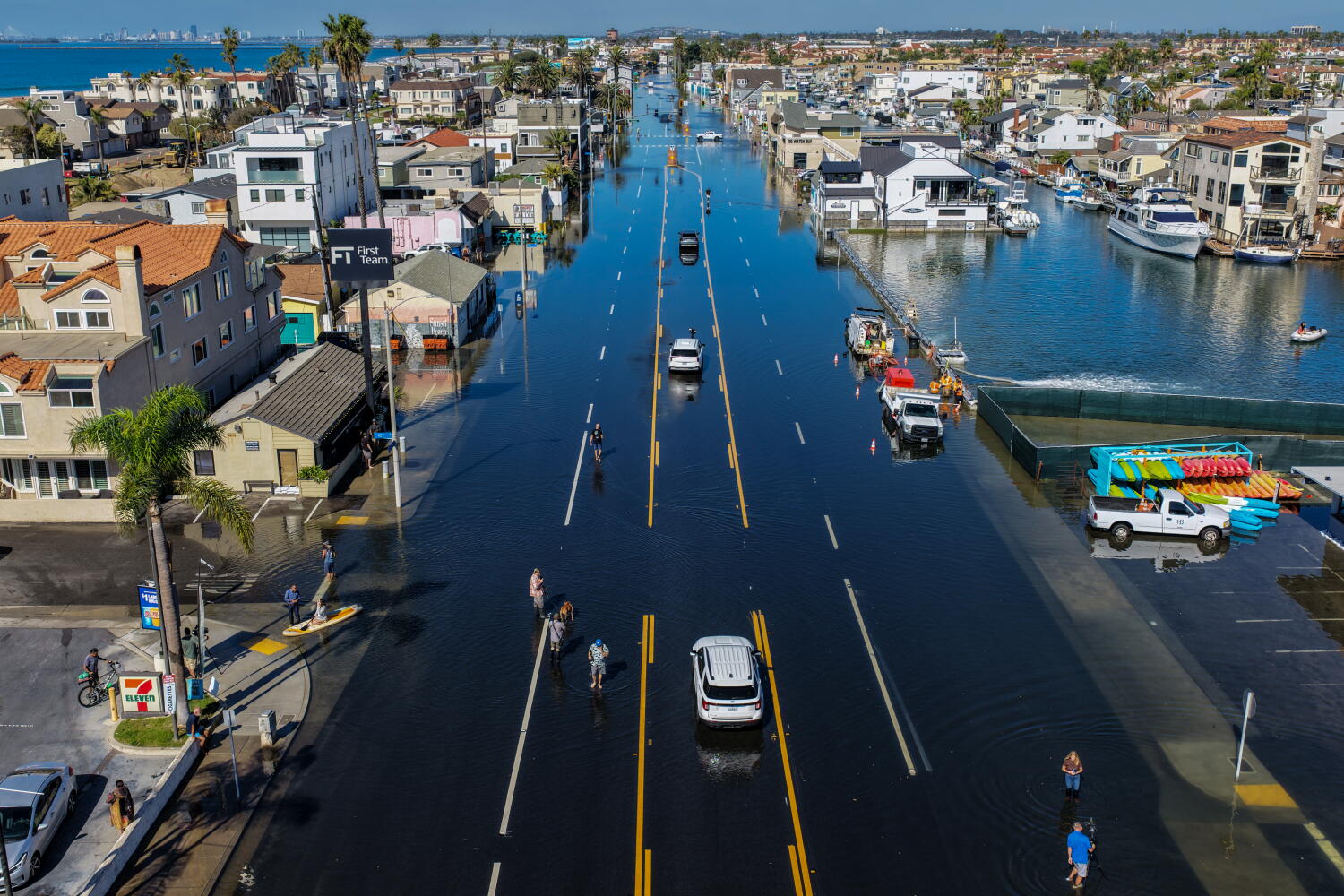
Because hydrophobic soil cannot absorb that sudden pulse of water, the rain sheets straight down the steep slopes, picking up ash, gravel, and boulders along the way. Even a modest half-inch-per-hour rainfall rate over a fresh burn scar can trigger localized debris flows and mudslides across canyon roads like Topanga, Malibu Canyon, or Highway 39. Meanwhile, down in the flatlands, municipal storm drains clogged with six months of dry-season litter, palm fronds, and fast-food wrappers back up within minutes, turning routine intersections in Burbank, Downtown Los Angeles, and Santa Ana into axle-deep ponds.
Meteorologists often struggle to communicate this nuance because the public hears "light to moderate rain" and assumes uniform safety. Weather does not distribute itself evenly across a basin ringed by ten-thousand-foot peaks. One neighborhood stays dry enough to light sparklers on the sidewalk while four miles north, a canyon road is buried under six inches of mud and wet ash.
Why We Always Wait Until the First Drop Falls
There is a fascinating psychological blind spot at work every time a late-October storm approaches the Southland. Behavioral economists call it normalcy bias—the tendency of the human brain to assume that because things have been a certain way for a long time, they will continue to be that way tomorrow.
After one hundred and eighty consecutive days of blue sky, the human brain simply stops allocating mental bandwidth to weather preparation. Nobody in Los Angeles checks the rubber on their windshield wipers in August. Nobody tests the defroster in September. Nobody wonders whether the drainage grate at the end of their cul-de-sac is buried under three inches of compressed jacaranda blossoms.
I am no different. Three autumns ago, despite knowing better, I walked out to my car during the first October squall only to discover that the rubber strip on my driver-side wiper blade had dry-rotted in the July heat and detached entirely, leaving a bare metal arm scraping a frantic arc across my windshield in heavy traffic. You feel foolish in that moment, sitting in a warm cabin while nature reminds you that geography does not care about your calendar.
If you live anywhere between Point Conception and the Mexican border, the window between forecast and landfall is the only margin you get. Preparing for an early-season storm does not require panic or hoarding bottled water, just a deliberate thirty-minute break from our perpetual-summer autopilot before the clouds cross the coastline.
Start with the machine you will inevitably drive. Lift your windshield wipers off the glass and run a finger along the rubber edge; if it feels brittle, cracked, or leaves black powder on your skin, replace it before the rush hits the auto parts store on Halloween afternoon. Check your tire tread depth—bald tires that handle dry concrete effortlessly will hydroplane across the first oily puddles on the freeway.
Then walk the perimeter of where you live. Pull the dry leaves out of the porch drain and sweep the curb grate in front of your house so water has an exit route. Bring the porch cushions, lightweight Halloween inflatables, and potted plants tucked near railings inside before the pre-frontal winds start gusting down from the canyons.
And if you are taking kids out into the dark on October thirty-first, trade the aesthetic purity of the costume for visibility and warmth. Layer thermal shirts underneath thin fabrics, swap slick plastic dress shoes for sneakers with actual rubber tread, and attach reflective tape or glow sticks not just to the candy bucket, but to the back of jackets and umbrellas where headlights actually strike.
The Night the Coastline Changes
By midnight on Halloween, the trough will begin pushing east toward the high desert, leaving behind scrubbed, crystalline air and snow dustings above seven thousand feet on Mount Baldy and San Gorgonio. The next morning, Southern California will wake up to the sharpest, cleanest light of the entire year—the San Gabriel Mountains standing out against a cobalt sky so vivid it looks painted onto the horizon.
The dry season will be officially broken. The dust will be washed off the palms, the reservoir levels will tick upward by a fraction of a percent, and the long, slow turn toward winter will have begun.
Yet between sunset and midnight, before that clear morning arrives, millions of people will step out their front doors into a sudden, cold downpour they never quite believed was coming. Somewhere on a quiet suburban street, a seven-year-old in a damp superhero cape will stand beneath a flickering porch light, watching fat raindrops explode against the pavement and turn a chalk hopscotch grid into rivers of pastel mud—learning, the same way every Southern Californian eventually learns, that when the Pacific finally decides to speak, it never waits for the party to end.