The coffee in the paper cup had gone lukewarm twenty minutes ago. Outside the terminal window, the tarmac of Chișinău International Airport stretched out wet and gray, reflecting the stubborn drizzle that seemed intent on dampening every square inch of Eastern Europe this morning.
Airports are peculiar places. They are designed for transitions, for the mundane rituals of boarding passes, belt removal, and overhead compartment Tetris. Yet, beneath that veneer of routine efficiency, every departure is a quiet gamble with gravity and fate. On this particular day, the gamble carried stakes that could rewrite the map of a continent.
Consider what happens next: a routine diplomatic exit transforms into a hair-breadth brush with catastrophe.
Norwegian Prime Minister Jonas Gahr Støre knows what it is like to navigate rooms charged with geopolitical electricity. He has spent decades parsing the cautious language of diplomats, weighing the subtle shifts in posture that signal a border crossing or an escalation. But diplomatic immunity does not extend to the stratosphere. It does not deflect uninvited ordnance cutting through cloud cover at hundreds of miles per hour.
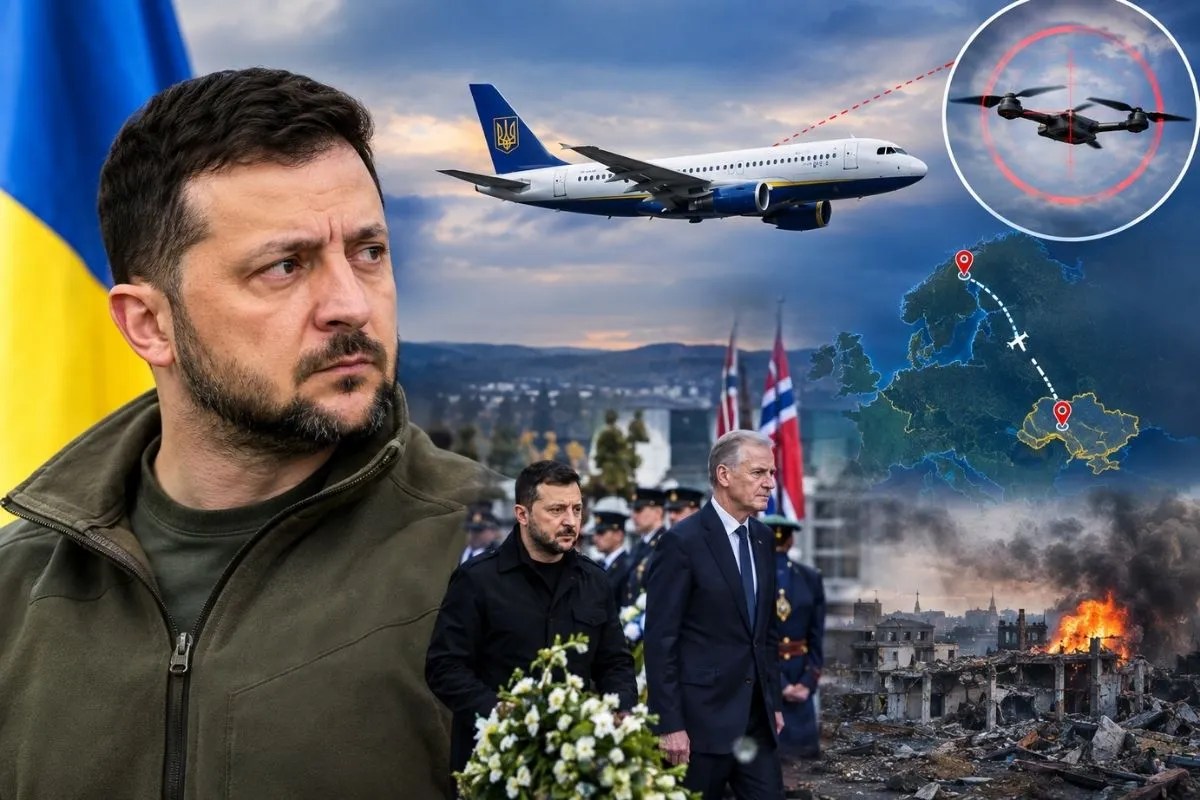
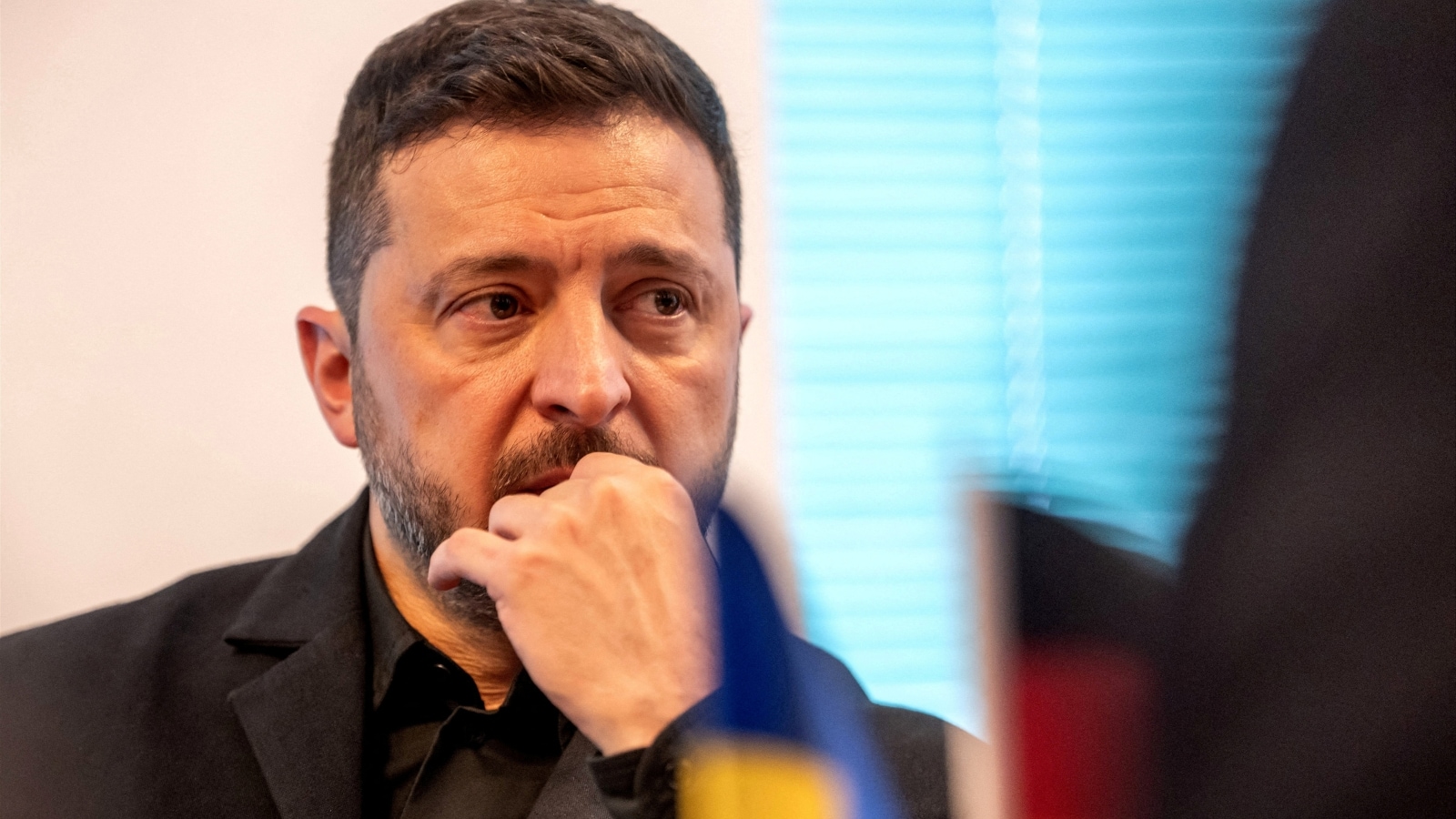
According to reports that surfaced in the wake of the visit, a drone—cold, silent, and indifferent to the fragile architecture of international peace—nearly collided with the aircraft carrying Ukrainian President Volodymyr Zelenskiy as it departed Moldovan airspace.
Think about the margins. Aviation is measured in milliseconds. At cruising speed, a commercial or VIP transport covers ground so fast that a deviation of ten feet, a hesitation of half a second, turns a flight path into a smoking crater. The drone did not need to announce its intentions. It simply occupied the same patch of sky, the same brutal intersection of probability, that a head of state was scheduled to pass through.
Space is vast, but the narrow corridors carved out for diplomatic transit in contested skies are remarkably crowded with invisible danger.
To understand the weight of that near-miss, you have to look beyond the dry terminology of aviation authorities and security briefings. You have to look at the ground. Moldovan airspace has been a nervous frontier since the conflict spilled over the horizon in early 2022. It is a thin slice of sovereignty sandwiched between Ukraine and the wider tensions rippling through the Black Sea basin. Every time a civilian or governmental aircraft lifts off from Chișinău, it does so beneath a ceiling of radar sweeps and intercepted signals.
The pilots flying these missions do not talk about heroism. They talk about crosswinds, instrument landings, and clearance altitudes. But behind their quiet professionalism lies an acute awareness that the airspace they navigate is governed by rules that are rewriting themselves in real-time.
When Støre recounted the incident, he did so with the sober detachment of a statesman, yet the underlying reality was staggering. A stray piece of autonomous technology, or a targeted vector of surveillance turned weapon, came within shouting distance of altering the political trajectory of democratic Europe.
We have grown numb to the vocabulary of war. We hear terms like "airspace violation," "intercept vector," and "unidentified aerial vehicle" so often that they blur into the background noise of the evening news, rendered as harmless as a weather forecast.
That numbness is a defense mechanism. If we truly processed the fragility of the systems keeping the world from total fracture, we wouldn't be able to pour our morning coffee. We wouldn't step onto a plane. We wouldn't send leaders to meet in frontline capitals like Kyiv or Chișinău, shaking hands in subterranean bunkers before racing back to the airstrips.
Yet they go anyway. And the planes take off.
The drone did not strike. The headlines registered the event, provoked a momentary surge of anxiety in diplomatic circles across Oslo, Brussels, and Kyiv, and then the news cycle ground forward to the next crisis. That is the rhythm of our era. Catastrophe narrowly averted is treated not as a miracle, but as a non-event.
We measure safety by the absence of wreckage. If the fuselage remains intact, if the landing gear deploys on schedule at the destination, we assume the system worked. We ignore the terrifying physics of the inches that separated survival from disaster.
The rain continued to fall on the Moldovan runway long after the engines had spooled down and the airspace had cleared. Somewhere overhead, the invisible architecture of the sky reset itself, waiting for the next departure, the next high-stakes gamble, the next quiet moment where the entire world holds its breath and prays for a clear horizon.