Smoke does not smell like wood when it comes for a town. It smells like old plastic, melted rubber, and the final breath of a forest that has stood for centuries.
Ask anyone who has stood on a ridge in Spain this summer and watched the horizon turn the color of a bruised plum. They will tell you about the silence first. Not a peaceful silence, but the eerie hush that falls right before nature tears itself apart. The birds vanish. The wind stops its normal rhythm and begins to roar, driven by its own terrible hunger. You might also find this related story insightful: Why Emergency Relief Is Actually Destroying Disaster Zones.
Ten thousand people know that sound now.
They left behind coffee cups still warm on kitchen counters. They left framed photographs of weddings and children’s first steps, trusting that the thick wooden doors of their ancestral homes would somehow hold back an enemy made of pure heat. They drove down narrow mountain roads choked with ash, headlights cutting through a daytime midnight, bumper to bumper with neighbors they had argued with over property lines just a week ago. As discussed in recent reports by Reuters, the effects are significant.
Emergency declarations look neat on news tickers. They are printed in bold fonts across government memos and broadcasted by anchors in air-conditioned studios miles away. But on the ground, an emergency is a wet towel pressed against a child's mouth. It is the frantic barking of abandoned dogs. It is the sudden, terrifying realization that the asphalt beneath your tires can get hot enough to blister.
Spain declared that emergency. The fires crossed from abstract weather reports into the living rooms of the Mediterranean, leaping over firebreaks designed by men who underestimated the sheer velocity of modern drought.
Listen.
That is the sound of pine needles exploding like microscopic hand grenades.
For months, the soil had turned to powder. Every creek bed was a dry scar across the landscape. The heat did not just arrive; it settled in like an uninvited guest who refuses to leave, baking the hills until the very air felt brittle. When the first spark caught, it did not need permission. It had millions of tons of kindling waiting for a match.
Fire is not just a chemical reaction. It is a consumer. It eats distance.
Consider what happens when ten thousand lives are unspooled in a single afternoon. Entire villages evacuated. Shelters set up overnight in school gymnasiums, where cots rattle against linoleum floors and strangers share bottled water with shaking hands. An elderly couple sits side by side on a metal folding chair, staring blankly at a television screen showing aerial views of the very valley they just fled. They have lived through economic crises, political shifts, and the slow erosion of rural life. None of it prepared them for the speed of a wall of flames moving faster than a galloping horse.
We built our world assuming the boundaries between the wild and the domestic were permanent. We paved roads, strung power lines, and planted gardens, convinced that human ingenuity had tamed the earth. We drew lines on maps and called them borders, property, safety.
The fire does not care about your deeds of ownership.
It sweeps across centuries of history in seconds, turning stone walls to soot and ancient olive groves into smoking matchsticks. The economic cost will be calculated later, neatly tabulated in millions of euros, destroyed livestock, and ruined tourism seasons. Bureaucrats will sign forms. Insurers will send adjusters with clipboards.
That is not what lingers.
What lingers is the smell of ash on a shirt that won't wash clean. What lingers is the look in a firefighter's eyes as he leans against the side of a charred truck, his face streaked with black grime, drinking water straight from a plastic jug like a man who has crawled out of a desert.
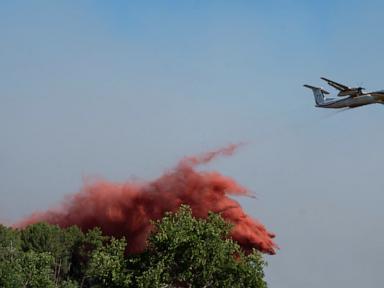
They held the line where they could. They dropped water from the bellies of lumbering aircraft until the tanks ran dry and the pilots had to land, exhausted, hands trembling on the controls. They cut trenches with hand tools while the wind shifted unpredictably, turning back drafts into traps.
And still, the people ran.
Because bravery is not just standing your ground. Sometimes, bravery is letting go of everything you own to save the only thing that cannot be replaced.
The emergency declaration will eventually be lifted. The smoke will clear, revealing a landscape stripped down to its bare, blackened bones. The headlines will fade as the news cycle chases the next catastrophe across the globe.
Yet on those scorched hillsides, long after the television crews have packed their cameras and driven away, the earth will remember. And so will the ten thousand who looked up, saw the sky turn the color of blood, and realized that the world they knew had just burned away.