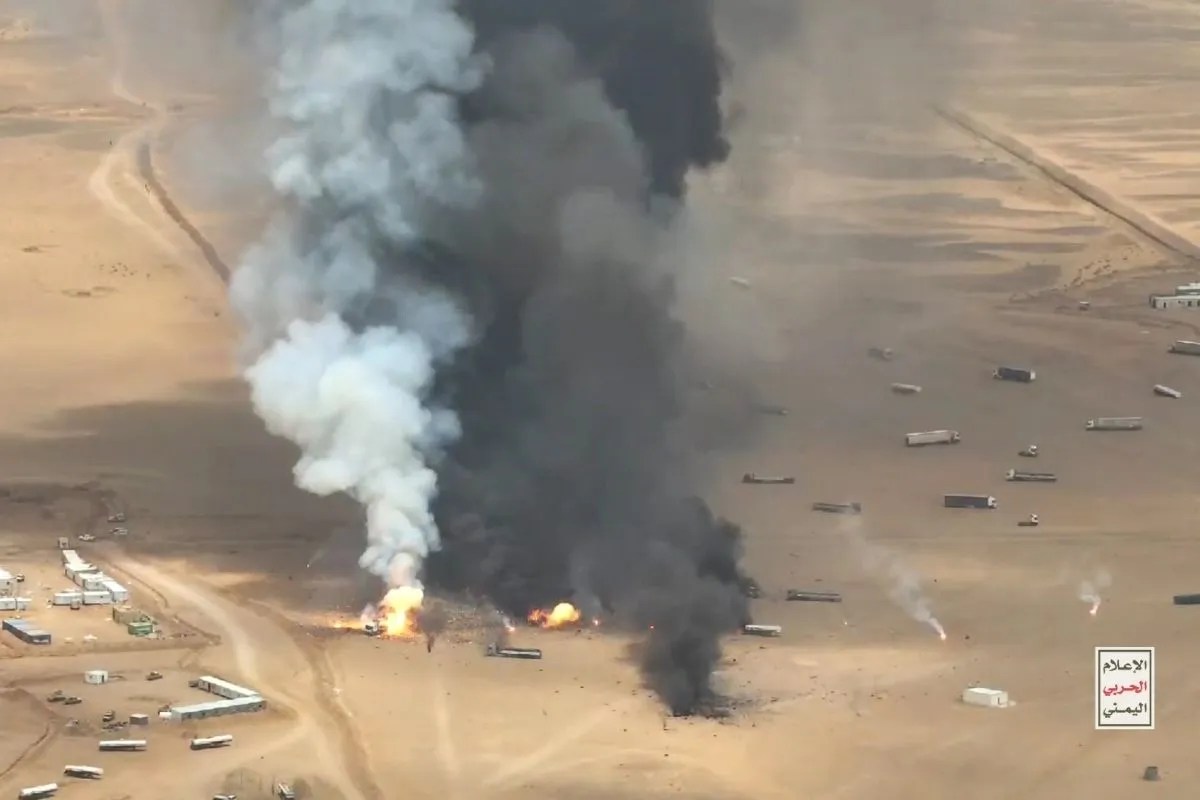
Smoke.
That is the first thing anyone notices when a piece of modern life turns hostile—not the roaring orange wall from a movie screen, nor the dramatic sirens blaring two blocks away, but a thin, gray ribbon rising from somewhere you thought was harmless. A white dish on a bracket. A cable snaking through a window frame. A quiet promise of connection drawn down from hundreds of miles above the curvature of the Earth.
Fire.
And suddenly, a localized spark in a Bulgarian town carries the weight of cross-border warrants, two German nationals in the frame, and a court ruling that turns a technical failure into a criminal reckoning.
I have stood beside charred plastic and melted aluminum after a small electrical fire in a residential building, breathing in that sharp, sweet-acrid sting of overheated insulation and lithium cells. You expect flames to come from a forgotten stove or a frayed space heater. You do not expect them to rise from an object that looks like an upturned saucer meant to whisper with satellites. When something unexpected catches fire, the shock isn't only in the heat. It's in the realization that the invisible infrastructure holding our routines together has teeth.
Let's be clear about where we stand. The competitor headline points to a concrete, high-stakes event: a Bulgarian court approving an arrest warrant for two German citizens in connection with a Starlink fire. Because the competitor summary gives us the headline rather than a full dossier of courtroom transcripts, specific dates, or investigative findings, certain finer details—such as the exact municipal location in Bulgaria, the precise chain of custody of the equipment, or the specific criminal statute cited—remain unverified from that bare reference alone. Rather than guessing at facts not in evidence, we will examine what a warrant of this kind signifies, how satellite hardware interacts with real-world environments, and why a court in one country pursuing suspects from another exposes a fault line in how we live with connected technology.
To see how a dish on a wall becomes a legal storm, consider a hypothetical scenario. Picture a two-story house along a quiet street in a provincial Bulgarian town—let's call the homeowner Petar, a fictional stand-in for anyone trying to get reliable high-speed internet where legacy cables fall short. Fiber optic lines take years to reach certain pockets; copper degrades; mobile towers congest when a town fills up in summer. A compact satellite terminal looks like a shortcut out of digital isolation. You mount it, plug it in, point it at the open sky, and watch packets fly across orbital relays.
Now imagine two German technicians or installers—again, a hypothetical reconstruction to illustrate the roles involved—who either brought the hardware across borders, set it up, or supplied/modified gear tied to the installation. One evening, heat builds where it shouldn't. Maybe a power supply faults, maybe a connection arcs, maybe moisture or a botched modification turns resistance into thermal runaway. Flames lick dry siding or timber. Neighbors smell smoke before they see light. A fire truck arrives, hoses hiss, and when the soot settles, investigators aren't just looking at a damaged wall. They are looking at an origin point linked to a satellite internet system and two foreign nationals who are now the subject of a judicial arrest warrant.
That shift—from "something caught fire" to "a court approved an arrest warrant for two Germans"—is where ordinary news turns unsettling.
Why a Local Flame Becomes a Cross-Border Case
Courts do not approve arrest warrants lightly, especially when the people named are citizens of another European Union member state. Across the EU, judicial cooperation relies on instruments like the European Arrest Warrant, built on mutual trust between legal systems so suspects cannot simply cross a border and treat national lines as shields. Yet even within a shared legal neighborhood, executing a warrant across countries involves scrutiny, translation, evidentiary thresholds, and questions of jurisdiction.
If a Bulgarian court signed off on an arrest warrant over a Starlink fire involving two Germans, investigators had to convince a judge of probable cause—a link between the incident, potential criminal negligence or endangerment, and the actions or omissions of those two individuals.
Why would two Germans be tied to a fire in Bulgaria? There are several plausible explanations, none of which can be confirmed without official court filings, yet each points to a real phenomenon in modern connectivity.
One possibility is unauthorized cross-border movement or unofficial resale of hardware. Satellite terminals are engineered with regional rules, licensing frameworks, and hardware tolerances in mind. When equipment is carried across countries, re-routed, or used outside standard configurations, accountability blurs. Who installed the power brick? Was an aftermarket adapter used to step down or step up voltage? Did someone bypass a safeguard?
Another possibility is improper installation or servicing. A satellite dish isn't a plush toy; it contains powered electronics, motors or phased-array components, and cabling exposed to weather. If someone mounts a unit poorly, routes high-draw cables near combustible material, or tinkers with components without proper certification, a minor electrical fault can escalate fast.
A third possibility involves broader commercial or logistical activity—perhaps equipment distribution, testing, or technical work gone wrong—where the fire wasn't merely an isolated household mishap, but part of an operation that put people or property at risk.
What if the fire was a freak manufacturing defect rather than human error? That question haunts every modern consumer. When a device fails on its own, blame usually points toward the manufacturer, quality control, or regulatory compliance. When an arrest warrant targets individuals instead of a corporate press release, prosecutors are generally arguing that human choices—carelessness, rule-breaking, or disregard for safety—crossed the line from bad luck into legal culpability.
The Invisible Stakes of Orbital Internet
Here is a metaphor to make sense of what satellite connectivity actually does: think of a satellite terminal as a tiny lighthouse perched on your roof, blinking in coded bursts to a moving fleet of lanterns hundreds of kilometers overhead. A lighthouse doesn't carry cargo ships on its beams, yet without it, vessels drift blindly in the dark. Satellite broadband works the same way for data. Instead of trenching miles of fiber through rocky hills or across rural valleys, signals leap to low-Earth-orbit satellites and bounce back down, bringing fast internet to places ground infrastructure hasn't reached.
For rural residents, remote workers, emergency responders, and small businesses in countries like Bulgaria, that capability can feel transformative. When a town has spotty broadband, a reliable connection isn't a luxury gadget. It is how a kid finishes schoolwork, how a small shop processes card payments, how a family video-calls relatives abroad.
Yet convenience has a shadow side that rarely shows up on a glossy spec sheet. Every watt of electricity flowing through a circuit carries potential energy. Under normal conditions, fuses trip, circuits regulate current, and enclosures contain heat. Push past design limits—through cheap replacement parts, water ingress, loose terminals, or sheer statistical bad luck—and electrical energy converts into thermal energy.
I have to admit, even as someone who writes about technology and watches hardware cycles roll past every year, moments like this make me pause. We grow casual around high-tech gear because it looks sleek and behaves quietly. A matte-white dish sitting on a porch looks harmless. We forget that a quiet box can draw serious power continuously, sitting outdoors through blistering sun, freezing rain, and wind, day after day, month after month.
That vulnerability isn't unique to Starlink or any single brand. Any powered device—a router, a solar inverter, an e-bike battery, a satellite receiver—sits at the intersection of physics and human habits. What makes a Starlink-related fire especially striking is the contrast between the cosmic reach of the technology and the painfully earthly consequence of smoke in a hallway. You are talking to satellites zipping around the planet at roughly 27,000 kilometers per hour, and the failure happens right next to a wooden rafter.
When Hardware Meets Human Error
Consider what happens next in a case like this. Once a warrant is issued, the story splits into two tracks that move at very different speeds.
On one track is forensic reality. Fire investigators sift through ash and melted polymers, tracing arc mapping, burn patterns, and remaining wire fragments to figure out where the heat started and how it spread. Did the fire begin inside the terminal's power supply, along the cable run, or in surrounding materials that ignited after the unit overheated? In fire scenes, evidence is fragile. Water from firefighting efforts, collapsing debris, and time all complicate reconstruction.
On the other track is legal process. Warrants are steps in an investigation or prosecution, not final verdicts. A court approving an arrest warrant signals that authorities believe there are grounds to detain and question or charge suspects—it does not by itself prove guilt beyond a reasonable doubt. Anyone named in a warrant has legal defenses to mount, context to explain, and procedures to navigate across borders.
Still, look at the behavioral pattern here. Whenever a new wave of technology spreads faster than local rules, installers, and safety habits, friction follows. Think back to the early days of rooftop solar panels, home lithium battery storage, or high-power electric scooters. At first, enthusiasts and early adopters improvised mounts, spliced cables, and bypassed standard procedures because the market was moving quickly and clear guidelines hadn't caught up to every street corner. Then a few serious fires or accidents forced regulators, insurers, and courts to draw harder lines.
A satellite internet terminal is much smaller than a solar array, of course. A single dish doesn't power an entire house. Yet the underlying dynamic rhymes: fast adoption plus physical hardware plus human handling equals real-world risk.
Let's be honest about what we don't know yet. Without access to the court order or investigative reports behind the Bulgarian ruling, we cannot say whether the fire caused injuries, how extensive the property damage was, or what exact role the two German nationals played. Speculating beyond those boundaries would be unfair to everyone involved, including the suspects and any affected residents.
What we can see clearly is why the story resonates so sharply. It captures a moment when digital abstraction collides with physical consequence.
The Weight Behind the Headlines
Think about how easy it is to read a headline like "Bulgarian court approves arrest warrant for two Germans over Starlink fire" and scroll past in three seconds. It sounds like a niche blotter item—an odd mix of geography, nationality, and tech brand.
Slow down and trace the human ripples.
For a homeowner whose property was scorched, a fire isn't a technical footnote. It is the smell of smoke clinging to clothes for weeks, the stress of dealing with insurance adjusters, the sudden fear of what might have happened if the flames had started ten minutes later while everyone was asleep.
For investigators and prosecutors, it is the grind of piecing together cross-border threads—checking records, coordinating with foreign authorities, separating genuine criminal negligence from an unfortunate accident.
And for the two German individuals named in the warrant, if they are indeed facing cross-border legal action, their lives are suddenly tangled in international procedures, legal representation, and public scrutiny over an incident that may have started with a piece of hardware meant to do nothing more than bring internet to a room.
Technology rarely feels dramatic when it works. You click a link, a page loads, and you move on with your day. It only demands your full attention when something breaks in a way you didn't anticipate—when a symbol of modern connection becomes the center of a police investigation and a judicial order.
A spark in the dark. A knock on a door across a border. And a reminder that even when our data flies through space, our lives still happen on the ground, where heat burns, wood catches, and law follows the trail of smoke.