Silence in a military training zone is never peaceful. It is loaded. It smells of crushed pine needles, damp earth, and the metallic tang of diesel exhaust cooling in the autumn air.
At the Ādaži training area in Latvia, the trees stand tall and indifferent. For months, multinational units under the NATO Forward Land Forces banner had moved through these flats like clockwork, rehearsing contingencies for a conflict nobody truly wanted to see materialize. They were bound by maps, radio frequencies, and a shared vocabulary translated into three different languages. In other news, take a look at: Body Counts Are Losing Wars Every Single Day.
Then came the flash.
Warfare instruction relies on an illusion: that chaos can be choreographed. Drills are designed to transform raw terror into muscle memory. You run the same ridge line until your boots know the dips; you check your sectors until your eyes adjust to the gloom. But machinery fails, radio static eats vital syllables, and seconds collapse into a fraction of an intent. The Guardian has also covered this fascinating subject in great detail.
On September 25, during a live-fire exercise in the Baltic mist, that fragile choreography broke.
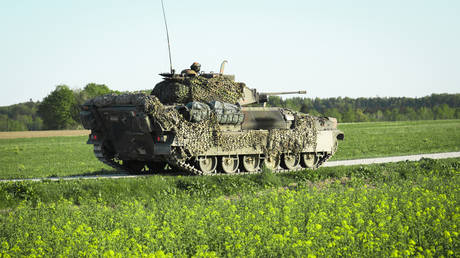
Imagine sitting inside the cramped, armored hull of an Italian Dardo infantry fighting vehicle. Your world is reduced to the amber glow of instrument panels and the vibration of a massive diesel engine thrumming through your spine. Communication is a headset buzz. Outside, the wooded horizon is a blur of shadows.
Without warning, a heavy machine gun opened fire.
It wasn't an incoming shell from an adversary across a contested border. It was the sharp, concussive stutter of a weapon fired by an ally, striking the very vehicle meant to move beside it. In the tight confines of a live-fire range, physics care nothing for uniforms or alliances. Steel meets steel with catastrophic indifference.
Four Italian soldiers were wounded in that instant. Four men who had shared morning coffee, compared home photographs, and trusted the training standard binding thirty nations together suddenly found themselves fighting for air inside a punctured cabin.
Consider what happens next in the quiet command centers miles away. The scramble of alerts. The frantic checks on stable vitals. The phone calls placed across European time zones to families back in Italy, where an ordinary Tuesday morning transforms into a heart-stopping notification from the Ministry of Defense. One soldier bore the brunt of the severity, though thankfully, medical teams managed to pull all four back from the edge of tragedy. Their lives were saved, but the psychological architecture of the exercise was permanently altered.
We talk about military deterrence in grand, sweeping terms. We count tanks, tally artillery shells, and map out strategic depth across the plains of Eastern Europe. We forget the human margin. We forget that deterrence is practiced by exhausted twenty-year-olds operating heavy machinery in the freezing rain, running on too little sleep and too much adrenaline.
When a friendly fire incident occurs during a routine drill, it exposes the raw underbelly of preparedness. It reminds everyone involved that the most dangerous enemy on a battlefield is often entropy itself—the sudden convergence of bad timing, mechanical misinterpretation, and human fatigue.
Back in Ādaži, the investigations began almost before the smoke cleared. Ballistic trajectories were mapped. Radio logs were decrypted. Officers looked for the exact point where a human hand squeezed a trigger believing it was pointing elsewhere. But no inquiry can fully restore the unblemished confidence that existed before the barrel swung the wrong way.
True security is an expensive illusion, bought and paid for in the currency of constant risk. Even in training, thousands of miles away from an active front, the armor is thin and the margin for error is razor-thin.
The forest in Latvia has quieted down again. The tracks left by the armored vehicles are slowly filling with autumn rain. Yet the echoes of that day linger in the barracks—a stark, sobering reminder that before an army can ever face an external threat, it must first survive the terrifying unpredictability of its own power.
Before Kaliningrad 'War', NATO Live-Fire Drill Goes Wrong: Italian Troops Hit By Their Own Vehicle?
This video provides visual context of the Ādaži training area and breaks down the circumstances surrounding the multinational exercise drills in Latvia.