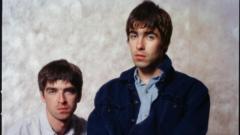
The air in a recording studio is heavy. It smells of stale coffee, expensive cigarettes, and the hum of amplifiers that have been left on for too long. For most of us, that silence is just a lack of noise. But for Liam and Noel Gallagher, silence has been a weapon, a shield, and a multi-million-dollar brand for a quarter of a century.
Since the final, catastrophic blowout in Paris back in 2009—and the years of icy distance that preceded it—the world has lived in the wake of the Oasis explosion. We watched from the sidelines as the most famous brothers in rock history traded insults through the press like schoolyard bullies with platinum records. We saw the tweets. We read the lawsuits. We accepted the idea that the two men who defined the Britpop era would never again occupy the same physical space without a legal team present.
Then the rumors began to solidify. The posters appeared. The stadium tour dates sold out in a frenzy that felt less like a ticket purchase and more like a collective cultural exorcism. But there was still a missing piece. We had the dates, we had the reunion, but we didn't have the why.
Now, we have the documentary.
The Ghost in the Room
Documentaries about bands are usually vanity projects designed to sell more merchandise. They are curated, polished, and safe. But the upcoming Oasis film is carrying a weight that most music docs couldn't lift. It promises the first joint interview between Liam and Noel in twenty-five years.
Think about that span of time. In twenty-five years, empires rise and fall. Children grow up, leave home, and start families of their own. For the Gallaghers, it represents a lifetime of missed birthdays, unspoken apologies, and a public narrative that they were fundamentally broken.
When they sit down in front of the camera, they aren't just two rock stars discussing a setlist. They are two brothers from Burnage facing the reality of their own legend. The stakes aren't financial; they already have the money. The stakes are emotional. This is a high-definition look at the process of two people deciding that their shared history is more important than their individual pride.
The Architecture of a Feud
To understand the impact of this interview, you have to understand the specific anatomy of the Gallagher fallout. It wasn't just a band breaking up. It was a family fracturing in the center of a spotlight.
Noel was the architect, the meticulous songwriter who built the walls of the Oasis sound. Liam was the spirit, the snarling, charismatic frontman who breathed life into those songs and made them feel like a revolution. One provided the structure; the other provided the fire. When they split, the music didn't just stop. It lost its balance.
For years, the narrative was driven by Noel’s dry, weary dismissals and Liam’s chaotic, unfiltered outbursts. They spoke at each other through microphones at solo gigs or via social media, but never to each other. This documentary forces a collision. The "dry facts" of the press release say it will feature "unseen footage" and "exclusive commentary," but the subtext is much more visceral.
It is the sound of the ego finally yielding to the legacy.
Why We Can’t Look Away
There is a reason why the news of this interview sent shockwaves through the industry. It touches on a universal human nerve: the desire for reconciliation.
Most people have a "Noel" or a "Liam" in their lives—a sibling, a parent, or a friend with whom the bridge has been burned. We watch the Gallaghers because they represent the extreme version of our own family dramas. If these two—who have spent two decades publicly despising one another—can find a way to sit in a room and speak, maybe there’s hope for the rest of us.
The documentary captures the shift from the "I don't need him" era to the "we need this" era. It isn't just about the 1990s or the glory days of Knebworth. It’s about the vulnerability of middle age. There is something profoundly moving about seeing two men who once thought they were invincible realize that the clock is ticking.
The Mechanics of the Reunion
The film doesn't just rely on talking heads. It digs into the archives to show the friction that created the heat. You see the younger versions of them—cocky, untouchable, and inextricably linked.
- The 1990s Context: The footage reminds us that Oasis wasn't just a band; they were a cultural phenomenon that bridged the gap between the working class and the elite.
- The Breaking Point: Detailed accounts of the 2009 Paris incident, where a guitar was smashed and a brotherhood seemingly ended for good.
- The Long Silence: A montage of the solo years, highlighting the professional success but the palpable atmospheric void left by the absence of the other brother.
Consider the technical reality of this interview. It wasn’t filmed in a crowded room with a dozen assistants. Reports suggest a more intimate setting, designed to strip away the artifice. When Noel looks at Liam, and Liam looks at Noel, the cameras are catching decades of resentment being processed in real-time.
Beyond the Setlist
The "People Also Ask" sections of the internet are currently obsessed with the logistics. Will they play 'Wonderwall'? Who is in the touring lineup? How much are the tickets? But the documentary aims to answer a deeper question: Who are they to each other now?
They are no longer the twenty-something brawlers who took over the world. They are men in their fifties. Noel has talked about the "weight of the songs" and how they no longer belong to him, but to the fans. Liam has spoken about the "vibe" and the "energy" that only happens when they are together.
This film is the bridge between the myth and the reality. It’s the moment the mask slips. We aren't just getting a promotional tool for a tour; we are getting a post-mortem of a feud and a birth certificate for a second chance.
The Invisible Stakes
If the interview goes well, it solidifies the Oasis legacy for a new generation. If it feels forced or cold, it risks turning the reunion into a cynical cash grab. That is the invisible pressure on this production. Every sigh, every smirk, and every long pause will be analyzed by millions of people looking for a sign of genuine connection.
The documentary understands that the music is the background noise. The real story is the tension in the room. It’s the way Noel still manages to roll his eyes at his brother’s antics, and the way Liam still looks to Noel for the musical cue.
It is a study in chemistry—the kind that can’t be manufactured by a PR firm or a marketing department. You either have it, or you don't. And for twenty-five years, that chemistry was locked in a vault.
A Cultural Reset
We live in an era of digital fragmentation, where moments of genuine collective experience are rare. Oasis coming back together is one of the few things that can still make the world stop and listen.
The documentary serves as the prologue to the tour. It clears the air. It addresses the elephant in the room so that when the first power chord of "Rock 'n' Roll Star" hits in a stadium next year, the audience isn't wondering if the brothers are going to fight. They'll know they've already done the hard work of talking.
The film explores the idea that Oasis was always too big for one person. It was a volatile compound that required both elements to remain stable. For twenty-five years, the world was out of balance.
As the credits roll on this new footage, the takeaway won't be about the chart positions or the record sales. It will be about the sight of two men, graying at the temples, sitting in a quiet room and finally finding the words they couldn't say when the world was screaming their names.
The silence hasn't just been broken; it has been replaced by a conversation that was a quarter-century in the making.
The guitars are tuned. The mics are live. The brothers are talking. And for the first time in a generation, the story of Oasis belongs to the people who lived it, rather than the people who reported on it.