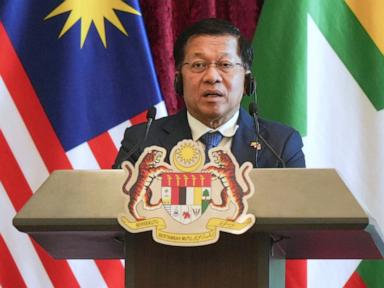
The lazy consensus floating across international newsrooms is that Min Aung Hlaing's diplomatic outreach to Kuala Lumpur signals a sudden, pragmatic pivot toward regional charm. Media outlets frame this diplomatic maneuver as a desperate, face-saving scramble for legitimacy by a cornered military regime.
They have it backward.
This is not a pivot. It is an extraction strategy, and ASEAN is walking right into the trap.
When a pariah state starts trading isolation for photo-ops, foreign policy analysts love to dust off their theories about the softening power of dialogue. They talk about constructive engagement and back-channel diplomacy as if the State Administration Council woke up one morning and decided to read a textbook on conflict resolution. This naive reading misses the fundamental mechanics of authoritarian survival. The junta is not seeking integration; it is seeking exhaustion. Every handshaking tour through regional capitals buys precious time, fragments the opposition narrative, and shifts the burden of proof onto neighboring states who prefer quiet trade over moral consistency.
The Myth of Diplomatic Isolation
For four years, the prevailing Western orthodoxy insisted that economic strangulation and diplomatic freezing would force the generals back to the barracks. That theory has completely collapsed, and nobody in power wants to admit it.
Sanctions without enforcement are just protectionism for domestic industries and an inconvenience for the elites. The black-market logistics networks connecting Naypyidaw to regional supply chains adapted within forty-eight hours of the initial asset freezes. When you look at the actual trade flows, cash keeps moving, energy projects proceed without interruption, and border commerce hums along precisely because neighboring economics run on regional pragmatism rather than Geneva conventions.
The mainstream narrative treats the regime's foreign visits as concessions. Every time a junta official boards a state-chartered flight to an ASEAN neighbor, professional pundits scream about normalisation. They assume that hosting a general is an endorsement of his atrocities.
That is an amateur mistake. In realpolitik, hosting a butcher is often just local pest control. Regional capitals do not care about democratic transitions in Myanmar; they care about border stability, refugee spillover, and who controls the rare earth mines and natural gas pipelines. By stepping outside his borders, the junta leader forces ASEAN into a procedural corner. If they refuse to meet him, they look ineffectual and divided. If they meet him, he claims the crown of legitimacy. It is a win-win scenario for a regime that only needs to survive week by week, while its opponents rely on a systemic collapse that never quite arrives.
The Five-Point Consensus Is Dead Weight
Let us dispense with the polite fiction that ASEAN's Five-Point Consensus is an active framework. It is diplomatic theater, designed entirely to give diplomats something to talk about while ignoring the reality on the ground.
The consensus was built on a foundational error: the belief that the military cares about face or international embarrassment. A military that bombs its own villages from the air has moved past the point where a strongly worded communique from Jakarta or Kuala Lumpur stings. Yet, regional leaders cling to the process because the alternative is admitting they have zero leverage.
When a regime faces an armed resistance controlling vast swathes of its territory, standard diplomatic playbooks do not apply. The lazy analyst looks at a map of Myanmar, sees red dots indicating resistance gains, and assumes the end is near. But military rule does not expire simply because it becomes unpopular. It ends when the logistics backing the guns run dry. And right now, those logistics are funded by the steady extraction of timber, jade, natural gas, and cross-border trade that nobody is willing to blockade with actual teeth.
The Economics of Impunity
Follow the money, and the diplomatic theater dissolves into simple ledger entries.
Foreign direct investment into Myanmar shifted forms, but it did not vanish. It migrated into opaque corporate structures backed by regional syndicates who view human rights abuses as background noise. When the junta engages in diplomatic outreach, it is signaling stability to these specific commercial partners. It tells the regional merchant class that the road network is secure enough, the ports are functioning, and the revenue sharing agreements remain untouched.
We have seen this movie before. Every stalled transition in modern history features a moment where the international community mistakes a tactical pause for a strategic retreat. The generals do not want to share power. They want total control, or failing that, a managed feudalism where they extract rents from a devastated economy. Their regional tours are designed to reassure commercial partners that the house is not burning down, just poorly managed.
The Opposition Trap
The resistance movement inside Myanmar faces a brutal paradox of its own making. Relying on international moral outrage is a losing game because the world has too many fires to manage. While Western capitals issue periodic expressions of deep concern, their strategic focus is locked elsewhere.
By waiting for ASEAN or the United Nations to ride to the rescue, the opposition wastes time it does not have. Diplomacy is not a rescue boat; it is a mirror reflecting the balance of power on the ground. If the resistance wants international backing that actually matters, they have to present a unified administrative alternative that can run a state, secure borders, and protect foreign assets. Until then, regional capitals will deal with whoever holds the telegraph wires and the bank vaults in Naypyidaw.
Stop pretending that a diplomatic handshake is a sign of weakness from the junta. It is a sign of calculation. They know that fatigue is the greatest ally of an authoritarian state. Every month they stay in the game, the world gets bored, new crises emerge, and the blood on their uniforms fades into the background noise of geopolitical business as usual.
If you want to understand why the generals are smiling for the cameras in Malaysia, stop looking at human rights reports and start looking at trade ledgers. The transition back to democracy in Myanmar is not stalled because of bad diplomacy. It is stalled because the regional architecture profits from the stalemate, and nobody has the courage to break the table.


