The "difficult bargain" narrative is lazy. It is comforting. It is wrong.
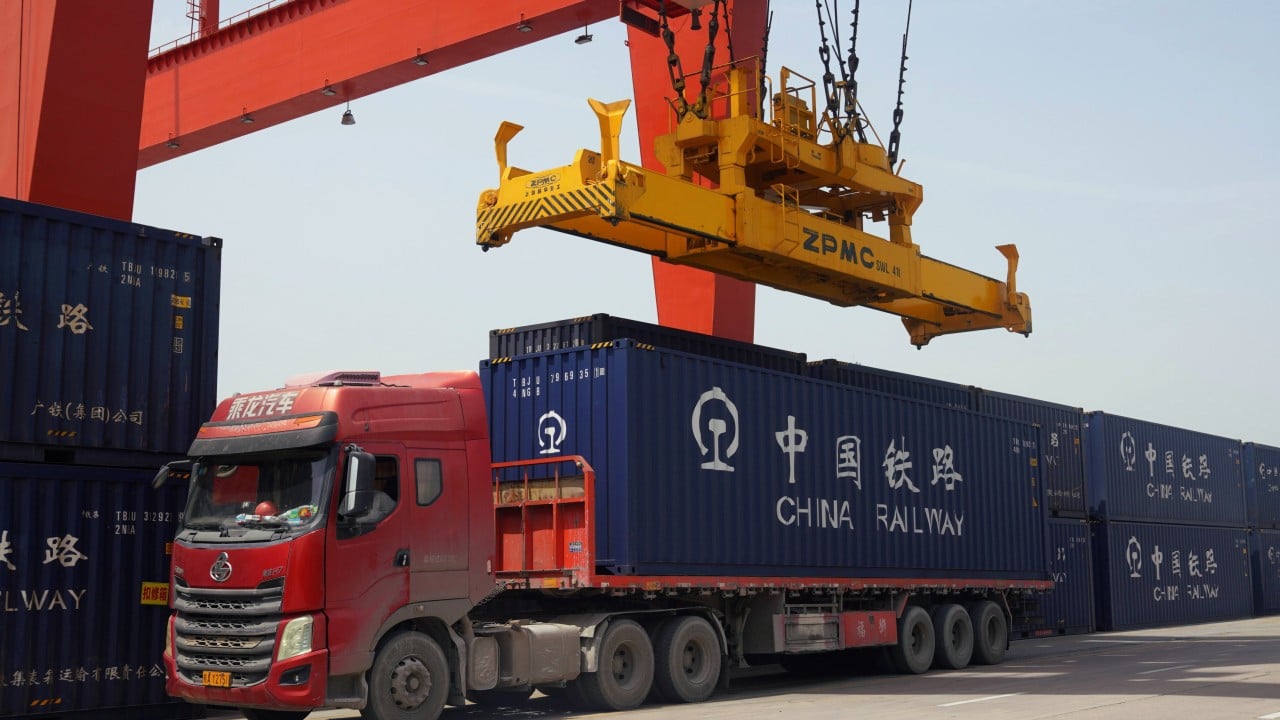
Every few months, another wave of commentators looks at surging Chinese outbound shipments and declares Southeast Asia trapped in a vise. Cheap factory goods flood in. Domestic manufacturers get squeezed. Policymakers face an agonizing choice between industrial survival and low consumer prices.
Neat story. Terrible economics.
I have spent years watching supply chain executives, trade negotiators, and boardrooms burn millions chasing ghosts built on this exact premise. They treat trade like a zero-sum brawl in a locked room where every gain by Shenzhen means a body bag in Bangkok or Ho Chi Minh City. That is not how industrial ecosystems actually work. When a massive manufacturing engine pushes out cheaper intermediate inputs, solar cells, batteries, steel, or machinery, it lowers costs for everyone downstream who knows how to build on top of them.
The real story is not a trap. The real story is a capability gap.
The Lazy Consensus Around Trade Deficits and Factory Displacement
Start with the standard script. Critics point to bilateral trade deficits and factory closures in traditional sectors—textiles, basic consumer electronics, low-margin metal fabrication—and treat them as proof of an existential threat.
Let us define the terms properly before going further. A bilateral trade deficit occurs when one country imports more goods from a specific partner than it exports back to that same partner. On its own, a bilateral deficit tells you almost nothing about national prosperity. The United States has run trade deficits with individual countries for decades while expanding real income and high-value output. Comparative advantage, the foundational insight associated with David Ricardo and later refined by trade economists like Paul Krugman through models of economies of scale and specialization, explains why countries benefit from producing what they do relatively efficiently and trading for the rest.
When commentators treat every cheap Chinese export as an act of industrial predation, they confuse competition at the bottom with collapse across the board. Yes, a workshop making generic plastic housewares or basic apparel faces brutal price pressure when automated plants scale up production. That pain is real for the workers and owners in that specific line.
Yet treating that localized pain as proof that Southeast Asia faces a "difficult bargain" misses the second-order effects. A factory in Penang or Rayong paying less for precision components, power electronics, or automated assembly gear has a lower cost structure. A logistics operator moving higher volumes through regional ports gains scale. A household paying less for appliances or EVs keeps more cash in its pocket for services, housing, or savings.
The lazy consensus assumes Southeast Asia is merely a passive target sitting in the path of a freight train. In reality, many economies in ASEAN sit right inside the supply chain as processors, assemblers, and exporters of their own.
What People Actually Ask When They Panic About Export Surges
When headlines scream about export waves, the same questions pop up across search bars and executive briefings. Most of them start from a shaky premise.
Are cheap imports hollowing out Southeast Asian manufacturing?
Only if a country tries to defend yesterday's low-margin assembly jobs with tariffs instead of upgrading its industrial base.
Protectionism feels decisive. Slapping duties on imported components or finished goods gives struggling domestic firms breathing room. I have seen boards lobby hard for protective walls because raising prices on rivals looks easier than fixing plant productivity, worker training, or supply bottlenecks. It almost always backfires downstream. Raise the price of imported inputs or capital equipment, and you tax your own exporters and builders.
Hollowing out happens when domestic firms lack capital, engineering depth, and access to higher-value niches—not simply because a rival ships goods cheaply. If a local manufacturer cannot survive without permanent protection against cheaper inputs, the bottleneck is competitiveness, not trade itself.
Should ASEAN governments erect higher trade barriers to protect local industries?
Blanket protectionism is a fast track to higher domestic costs and retaliatory headaches. Targeted trade remedies against proven, illegal dumping or acute injury have a place in trade law, as economists from Jagdish Bhagwati to Dani Rodrik have long debated when balancing open markets with social stability. Blanket walls, however, turn consumers and downstream producers into hostages.
Consider a simple thought experiment. Imagine a scenario where a Southeast Asian government imposes steep tariffs on imported solar modules, inverters, and grid batteries to protect a handful of small domestic assemblers. Power projects stall or grow more expensive. Industrial parks lose their appeal to energy-intensive manufacturers chasing green power targets. A handful of protected producers stay afloat while the wider economy pays a hidden tax on energy and competitiveness.
Protection rarely creates world-beaters. Exposure, paired with smart industrial policy—ports, technical education, reliable power, and regulatory clarity—builds lasting strength.
Is China+1 actually saving Southeast Asia, or just turning it into an assembly shed?
This question cuts closer to the bone, and the honest answer stings. Many "China+1" moves have been thin. Companies bolt on final assembly or light testing in Vietnam, Malaysia, Indonesia, or Thailand while keeping high-margin R&D, core tooling, and deep component manufacturing right where they started.
Calling that a failure, though, ignores how industrial climbing works. Nobody jumps straight from agrarian or basic assembly work to designing cutting-edge lithography gear overnight. South Korea, Taiwan, and China itself all climbed rungs over decades—starting with assembly, absorbing technical know-how, localizing suppliers, and moving up the value chain step by step.
If Southeast Asia stops at low-value screw-driver assembly, it risks getting stuck in a middle-income squeeze. If it uses those incoming investments to train engineers, build local supplier networks, and enforce quality standards, thin assembly becomes a launching pad.
Where the Contrarian Bet Can Burn You
I am not selling a fairy tale where market forces solve everything cleanly. Going against the panic has real risks, and ignoring them is just as foolish as panicking.
First, adjustment costs hit real people unevenly. A macro argument about lower input costs means very little to a factory worker whose plant shuts down this quarter. Political stability requires real transition support, retraining, and safety nets—not lectures from economists about long-run welfare.
Second, over-reliance on a single dominant supply source creates fragility. If one country controls a massive share of key inputs, supply shocks, export controls, or geopolitical flare-ups can snarl production overnight. Diversification is not anti-trade; it is basic risk management.
Third, predatory pricing and state-backed overcapacity can distort markets. When state subsidies keep loss-making capacity running long past normal commercial limits, private competitors without deep pockets get crushed regardless of efficiency. Ignoring non-market distortions leaves domestic firms fighting with one hand tied behind their backs.
Fourth, regulatory evasion hurts everyone's credibility. When goods are lightly reworked just enough to slap on a new origin label, trading partners crack down harder on entire regions. Legitimate exporters get caught in the crossfire of customs scrutiny and origin audits.
| Common Claim | What Actually Happens | Smart Move for Builders and Policymakers |
|---|---|---|
| Export surges only destroy local industry | Cheaper inputs and capital goods lower costs for downstream producers and consumers | Cut bottlenecks on energy, ports, and customs so local firms can scale |
| Tariffs easily save domestic jobs | Protection raises costs for buyers and exporters while delaying needed upgrades | Use narrow, rule-based remedies only where clear injury is proven |
| Assembly relocation is a dead end | Light assembly can stay shallow, or serve as a springboard for supplier upgrading | Tie incentives to local skill building, supplier depth, and standards |
| Trade balances measure winning or losing | Bilateral deficits ignore value-added chains and domestic consumption gains | Track productivity, domestic value-added, and export diversification |
How to Stop Playing Defense and Capture Real Value
Stop treating cheap exports like a weather disaster you can only endure or block. Treat them like cheap raw energy and tools—useful only if you have the systems to put them to work.
For corporate leaders, audit your cost stack honestly. Where are you bleeding margin because you refuse to source competitive intermediate inputs, and where are you vulnerable because a single supplier controls a critical link? Dual-source where concentration risk is high. Invest in plant automation, quality control, and local engineering talent so your operation moves past basic commodity work. If you are selling into Southeast Asian markets, stop competing purely on price against subsidized scale; compete on speed, local service, customization, and reliability.
For policymakers, fix the fundamentals that actually determine whether capital stays or leaves. Cheap imports do not stop a country from building deep industrial capacity—bad ports, erratic electricity, slow permits, weak vocational training, and unpredictable rules do. Make it easier for local suppliers to plug into global value chains. Enforce strict rules of origin so legitimate regional manufacturers do not pay the price for transshipment shortcuts.
Southeast Asia does not face a neat, binary bargain between ruin and submission. It faces a test of execution. Countries and companies that whine about the tide will get knocked around by it. The ones that build better ships will ride it straight past the critics.


