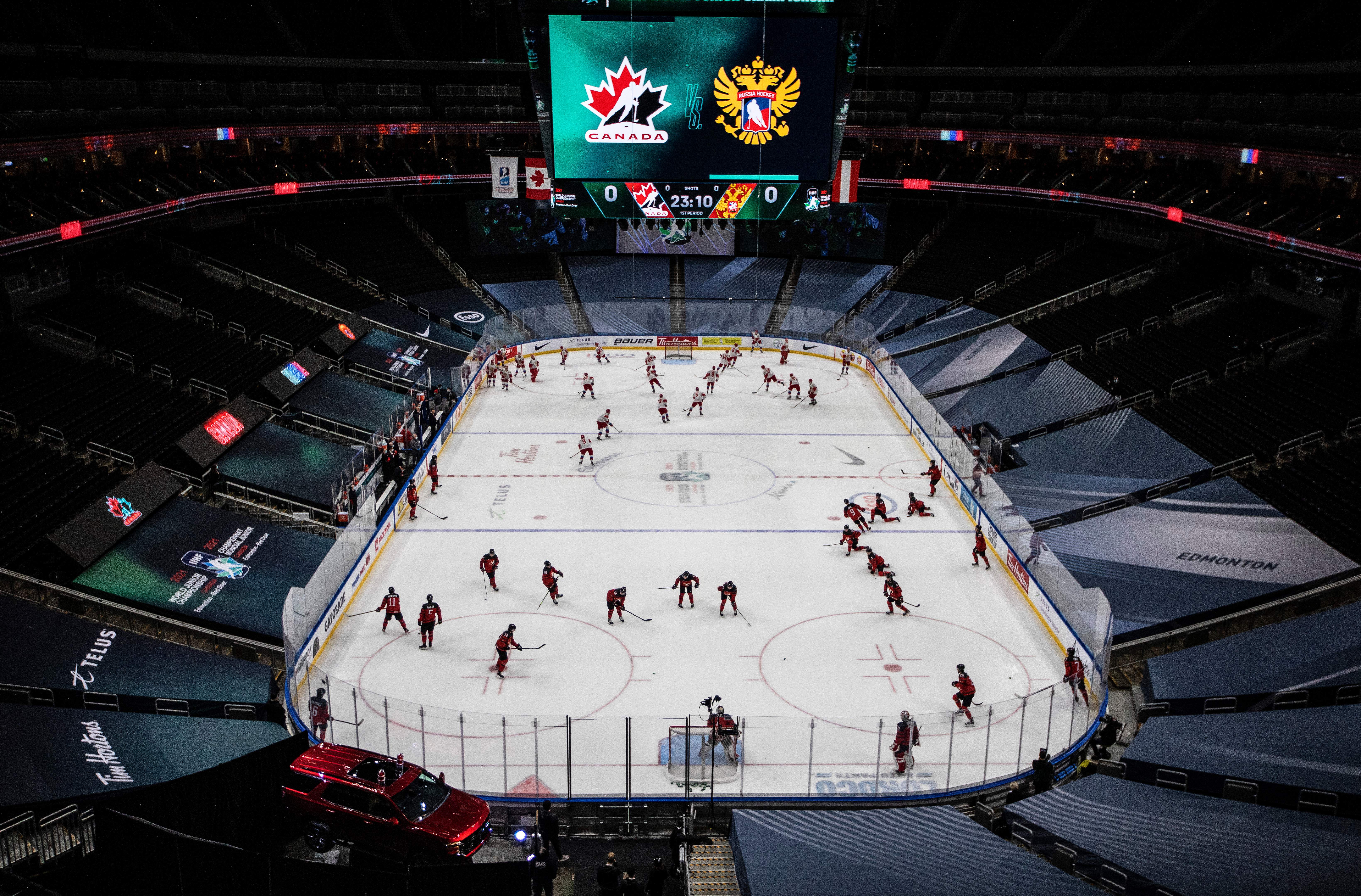
International sports governance collapses the moment an arbitration ruling collides with national border sovereignty. When the Canadian federal government announced that Russian and Belarusian hockey players would be barred from entering Canada for the 2027 IIHF World Junior Championship—even if those athletes already possess valid visas—it exposed the structural impotence of international sporting tribunals. The International Ice Hockey Federation (IIHF) cannot compel a sovereign state to admit foreign nationals, regardless of what the Court of Arbitration for Sport (CAS) orders.
The immediate operational trigger was a sequence of institutional clashes beginning in late October 2026. On October 30, CAS overturned the IIHF’s multi-year suspension of Russian national teams on procedural grounds, ordering the federation to readmit Russia across five upcoming championships, starting with the December 26, 2026 to January 5, 2027 tournament in Edmonton and Red Deer. Ottawa neutralized that ruling within two weeks. Prime Minister Mark Carney and Secretary of State for Sport Adam van Koeverden established a hard boundary: as long as Russia continues its war in Ukraine with Belarusian complicity, no athletes or officials representing those states will cross the Canadian border to compete.
The Three-Tier Jurisdictional Hierarchy
To understand why a valid visa fails to guarantee tournament entry, you have to separate athletic eligibility from border admissibility. Standard sports journalism treats these as a single bureaucratic hurdle. In practice, international tournament participation operates across three distinct, non-overlapping legal tiers:
- Sporting Eligibility (IIHF and CAS): Governs whether a federation is in good standing, whether players meet age and citizenship criteria, and whether sanctions follow internal bylaws. CAS holds supreme authority here, which allowed it to invalidate the IIHF ban on procedural errors.
- Visa Issuance (Consular Processing): Governs the pre-screening of foreign nationals by Immigration, Refugees and Citizenship Canada (IRCC). A Temporary Resident Visa (TRV) grants permission to travel to a Canadian port of entry, not an absolute right of admission. Many Russian junior prospects already hold multi-year Canadian visas from prior scouting combines, Canadian Hockey League (CHL) drafts, or NHL development camps.
- Port-of-Entry Admissibility (Border Sovereignty): Governs the final physical admission of a non-citizen at the border. Under Canada’s Immigration and Refugee Protection Act, border officers and cabinet ministers retain statutory authority to deny entry or cancel existing authorizations based on public policy, national security, or foreign policy directives.
A visa is an invitation to knock on the door; admissibility is the decision to unlock it. By targeting the third tier, Ottawa bypassed the need to litigate sports law. Even if a 19-year-old Russian forward holds a stamped visa from 2024, his purpose of travel—representing the Russian Ice Hockey Federation in an international tournament—triggers an immediate refusal at pre-boarding or customs inspection.
The Neutrality Loophole and Why It Failed
Following the CAS decision, Russian sports officials attempted to exploit the neutral-athlete precedent used in individual Olympic disciplines. The logic assumed that stripping national flags, anthems, and federation logos would satisfy Western host nations while preserving competitive participation.
Secretary of State for Sport Adam van Koeverden closed that avenue by distinguishing between individual competitors and state-selected rosters. In individual sports like tennis or cycling, athletes enter tournaments via personal ranking points and private funding. In the World Junior Championship, every roster spot is allocated to a national member federation. The players are selected, trained, insured, and deployed by the Russian Ice Hockey Federation, an entity tightly integrated with Russian state apparatus and state-owned sponsors.
Treating a national junior hockey team as a collection of "neutral individuals" fails a basic operational test:
- Selection Sovereignty: A private athlete cannot self-nominate for the World Juniors; the national federation controls the roster.
- Commercial Branding: Even under a blank jersey, broadcast rights, scouting metrics, and domestic state media treat the squad as the national representative.
- Reciprocity Risk: Permitting a state-selected team under a neutral banner creates a template that other sanctioned states can replicate to nullify diplomatic isolation.
Ottawa’s refusal to recognize team-level neutrality forced the IIHF into a binary choice: strip Canada of hosting rights seven weeks before puck drop, or accept a tournament field without Russia.
The Economic and Competitive Cost Function for the IIHF
When Ottawa locked the border, the IIHF council faced an immediate risk-management calculation. Moving the 2027 World Junior Championship out of Alberta in November 2026 was operationally impossible, while forcing Russia into the bracket threatened to collapse the tournament's commercial viability.
The federation’s decision to keep the event in Edmonton and Red Deer without Russia rested on four quantifiable pressures:
- The Boycott Cascade: Within days of the October 30 CAS ruling, seven European national federations—Austria, Czechia, Denmark, Finland, Latvia, Norway, and Sweden—declared their teams would refuse to take the ice against Russia. A tournament featuring Russia would have triggered mass forfeits, destroying the competitive integrity of the group stage and knockout rounds.
- Sponsor Flight: Major commercial partner AJ Products terminated its sponsorship immediately after the CAS decision, and additional corporate backers signaled they would pull funding if Russian teams participated. For an organization reliant on broadcast and sponsorship revenue to fund lower-division tournaments, hosting Russia meant absorbing an immediate seven-figure revenue hole.
- Host Infrastructure Sunk Costs: Hockey Canada and the local organizing committees in Edmonton and Red Deer had already locked in arena leases, broadcast production crews, security contracts, and ticket sales for the December 26 start date. Relocating to a non-sanctioning host country on six weeks' notice would have generated catastrophic cancellation penalties with zero guarantee of selling out seats.
- Reputational Containment: Keeping the tournament in Canada allowed the IIHF to comply nominally with CAS—by not issuing a new athletic ban itself—while letting Canadian immigration law execute the exclusion.
Norway’s position illustrates the collateral friction of this standoff. After CAS ruled in Russia's favor, the IIHF initially notified the Norwegian Ice Hockey Federation that Russia would take Norway's slot in the 10-team top division. Once Canada blocked Russian entry and the IIHF confirmed Canada would remain host without Russia, Norway retained its earned spot in the field. The episode demonstrated that athletic qualification in international hockey is now secondary to geopolitical clearance.
The Structural Limits of Sports Arbitration
The broader lesson extends well beyond junior hockey in Alberta. International sports federations are incorporated as private associations—most, like the IIHF, under Swiss civil law—and submit their disputes to CAS in Lausanne. This legal architecture assumes that host nations will subordinate their border policies to the federation’s tournament calendar.
That assumption no longer holds. When geopolitical conflict escalates to full-scale conventional war, host governments treat international sporting events as instruments of statecraft rather than autonomous cultural exchanges. In November 2026, the Czech Republic applied the exact same border mechanism to bar Russian athletes from entering the country for the January 2027 IIHF Ice Hockey U18 Women's World Championship, while Finland enforced parallel border blocks against Russian competitors.
The limitation of Ottawa’s strategy is that it creates a fragmented, host-by-host enforcement regime rather than a uniform global standard:
- Jurisdictional Arbitrage: While Western European and North American hosts block Russian entries, tournaments awarded to non-aligned nations in Asia or the Middle East remain open to Russian rosters if CAS rulings stand.
- Legal Escalation: On November 25, 2026, the IIHF filed an appeal with the Swiss Federal Tribunal—Switzerland’s supreme court—to overturn the CAS reinstatement ruling. However, Swiss supreme court reviews of CAS awards are strictly narrow, examining procedural fairness and public policy violations rather than re-litigating the underlying merits of the dispute.
- Asymmetric Retaliation: Following the IIHF’s confirmation that Canada would host without Russia, the federation suffered immediate cyberattacks, and Russian officials condemned the move as a breakdown of international legal norms.
The Operational Playbook Moving Forward
Sports governing bodies can no longer draft tournament hosting agreements on the assumption that a federation's eligibility list overrides national immigration law. For federations, sponsors, and national teams operating in this environment, the strategic path is clear:
- Rewrite Host-City Contracts Immediately: International federations must insert explicit force-majeure and visa-guarantee clauses into host agreements at least 24 months prior to an event, specifying whether border exclusions trigger automatic team replacement or tournament relocation.
- Audit Dual-Jurisdiction Athletes Early: Professional clubs—specifically NHL organizations drafting Russian prospects—must separate player development in North America from national-team call-ups. Holding a valid work or visitor visa for club training does not insulate a player from border refusal if they travel under the auspices of a sanctioned national federation.
- Price Political Risk into Broadcast and Sponsorship Deals: Commercial partners must structure federation contracts with automatic termination triggers tied to host-government entry bans and participant boycotts, eliminating the need for reactive public withdrawals like AJ Products' exit.
Until the war in Ukraine concludes or the Swiss Federal Tribunal establishes a new legal precedent on federation autonomy, national border ministries—not sports tribunals—hold the final roster authority in international hockey.