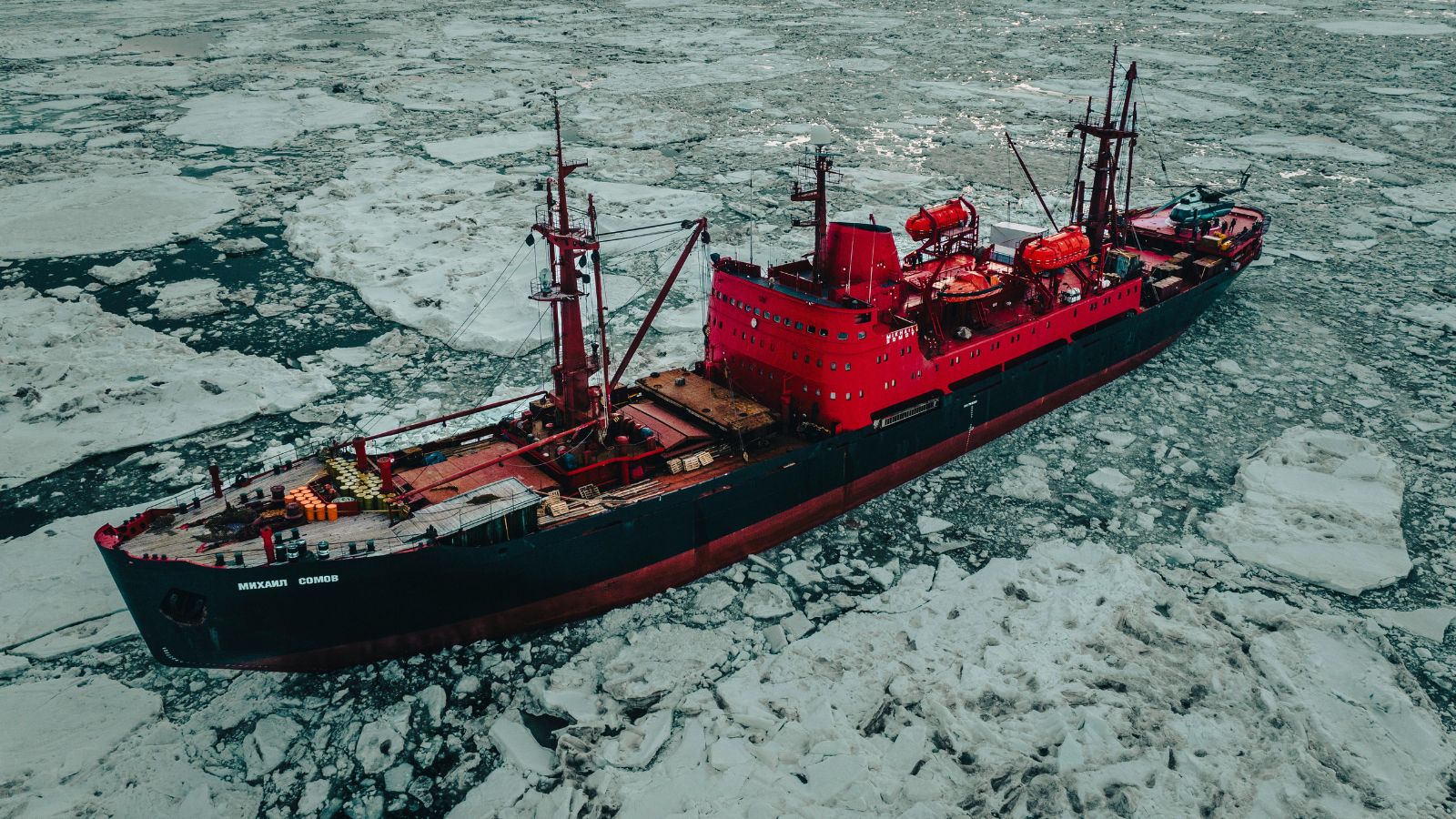
When the Russian research and cruise vessel Professor Molchanov dropped anchor in the Svalbard settlement of Barentsburg, its passengers expected a routine Arctic expedition. Instead, they walked straight into a quiet, meticulously planned maritime ambush. Backed by a local court order and enforced by the Norwegian Coast Guard, Ukrainian state energy firm Naftogaz successfully impounded the ship to claw back a staggering $4.22 billion arbitration award.
This seizure is far more than a localized legal stunt. It marks a foundational shift in how international arbitration awards are enforced against hostile sovereign states that treat global borders as shields. For years, major powers could comfortably ignore international tribunals, secure in the knowledge that sovereign immunity kept their overseas assets locked behind diplomatic velvet ropes. That doctrine is cracking. Naftogaz and its legal teams have weaponized civil maritime law, turning commercial transit routes into an active recovery zone for war-era expropriations.
The Anatomy of a Long-Game Ambush
The roots of this confrontation stretch back to the 2014 annexation of Crimea. When Moscow seized control of the Crimean peninsula, it also absorbed billions of dollars in energy infrastructure, drilling rigs, and corporate assets belonging to Naftogaz. Most companies write off such losses as the cost of geopolitical catastrophe. Naftogaz chose a different path, filing a sweeping damages claim in 2016 through international arbitration.
By April 2023, a tribunal in The Hague delivered a definitive verdict: Russia owed Naftogaz $4.22 billion, plus accumulated interest and legal costs. Predictably, Moscow refused to pay, dismissing the ruling as political theater and assuming the matter would fade into the background noise of international litigation.
International judgments without an army are notoriously toothless. Yet, commercial vessels operating in foreign jurisdictions do not carry diplomatic immunity. The international law firm representing Naftogaz spent months tracking the movements of the Professor Molchanov, a Russian-owned vessel frequently utilized for commercial cruises and Arctic charters. When the ship entered Norwegian waters en route to the coal-mining outpost of Barentsburg, lawyers did not wait for diplomatic channels to clear. They went straight to the Nord-Troms and Senja District Court, securing an immediate arrest warrant and a mandate for compulsory sale.
The speed of the operation stunned Russian officials. Moscow's Foreign Ministry predictably labeled the action piracy, while local diplomats demanded an immediate release. Yet under Norwegian legal frameworks, the dispute is strictly categorized as a civil enforcement matter between private or corporate entities and a debtor, stripping the Kremlin of its usual state-to-state grievance playbook.
Jurisdictional Warfare Across Borders
The Svalbard seizure is not an isolated incident. It represents a coordinated, multi-jurisdictional asset-hunting campaign designed to systematically dismantle Russia's financial breathing room abroad. Naftogaz leadership has made it clear that similar legal traps are being laid across the United States, France, the United Kingdom, and Finland, where various Russian properties and frozen holdings remain under watch.
Svalbard itself provides a uniquely fascinating legal theater. Governed by a 1920 treaty that grants equal commercial access to signatory nations while demilitarizing its core administration, the archipelago became a blind spot for Russian authorities who routinely underestimate how domestic Scandinavian courts apply international debt recovery laws. By targeting a vessel servicing a Russian state-operated coal settlement on foreign territory, the litigants bypassed traditional naval choke points and struck directly at the infrastructure of resource extraction.
This strategy changes the risk calculation for any state-owned enterprise venturing outside domestic waters. When cargo ships, research vessels, and commercial assets can be summarily arrested to pay down war reparations and expropriation claims, global mobility transforms into a liability.
The Broader Fallout for Sovereign Assets
For corporate legal departments watching from the sidelines, this case establishes a brutal new precedent. Sovereign immunity has long served as an impenetrable fortress for state actors engaged in commercial enterprise. If courts in stable Western jurisdictions continue to pierce that veil to satisfy multi-billion-dollar arbitration awards, the financial map of state-backed commerce will shrink dramatically.
Russia will undoubtedly attempt to retaliate through counter-lawsuits, diplomatic pressure, or targeted asset seizures of Western firms still operating inside its borders. Yet those maneuvers carry diminishing returns for an economy increasingly cut off from standard financial liquidity. Every vessel forced to idle in an Arctic port, every commercial holding subjected to court-ordered inventory, and every frozen account turned over to a claimant chips away at the myth of untouchable sovereign wealth.
The Professor Molchanov remains docked in Barentsburg, its passengers absorbed into local arrangements while the legal machinery grinds forward toward a potential compulsory auction. It is a stark reminder that while wars are fought on front lines, they are frequently balanced on the ledger of international law. Moscow can cry piracy all it wants, but creditors are no longer waiting for permission to collect.