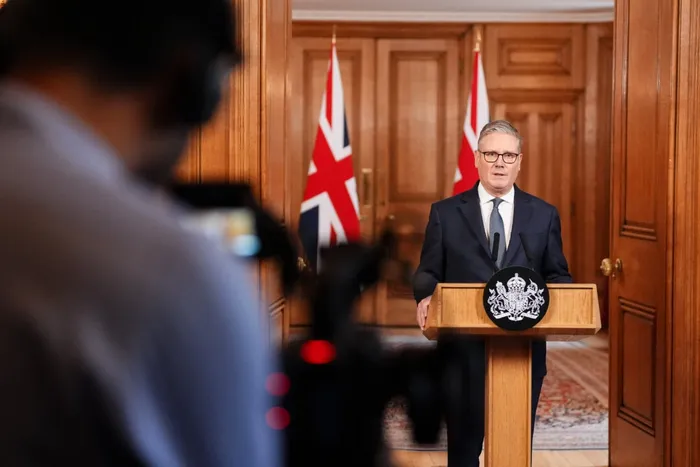
The "Special Relationship" between the U.S. and the U.K. is a sentimental hallucination. It is a security blanket for British diplomats and a convenient rhetorical prop for American presidents. When Donald Trump claims the bond is "not like it used to be," he isn't breaking news. He is finally admitting what the data has shown for thirty years: the trans-Atlantic alliance is no longer a marriage of equals or even a partnership of shared destiny. It is a transactional arrangement between a superpower and a mid-sized regional power struggling to find a role in a post-Brexit world.
The lazy consensus in mainstream media suggests that personality clashes—Trump vs. Starmer, or Biden’s Irish-inflected skepticism—are the "problem." This is a fundamental misunderstanding of geopolitics. The friction isn't about bad vibes. It is about a structural divergence of national interests. If you are still waiting for a return to the Churchill-Roosevelt or Thatcher-Reagan eras, you are waiting for a ghost.
The Sentimentality Trap
London has spent decades intoxicated by the myth of the bridge. The idea was simple: Britain would be the vital link between Europe and the United States. It was a brilliant strategy for 1995. It is a catastrophic delusion for 2026.
By leaving the European Union, the U.K. didn’t become a "Global Britain" free to roam the high seas; it became an island with no structural leverage over its largest neighbor and diminishing utility to its primary ally. Washington values the U.K. for its intelligence-sharing capabilities (Five Eyes) and its nuclear cooperation. Beyond that? The U.K. is increasingly seen as a high-maintenance junior partner that brings a lot of baggage and very little extra-regional muscle.
The U.S. is pivoting to the Indo-Pacific. Its focus is on the containment of China and the tech-war over semiconductors. While the U.K. tries to play along with the AUKUS deal, the reality is that Washington’s gaze has shifted away from the Atlantic. If the U.K. wants to remain relevant, it has to stop asking for "special" treatment and start offering "essential" value. Right now, it’s mostly offering nostalgic speeches.
Trade Realities Over Rhetoric
People often ask: "When will we get a U.S.-U.K. Free Trade Agreement?"
The honest answer? Never. Or at least, not one that actually matters.
The premise of the question is flawed. It assumes the U.S. is interested in a comprehensive trade deal with a nation that has a fraction of its GDP and a highly regulated agricultural sector that clashes with American industrial farming. For the U.S. Congress, there is zero political upside to a deal that would be framed as "selling out" American farmers to help a former colonial power.
Instead of a grand bargain, we are seeing "managed divergence." The U.K. signs tiny memorandums of understanding with individual states like Texas or Utah. These are the participation trophies of international trade. They look good on a press release but do nothing to move the needle on GDP.
I have watched policy advisors spend thousands of hours chasing these state-level crumbs. It is a waste of human capital. The U.K. should stop begging for a seat at the U.S. trade table and start aggressively deregulating its own internal markets to become a true high-growth hub. You don't get a "special" deal by being polite; you get one by being a competitor that can't be ignored.
The Defense Delusion
The U.K. prides itself on being the second-tier power in NATO, the one that actually pays its bills. But the gap between American military spend and British capability is now an abyss.
$US Defense Spending: ~$900 billion$
$UK Defense Spending: ~$65 billion$
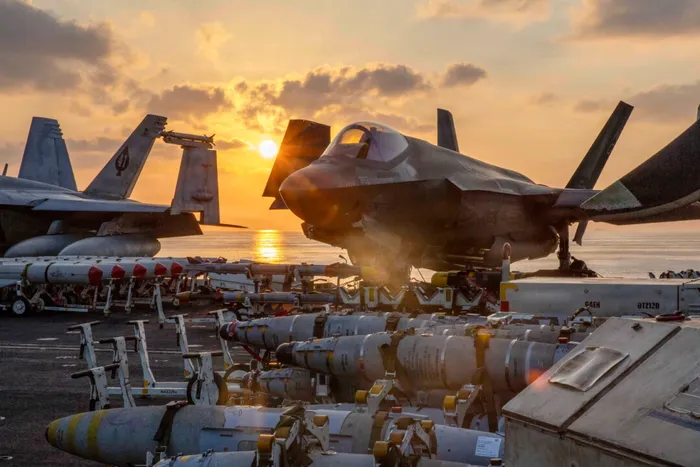
The math doesn't lie. The U.K. is currently struggling to maintain two aircraft carriers that it can barely afford to escort. When Trump complains that the relationship is "different," he is looking at a partner that is increasingly hollowed out. From a Washington perspective, the U.K. is a legacy asset. It’s a reliable vote at the UN Security Council, but in a kinetic conflict in the South China Sea, how much "special" help can London actually provide?
We need to dismantle the idea that the U.K. is the "deputy sheriff." It isn't. It’s more like the retired sheriff who keeps showing up to the crime scene with old maps.
The Sovereignty Paradox
The great irony of the current friction is that the U.K. sought Brexit to reclaim sovereignty, only to find that it is now more dependent on American whims than ever. When the U.S. Treasury Department sneezes, the City of London catches a cold. When Washington decides to subsidize its green energy sector via the Inflation Reduction Act, the U.K. is left in the cold, unable to compete with the sheer scale of American capital.
If the relationship were truly "special," there would be carve-outs for British industry. There aren't. There are only American interests.
Stop Trying to Save the Relationship
The obsession with fixing the U.S.-U.K. bond is a distraction from the real work of national survival. Here is the unconventional path forward that no politician wants to admit:
- Accept Irrelevance: Stop trying to be the "bridge." The bridge is broken, and no one is crossing it. The U.K. needs to define its national interest independent of American approval.
- Double Down on Niche Power: The U.K. excels in life sciences, fintech, and high-end aerospace. Stop trying to be a mini-superpower and start being a specialized powerhouse.
- Security Realism: Acknowledge that the U.S. security guarantee is conditional. The "America First" movement isn't a fluke; it's a trend. The U.K. must lead a European defense pillar that doesn't rely on a fickle Washington.
- Kill the "Special" Branding: The term itself is needy. It signals weakness. Great powers don't ask if they are special; they act in ways that make their presence unavoidable.
The "lazy consensus" says we need to get back to the way things were. The truth is that "the way things were" was an anomaly of the Cold War. That era is over. The U.S. is looking at its own internal fractures and its looming Pacific showdown. It doesn't have time for the U.K.'s identity crisis.
If the U.K. wants a seat at the table, it needs to bring something more than a shared language and some stories about 1944. It needs to bring cold, hard, strategic utility. Until then, stop crying about the "broken" relationship. It isn't broken. It’s just evolved into something much colder, much harder, and much more honest.
Accept the cold. Move on.
Build something that doesn't require a permission slip from the White House.