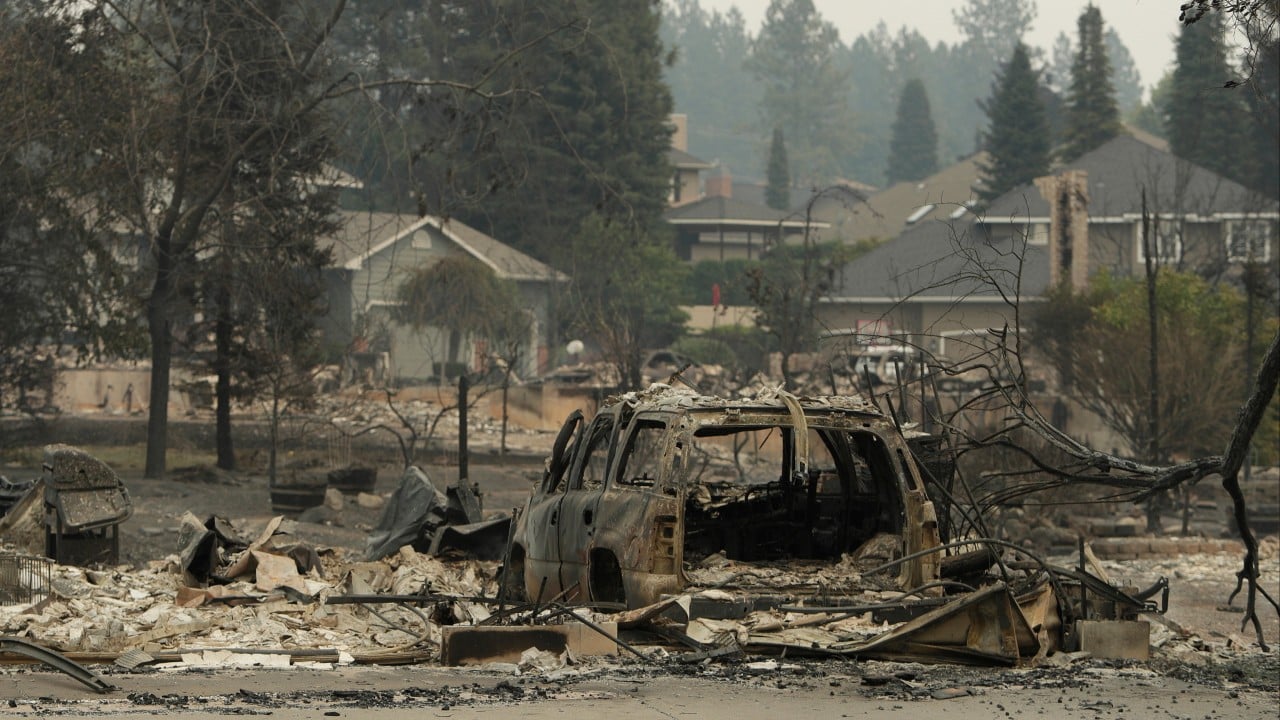
Every time a neighborhood turns to ash in Spokane, the media plays the exact same script. They wheel out weeping homeowners, blame an unusually dry July, mutter something vague about climate change, and call it a natural disaster.
It is not a natural disaster. It is an architectural mugging.
We keep treating catastrophic urban-wildland fires as bad weather events, akin to a sudden hurricane or an unexpected sinkhole. That framing is a lie. When you build suburban stick-frame housing directly into an aggressive fire ecology and refuse to clear the dry pine needles within three feet of the foundation, you are not the victim of nature. You are the architect of a tinderbox.
I have walked these burn zones hours after the smoke cleared. I have watched municipal planners throw their hands in the air and talk about unprecedented wind gusts. They want you to believe that fire acts with malicious, unpredictable intelligence. It doesn't. Fire behaves with physics. And our current zoning codes ignore physics entirely.
The Consensus Lie We Keep Buying
The lazy narrative surrounding the Spokane fires goes like this: drought makes the brush hot, lightning or a stray spark hits dry timber, and a wall of flame sweeps down from the hills, overwhelming local fire departments through sheer bad luck.
This story comforts us because it implies innocence. If the fire is an act of god, nobody is at fault.
Stop buying it.
The primary driver of structural loss in Spokane is not the crown fire tearing through the distant canopy. It is ember scatter. Hundreds of pounds of burning pine needles, bark, and twigs are lofted a half-mile ahead of the main front, landing on cedar shake roofs, piling up against vinyl siding, and sliding under the unvented eaves of modern tract housing.
Your house does not burn down because the forest caught fire. Your house burns down because your house is made of kindling and your local zoning board lacks the backbone to enforce defensible space mandates.
The Mechanics of Structural Ignition
Let us look at how a home actually burns down in a wildfire zone.
Most people picture a wall of roaring flames rolling over a suburban lawn like a scene from an action movie. In reality, houses rarely ignite from direct contact with a forest fire front. They ignite from three distinct vectors: radiant heat, direct flame contact from burning landscaping, and wind-driven embers.
Radiant heat is a straightforward mathematical equation. If a pine tree burns intensely fifty feet from your living room window, the infrared radiation will shatter dual-pane glass within minutes. Once the glass fails, interior curtains catch, and the house burns from the inside out.
Direct flame contact happens because homeowners love manicured landscaping. We plant ornamental evergreens right against the front porch. We lay down thick beds of decorative cedar bark mulch—which is literally dried wood chips—directly beneath wooden siding. When an ember lands in that mulch, it smolders unnoticed until it ignites the wall.
Embers are the real killer. During a high-wind Spokane wildfire event, trillions of glowing embers rain down on neighborhoods. If your attic vents have quarter-inch mesh screening, those embers fly straight into the attic space, land on blown-in fiberglass insulation, and ignite the roof structure from above while the fire department is two miles away fighting a flare-up on the ridge.
None of this is unpredictable. All of it is preventable. Yet city councils continue approving high-density subdivisions in heavy timber zones without requiring ignition-resistant construction standards.
Why Bad Building Codes Are a Lethal Form of Zoning
For decades, urban planners have pushed for developments that blend communities into natural environments. They call it green integration. I call it structural suicide.
When you zone land for residential use in the wildland-urban interface without mandating Class A fire-rated roofs, boxed-in eaves, multi-pane tempered glass, and non-combustible exterior wall assemblies, you are signing a death warrant for that neighborhood.
Developers love these locations because trees sell houses. A lot tucked against a ponderosa pine stand commands a twenty percent premium over a lot on a barren flat. The developer cashes out, the city collects increased property tax revenue, and twenty years later, the homeowner is standing in the soot wondering how this could have happened.
The liability is externalized onto the public purse. When the neighborhood goes up in smoke, federal and state disaster relief funds rush in to pick up the pieces, while insurance companies either flee the state or jack up premiums for everyone else. We are subsidizing stupidity.
The Hard Reset We Refuse to Make
If we want to stop watching Spokane neighborhoods turn to charcoal, we need to stop coddling developers and start enforcing radical mitigation.
First, ban combustible siding and roofing materials in every zone bordering timberland. No more cedar shingles. No more vinyl siding that melts when the ambient air temperature hits one hundred and twenty degrees. If you want to build in a fire zone, your exterior must be fiber cement, stucco, brick, or heavy timber treated with proper fire retardants.
Second, re-engineer the ignition zone. The first five feet around a home should be completely devoid of vegetation, mulch, or wood structures. Gravel, stone, and bare earth. If an ember lands next to your foundation, it should have nothing to burn.
Third, stop treating defensible space as an aesthetic suggestion. Local fire marshals need the statutory authority to inspect private property and fine homeowners who allow overgrown brush and dead pines to crowd their roofs. Yes, people value their privacy screens and their natural canopy. Your desire for shaded backyard privacy does not override your neighbor's right to not have your pine trees burn their house down.
We have the science. We have the building materials. What we lack is the political courage to tell people that living close to nature requires respecting nature's rules, not rewriting them to suit a real estate brochure.
Until we stop blaming the weather and start holding ourselves accountable for how and where we build, Spokane's next wildfire catastrophe is not a question of if. It is a question of inventory.