Salt.
That is the first thing you taste when the air turns heavy over the Strait of Hormuz, long before radar catches a rogue echo or a watch officer's coffee goes cold in a brass gimbal. At night, the water does not look like a map line drawn in ink across a globe. It looks like black glass stretched tight over something ancient and watchful.
Three ships. Three sudden concussions rolling across dark water where tankers creep single-file through a bottleneck barely wider than a commute on a bad morning.
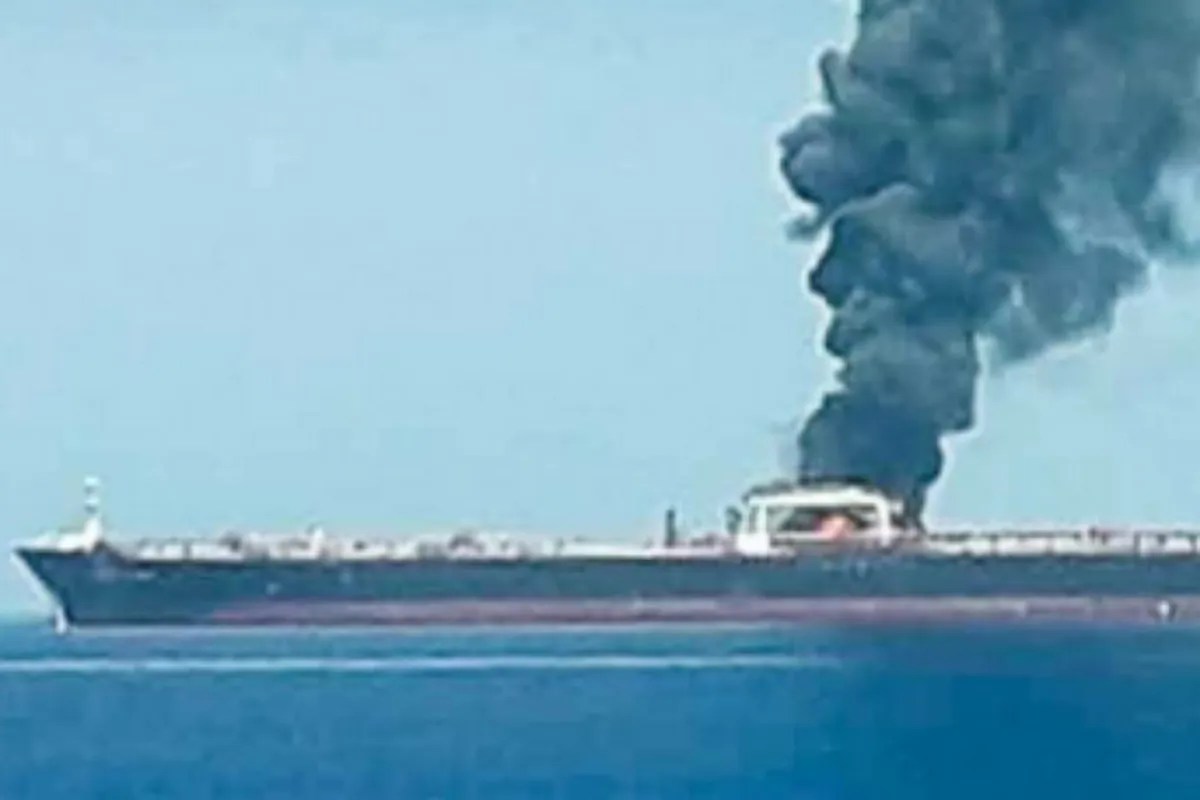
A standard news dispatch can give you the skeleton of that event in four crisp sentences: three vessels struck naval mines in the Strait of Hormuz, triggering explosions and fires. Clean. Tidy. Easy to scroll past while waiting for toast to pop. Yet a headline is a postmark, not the letter inside. It tells you steel met explosive behind closed water doors, and leaves out the salt, the heat, the ringing in a helmsman's ears, and the quiet arithmetic that decides whether a crate of medicine in Mumbai or a tank of diesel in a farming town ten thousand miles away costs more by Friday.
Because we do not have an operational incident log in front of us for this specific moment, let us be clear about how we read what happens when naval mines strike three vessels in the Strait of Hormuz. The core reported fact—three ships hit by sea mines in the strait, followed by blasts and fire—is the anchor. Everything else in a human story comes from sensory truth, maritime mechanics, and hypothetical characters explicitly marked as such so you never mistake fiction for a wire report.
The Sound Before the Flame
Picture a hypothetical second mate—let us call him Tariq—standing on the bridge wing of a medium-sized merchant ship at 02:14 local time. He has worked Gulf routes long enough to know the rhythm of heat on steel. Even after sunset, a hull that spent twelve hours baking under a desert sun radiates warmth back into the sea like a radiator left on in an empty room.
Down in the engine room, two decks below the waterline, the air smells of warm lube oil, ozone, and diesel exhaust scrubbed clean by regulation. Six hundred tons of fuel burn every twenty-four hours on a large vessel, turning shafts the thickness of tree trunks. Crews move through narrow steel corridors with muscle memory. You do not walk with your hands in your pockets at sea. One hand always finds a handrail, a bulkhead, a doorframe, because the ocean has no respect for balance.
Now imagine—strictly as a hypothetical illustration of what those on board experience when a mine detonates—the suddenness of a low-frequency shockwave. A sea mine does not always announce itself with a bright movie fireball first. Often, a moored or bottom-influenced charge lifts a column of water and gas against the hull plates with such violent force that the deck jumps upward through the soles of your boots before your ears even register the boom.
Glass shatters. Alarms shriek in three different pitches at once. Smoke, acrid and greasy, begins curling from a ventilation trunk before anyone has even reached the intercom.
Fire at sea is a different beast from fire on land. You cannot step outside and wait for a ladder truck. The ocean surrounds you on every side, and the closest shore may be miles away across pitch-black swells. When three vessels take hits in the same narrow corridor, the panic is not just on one bridge. Every radio channel crackles with clipped, urgent calls: position reports, smoke sightings, requests for tugs, warnings to hold back or alter course.
I have stood on enough steel decks in heavy weather to know what fear smells like. It smells like copper, wet wool, and burnt wiring. And it makes time stretch. Thirty seconds inside a smoke-filled passageway feels like ten minutes while you count bulkheads by touch.
Why a Narrow Strip of Water Holds the World by the Collar
Why does an explosion in one strait make people in completely unrelated time zones check fuel prices and shipping alerts?
Geography. Brutal, unglamorous geography.
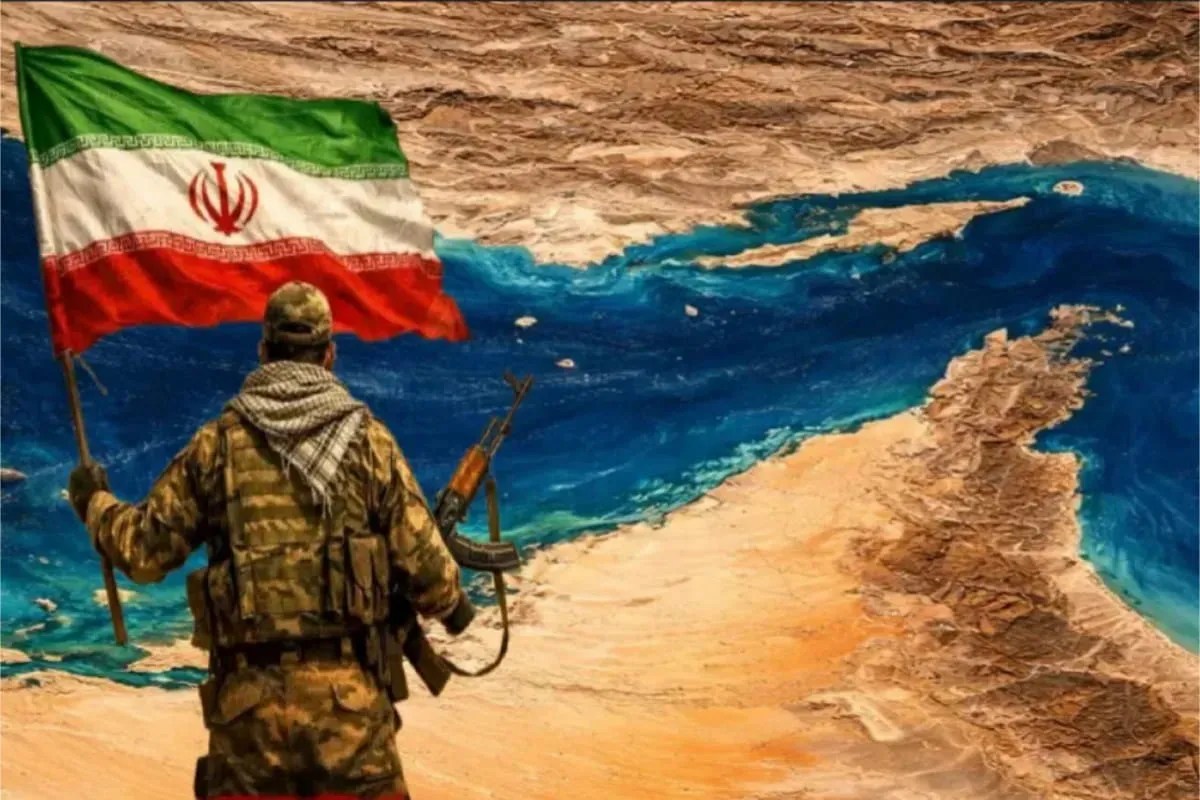
The Strait of Hormuz connects the Persian Gulf with the Gulf of Oman and the open Arabian Sea. At its narrowest point, the navigable shipping lanes squeeze vessels through a throat roughly twenty-one miles wide—and the actual deep-water channels where big ships can pass safely without grounding are only a couple of miles across in each direction.
Think of a six-lane highway funneling into a single tunnel during rush hour, except the cars are three-hundred-meter steel hulls carrying crude oil, liquefied natural gas, refined fuels, and industrial cargo, and there is no shoulder to pull onto if something goes wrong.
To explain this simply, use a kitchen analogy. Suppose you have a large mixing bowl full of ingredients on one side of a narrow doorway, and an empty pot on the other. Every cup has to pass through a frame just wide enough for one person at a time. Now drop a few heavy obstacles right inside the doorway. Even if the bowl is still full and the pot is still waiting, the flow slows to a crawl. Everyone behind backs up. Tempers flare. Costs climb because time itself has become scarce.
That is the Strait of Hormuz in plain terms. It is not a wide, empty sea where ships can casually detour around trouble by steering fifty miles left or right. The shoals, islands, and territorial waters press in tight. When sea mines enter that equation—and three ships suffer blasts and fires—every captain approaching the entrance has to ask a question no chart can answer with certainty: Is the channel clear right now, or is the next square of dark water waiting?
Sea Mines Are Cheap; Doubt Is Expensive
People who have never looked closely at naval warfare often picture torpedoes streaking through the water or missiles arcing across the sky. A sea mine is quieter. More patient.
Historically, sea mines have been among the most cost-effective weapons ever put in water. A single mine can cost a fraction of what it costs to build, insure, or repair a commercial vessel, yet its psychological and economic reach is enormous. Unlike a manned patrol boat, a mine does not get tired, does not need fuel to loiter, and does not care whether the vessel passing overhead carries crude oil, grain, electronics, or humanitarian supplies.
Some mines float or sit tethered at a set depth, waiting for physical contact with a hull. Others rest on or near the seabed, listening for the magnetic signature of a massive steel ship, the pressure wave of water displaced as a hull passes over, or the acoustic hum of turning propellers.
Consider what happens next when word spreads that three ships have been struck and set ablaze in the strait:
- Crew safety becomes immediate. Seafarers are civilians doing grueling work far from home. When mines go off, insurers, shipowners, and unions look hard at war-risk zones and whether crews should transit at night or wait in anchorage.
- Insurance premiums jump. Even if a ship is never hit, insuring a hull and its cargo through a mined waterway can surge dramatically in cost—sometimes overnight—forcing charterers to pause, renegotiate, or reroute.
- Schedules unravel. A delay of a few days in a chokepoint ripples outward like a stone dropped into a pond. Container ships miss berths at ports weeks later. Factories waiting on raw materials or fuel feel the squeeze downstream.
You do not need a degree in macroeconomics to feel that ripple. If freight and energy costs rise across supply chains, the cost shows up in groceries, manufacturing inputs, airline tickets, and utility bills. A blast in warm Gulf waters reaches cold suburban driveways.
The Invisible Stakes Behind Every Barrel and Hull
Let us introduce another hypothetical character—let us call her Meera—who runs a small logistics and packaging business far inland, thousands of miles from the Persian Gulf. She has never seen a supertanker in person. Her mornings start with spreadsheets, supplier emails, and trying to keep unit costs steady so she does not have to raise prices on loyal customers.
On the morning news comes a report of three vessels hit by mines in the Strait of Hormuz, explosions tearing into hulls, fires burning on the water.
Meera might shrug at first. That's far away, she thinks. Doesn't touch my shop.
Two weeks later, her freight forwarder sends a terse note: fuel surcharges are up, transit times on certain ocean legs are stretching, and a raw material supplier is quoting higher prices because energy and shipping costs across the chain are climbing. Nothing in Meera's warehouse exploded. No fire touched her roof. Yet a spark in a narrow strait still found dry tinder in her budget.
That is the invisible stake of chokepoint security. We live inside a tightly coupled world where efficiency—moving goods just in time, keeping inventories lean, routing trade through the fastest corridor—also creates fragility. When a bottleneck jams, there is very little slack in the system to absorb the shock.
At the same time, it is worth admitting honestly where uncertainty lives. In fast-moving maritime incidents involving mines, explosions, and fires, early details are often messy. Exact mine types, attribution, the full extent of hull damage, and how quickly channels can be swept and declared safe rarely become crystal clear in the first hour. Anyone claiming absolute certainty about every detail before thorough salvage and mine-countermeasures work is guessing louder than they know.
Acknowledging that fog is not weakness. It is honesty. At sea, respect for what you cannot yet see keeps people alive.
What Happens When Fire Meets Steel at Sea
When a vessel takes a mine hit and catches fire, the battle shifts from navigation to survival and containment.
Firefighters on shore can pull back, ventilate a roof, or bring in mutual aid from neighboring towns. At sea, a ship's crew is the first—and often the only—line of defense for hours. Thick smoke blinds corridors. Heat warps steel doors so tightly they jam shut. Water pumped onto a fire to cool bulkheads can add weight high or off-center on a damaged hull, making stability calculations a constant worry for the master and chief engineer.
Meanwhile, tugboats and firefighting vessels face their own hazard if mines remain active in the area. Sending rescue craft into waters where three ships have already detonated devices requires painstaking caution. Every meter of water has to be weighed against the risk of a fourth blast.
Think about the nerve that takes. A salvage captain steering toward a burning hull knows the exact spot where danger just struck, yet cannot assume the rest of the channel is harmless. Courage at sea rarely looks like a speech on a quarterdeck. Usually it looks like quiet, methodical checks: verifying sonar, watching the radar, keeping a steady hand on the throttle while everyone else on the bridge is wide awake and listening to the hull.
Why Headlines Fade Before the Consequences Do
News cycles have short attention spans. Tomorrow there will be another story, another crisis, another urgent alert competing for your thumb.
Maritime disruptions rarely end on the same day the smoke clears. Sweeping a busy waterway for mines is slow, meticulous work. Divers, unmanned underwater vehicles, and specialized mine-hunting vessels have to methodically clear routes, inspect wrecks, and confirm that shipping lanes can safely carry traffic again. Even after the fires on those three ships are extinguished and salvage crews assess the damage, the memory of the blasts lingers in every route plan.
Captains remember where the water turned hostile. Shipowners remember how fast a routine transit turned into a crisis. Families waiting at home for a call from a crew member on a Gulf run remember every hour of silence until a satellite message finally comes through.
There is a reason mariners have always spoken of the sea with a mixture of affection and dread. It gives livelihoods, connects distant cultures, and carries the bulk of what modern civilization consumes. Yet the moment we treat a vital waterway like a conveyor belt that can never break down, the sea reminds us otherwise.
Look back at that headline one more time: three ships struck by sea mines in the Strait of Hormuz, explosions and fires breaking out in one of the world's most vital passages.
Behind those words are real people gripping rails in the dark, real cargo tied to real livelihoods, and a narrow ribbon of salt water where a single hidden charge can echo across the entire map.
The water is still dark. The channel is still narrow. And somewhere out past the horizon, a watch officer is still staring into the night, listening to the hum of steel against the tide.