Every six months, a fresh crop of defense analysts sitting comfortably in Washington, Tokyo, or Singapore dusts off the exact same tired script. They look at a minor infrastructure proposal in the Natuna Islands, rub their hands together, and publish breathless think-tank papers about Indonesia’s delicate balancing act between two competing superpowers. According to this lazy consensus, Jakarta is a terrified middle power tiptoeing across a geopolitical tightrope, desperate to avoid angering Beijing while secretly begging Tokyo to build naval facilities as a counterweight.
It is a completely fictional narrative. It misunderstands modern Indonesian statecraft, misreads Tokyo’s foreign aid motivations, and projects Western Cold War anxieties onto a region that long ago stopped playing the binary loyalty game.
Indonesia is not balancing anyone. Indonesia is extracting.
If you want to understand why Japan’s proposed involvement in the Natuna development keeps hitting bureaucratic walls in Jakarta, you have to throw out the comic-book framing of good democracies versus rising autocracies. You have to look at how a post-colonial republic actually manages sovereignty in an era of fiscal pragmatism.
The Myth of the Strategic Tightrope
Let us start by destroying the core premise of the mainstream reporting. The prevailing narrative treats Indonesia’s foreign policy as an accident of geography—a helpless archipelago trapped between Chinese maritime ambitions and Japanese economic diplomacy. This view ignores the foundational doctrine of Indonesian diplomacy: bebas aktif, meaning independent and active.
To foreign observers, bebas aktif looks like hesitation or inconsistency. To Jakarta, it is a masterclass in strategic non-attachment. Indonesia has spent decades refusing to become anyone's junior partner. When foreign media frames a port proposal in the Riau Islands as a test of Jakarta's backbone against Beijing, they are applying a European or East Asian alliance mindset to a country that views permanent alliances as a tactical liability.
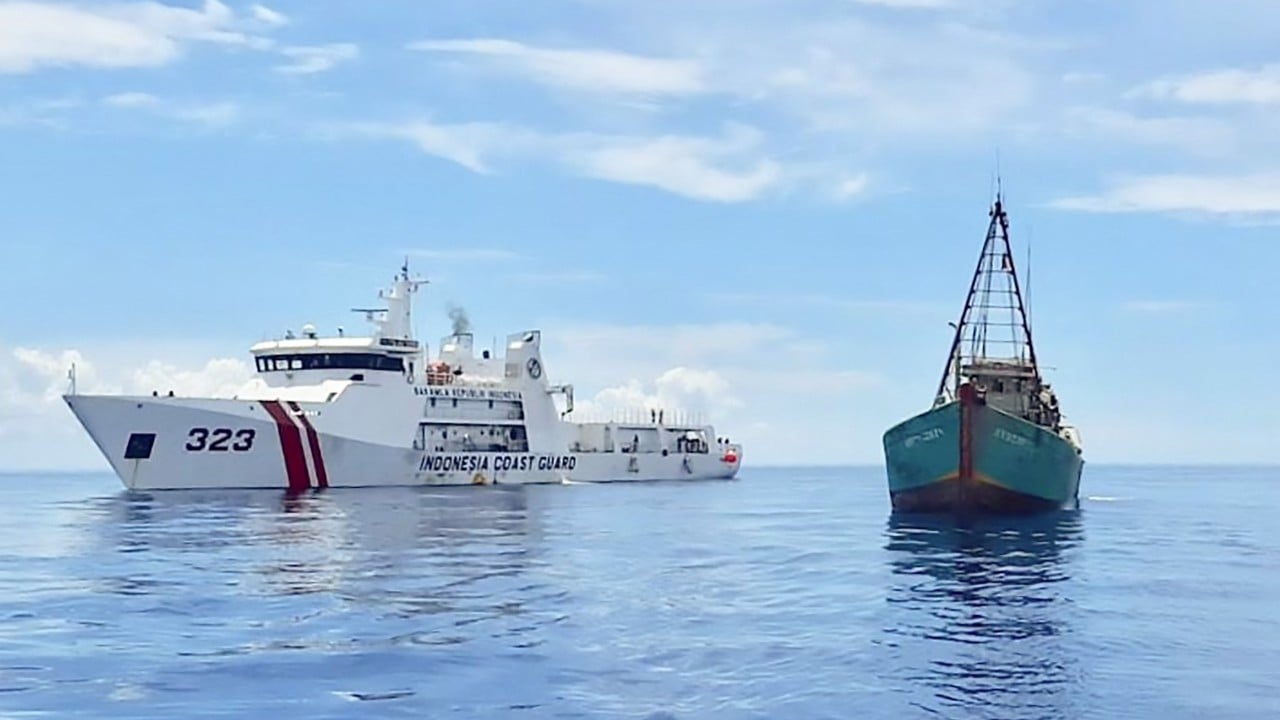
I have sat in closed-door policy briefings in Jakarta where Western diplomats wrring their hands over Chinese coast guard incursions near the Tuna block were met with polite, icy boredom. To Indonesian strategists, occasional gray-zone friction at the edge of their exclusive economic zone is a predictable cost of doing business in a crowded sea. It is not an existential crisis requiring a foreign rescue package.
When Tokyo pitches funding or technical assistance for maritime infrastructure in the outermost islands, Jakarta does not see a shield against Beijing. Jakarta sees an open checkbook. They evaluate the offer through a purely utilitarian lens: Who pays for the dredging? Who gets the construction contracts? Which local politicians get credit for the ribbon-cutting?
Tokyo Is Not Playing Guardian Angels
Let us turn the lens on Japan. The mainstream press loves to paint Tokyo’s increased diplomatic and economic engagement in Southeast Asia’s maritime periphery as a selfless defense of a rules-based international order. This is romanticized nonsense.
Japan’s interest in the South China Sea margins is driven by cold, hard maritime vulnerability. Tokyo imports nearly all of its energy and a vast majority of its raw materials through these sea lanes. Japanese policymakers are acutely aware that a Chinese chokehold on regional choke points spells economic suffocation for their island nation.
Therefore, Japanese capital deployment into places like the Natuna region is not an act of charity or a brave stand for regional freedom. It is insurance. Tokyo is trying to lock regional nations into supply chains, maintenance contracts, and diplomatic alignments that keep sea lanes open for Japanese tankers.
Yet, Japanese foreign aid comes with heavy bureaucratic friction. Tokyo demands strict transparency, complex feasibility studies, and environmental compliance standards that move at glacial speeds. Indonesian officials, accustomed to the fast, no-strings-attached financing models offered by other global actors, often find Japanese bureaucratic red tape exhausting.
When a port proposal stalls in Jakarta, it is rarely because Indonesian leaders are trembling at how Beijing might react. More often, it stalls because local elites are haggling over procurement rights, jurisdiction splits, and whether Tokyo’s proposed specifications actually serve domestic economic priorities. The geopolitical angle is mostly window dressing for domestic consumption and foreign media consumption.
How Jakarta Handles Beijing Without Your Permission
The armchair strategists love to point out that Indonesia refuses to formally challenge China’s sweeping territorial claims in international courts or join joint patrols with Western navies. They view this as weakness. It is actually sophisticated risk management.
Indonesia does not officially recognize Beijing's infamous nine-dash line or its modern iterations. Jakarta’s position is legally bulletproof: under the United Nations Convention on the Law of the Sea, the waters around the Natuna Islands are Indonesian sovereign economic zones. Period.
Because Jakarta’s legal stance is so clear, Indonesian leaders do not feel the need to scream about it on international television. Instead of engaging in performative naval posturing that risks escalation, Indonesia plays a long, attritional game of civilian law enforcement and resource development.
Fisheries vessels are intercepted. Domestic energy companies are pressured to drill for oil and gas right inside disputed maritime boundaries, daring foreign coast guards to disrupt commercial operations. By pushing state-backed commercial activity into contested zones, Indonesia forces foreign powers to choose between backing down or committing an explicit act of economic aggression against a sovereign state.
This approach requires no foreign bases, no Japanese destroyers docked in the Natuna harbor, and no security guarantees from Washington. It relies on domestic bureaucratic persistence and legal clarity. It is boring, unglamorous, and infinitely more effective than a flashy military buildup funded by foreign donors who expect a return on their strategic investment.
The Domestic Reality of Outpost Sovereignty
Imagine a scenario where a foreign government successfully funds and constructs a heavily militarized port facility on an isolated Indonesian island, complete with advanced radar installations and docking bays for foreign frigates. To a foreign think-tanker, this looks like a brilliant deterrent. To an Indonesian military planner, it looks like an unacceptable compromise of national command authority.
Indonesia’s military doctrine, heavily shaped by its war of independence, emphasizes territorial defense from within, relying on local resistance, dispersed units, and strict national control. Allowing a foreign power to establish deep infrastructural footprints in strategic borderlands violates the core taboo of modern Indonesian nationalism.
Furthermore, the domestic politics of the Natuna Islands are frequently misunderstood. The region is sparsely populated, economically disconnected from Java, and historically reliant on cross-border trade and fishing interactions with neighboring countries. Pumping billions into concrete ports without addressing local economic integration is a recipe for white elephant projects.
Indonesian presidents know this. When they entertain foreign proposals for island development, they are constantly weighing the utility of external funds against the political liability of looking like they are selling out national sovereignty to the highest bidder. Every dollar accepted from Tokyo or anywhere else is meticulously tracked against public perception.
Stop Applying Cold War Binaries
The fundamental error underlying almost every analysis of Indonesia’s foreign policy is the assumption that every nation must eventually pick a side in the great power competition between Washington and Beijing.
This assumption is arrogant and obsolete. Southeast Asia is writing its own playbook.
Indonesia has watched what happens to nations that become frontline proxies in superpower conflicts. They see the economic fallout, the political polarization, and the eventual abandonment when superpower priorities shift. Jakarta has zero intention of walking into that trap.
When foreign analysts ask whether Indonesia will lean toward China or lean toward Japan, they are asking the wrong question entirely. The question is not who Indonesia will lean toward. The question is how Indonesia can make both of them pay for local infrastructure while maintaining absolute independence of action.
The Natuna port proposal is not a geopolitical tipping point. It is a negotiation. It is a test of who has more patience: Tokyo with its endless checklists, or Jakarta with its infinite capacity to stall until the terms match its own national interest.
Stop looking for dramatic turning points in remote island archipelagos. There is no grand geopolitical chess match being played out on the shores of Natuna according to Western rules. There is only a sovereign state quietly taking everyone's money, building what it wants, where it wants, on its own terms, while the rest of the world mistakes its calm pragmatism for indecision.
The next time a headline warns you about Indonesia's delicate balancing act, remember the truth. They aren't balancing. They are watching you sweat over a game they stopped taking seriously years ago.