The lazy media narrative loves a villain. Hand them a stack of leaked bureaucratic documents showing a private career college scaling applications by 2,700 percent while pulling in millions in student aid, and they immediately smell blood. They point fingers at shady operators, scream about regulatory failure, and act surprised when public money follows the path of least resistance.
Everyone wants to blame the schools. Everyone wants to point to anomalous enrollment spikes, asynchronous online loopholes, and bad actors gaming the Ontario Student Assistance Program. You might also find this connected story insightful: The Prisoner of Tihar And The High Stakes Lobby For An American Mercenary.
They are missing the point entirely.
The crisis is not that private institutions figured out how to exploit a broken system. The crisis is that the system was deliberately engineered to be exploited by anyone willing to treat education like a high-volume retail transaction. Blaming career colleges for cashing the checks is like blaming a sponge for soaking up water. The government left the tap wide open, handed out the bucket, and yelled at the floor for getting wet. As reported in detailed reports by Reuters, the effects are widespread.
The Architecture of Perverse Incentives
To understand why 10 schools saw an average application surge of 855 percent, you have to stop looking at student handbooks and start looking at economic architecture.
For years, the province treated student financial aid as an open-ended voucher system tethered to institutional growth. When policy makers allowed OSAP eligibility to bleed into asynchronous online programs without proportional compliance frameworks, they created a massive arbitrage opportunity. If you remove physical classroom caps, lower the barrier to entry, and back every single enrollment with government-guaranteed funding, market forces will do what market forces always do. They will scale.
Imagine a scenario where a private business is handed a pipeline of government-backed capital with zero upfront credit risk. What do you expect them to do? Turn down growth? Tell prospective students wanting flexible online schedules to look elsewhere?
The schools caught in the crosshairs did not invent the loophole. They just drove a fleet of trucks through it while the Ministry of Colleges and Universities slept at the wheel for three straight years. Career Colleges Ontario—an organization whose board curiously consists of direct market competitors—started waving red flags back in 2023. They saw the anomaly. They watched applications balloon. And the ministry did what bureaucracies do best: they filed the letters, held a few meetings, and waited for a public scandal to force their hand.
The Myth of Bad Apple Regulation
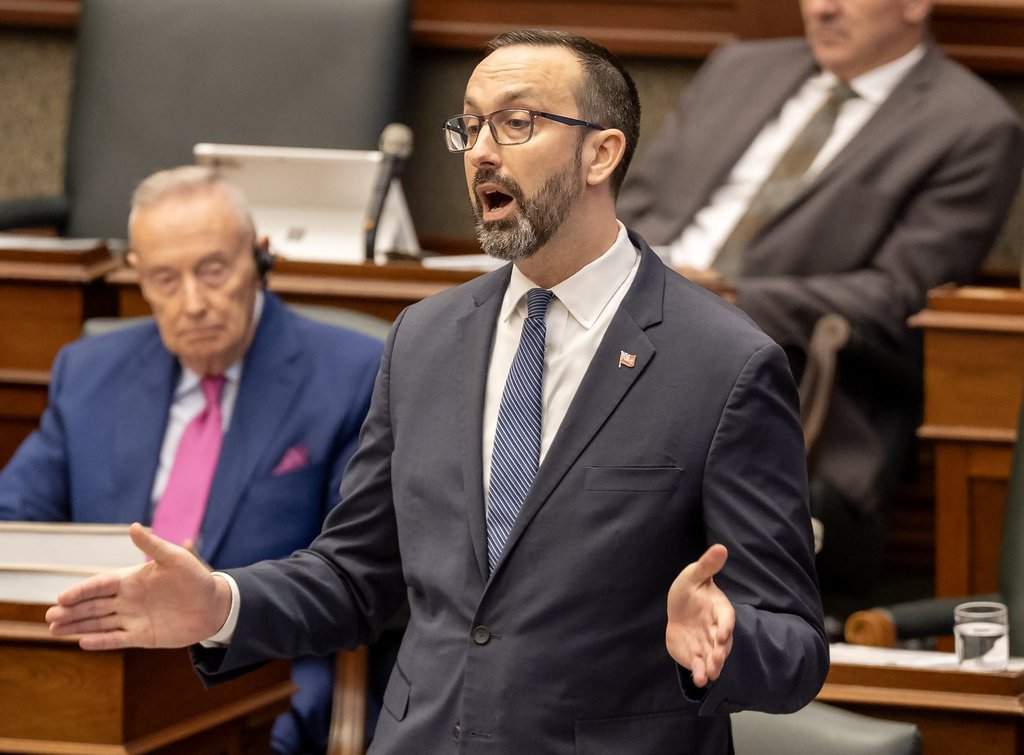
The current regulatory reflex is to drop the hammer on a handful of institutions, ban them from OSAP eligibility, and pretend the problem is solved. Universities Minister Nolan Quinn rolls out sweeping restrictions, slashing grant amounts and shutting down access, while politicians score cheap political points by acting shocked—shocked!—that private entities chase profit.
This is a structural distraction.
If you shut down five career colleges today, the underlying financial incentives that created those 2,700 percent spikes remain completely intact. Capital will simply find the next porous boundary. Private career colleges operate in a hyper-competitive space where survival dictates aggressive recruitment. When the state ties institutional revenue directly to government grants and loans, enrollment departments stop behaving like academic advisors and start behaving like aggressive sales teams.
We do not have an enforcement problem. We have a design flaw.
The entire post-secondary funding model treats education as a commodity where student volume equals institutional solvency. Public colleges spent years aggressively chasing international tuition to offset frozen domestic funding, while private career colleges optimized for whatever domestic demographics or program flexibilities kept the lights on. When you incentivize bodies in seats over outcomes in the workforce, you get exactly what you asked for.
Fixing the Plumbing, Not the Puddle
If Ontario actually wants to fix financial aid integrity, cutting off a few campuses via ministerial decree is window dressing. It allows the government to look decisive while punishing an entire ecosystem of students caught in the crossfire of retroactive panic.
Real reform requires upending how money flows.
First, unlink institutional survival from raw application volume. If funding is tied to long-term graduate employment retention and verifiable wage thresholds rather than initial enrollment data, the incentive to inflate application pipelines evaporates overnight. Schools that enroll students who never finish or never work should bear the financial weight of that failure, not the taxpayer.
Second, eliminate the artificial divide between synchronous and asynchronous oversight. If a program is fully online, the data trails for attendance, engagement, and academic progress must be subject to real-time programmatic auditing—not delayed three-year post-mortem reviews sparked by competitor complaints.
The outrage over millions flowing into private career colleges is a symptom of a deeper cowardice. Policymakers refuse to admit that their own administrative laziness built the bridge. Stop pretending this was an infiltration by criminal masterminds. It was a predictable outcome of a poorly built machine.
Stop punishing the schools for playing the game you wrote the rules for. Change the rules.