The lazy consensus in sports media is a parasitic thing. Let one high-profile quarterback hit the turf a few too many times in a season-opening collapse, and the entire ecosystem forms a single, deafening echo chamber.
The offensive line is a turnstile. If you enjoyed this post, you should look at: this related article.
Jordan Love is running for his life.
General manager Brian Gutekunst missed on draft capital. For another perspective on this development, see the recent coverage from NBC Sports.
It is clean, it is easy, and it is fundamentally wrong.
I have spent over a decade breaking down trench play from the coaches film, far away from the box-score box-checking that dominates morning shows. When I watch the Green Bay Packers struggle to keep their franchise quarterback upright, I do not see a collection of bad linemen getting physically whipped in individual one-on-one matchups. I see a systemic self-sabotage built on a flawed offensive architecture, erratic pre-snap identification, and a quarterback who routinely creates his own pressure by abandoning clean pockets.
Let us dismantle the narrative.
The Myth Of The Pass Protection Breakdown
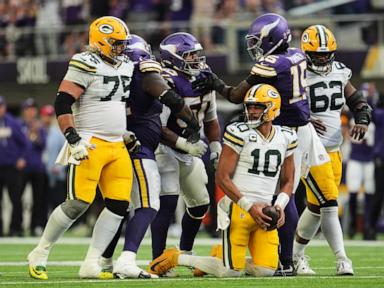
When a sack happens, the television broadcast freezes the frame at the moment of impact. A defensive end is standing over a flat-on-his-back Jordan Love. The finger points instantly at the right tackle or the center who missed an assignment.
That is not analysis. That is sports astrology.
Pass protection is an orchestra, not a solo act. When a defensive front overwhelms a scheme, the failure almost never originates at the point of contact three seconds after the snap. It starts in the first 800 milliseconds.
Consider the leverage math. Modern NFL pass rushes rely on coordinated stunts, simulated pressures, and unblocked second-level attackers designed to stress mathematical gaps. If an offense employs five linemen against a five-man rush with a blitzing linebacker, somebody must account for the math. When the Packers failed to protect Love in their opening-week meltdown, the tape showed a litany of protection scale errors—not physical beatdowns.
Centers and quarterbacks share the blame for slide protections. If the ID is wrong, the best tackle in football will look like an undrafted rookie trying to block a moving boulder. Green Bay did not lose because their guys up front lack the talent or the footwork. They lost because the pre-snap identification was entirely out of sync with what the defense dialed up.
The Quarterback Complicity Factor
We treat quarterbacks like fragile porcelain dolls who bear zero responsibility for the meteorological conditions of their pocket. This is a recent cultural phenomenon, and it ruins quarterback evaluation.
Jordan Love is a supremely talented thrower. His arm talent is real. But his pocket temperamentalism needs an aggressive audit.
Watch the coaches film from that opener again. Ignore the result of the play. Watch Love’s internal clock.
- He drifts backward when he should climb.
- He bails on clean inside grass to invite edge rushers into his escape lane.
- He holds the football half a beat too long waiting for high-risk vertical concepts to develop against two-deep shells.
Imagine a scenario where a quarterback consistently drops back seven yards instead of five, flattening the pass-rush launch angle for every defensive end in the league. That is not a protection failure; that is a geometry failure. When a quarterback sets his launch point too deep, he turns standard edge rushes into unblockable angle-rush sweeps.
The offensive line was graded poorly by every analytics outlet after that game because the metrics count pressures and sacks against the nearest blocker. They do not account for the quarterback who panics against simulated pressures and forces his tackles to block for four and a half seconds. No offensive line in NFL history can block a professional pass rush for four and a half seconds on a consistent basis. Physics forbids it.
The Scheme Stagnation
Matt LaFleur is an elite play-caller, but elite play-callers occasionally fall in love with structural complexity that taxes their own execution.
In that season opener, Green Bay tried to run sophisticated deep-shot concepts without establishing early rhythm throws or utilizing enough heavy personnel to dictate defensive match-ups. When you run predominantly empty or light formations against an aggressive, pressure-heavy front, you are essentially asking your five linemen to win an arm-wrestling contest against six or seven defenders with a running start.
The run game was abandoned far too early. You cannot neutralize a fierce pass rush by throwing forty times from standard dropback alignments. You neutralize a pass rush by running counter schemes right into the teeth of their lightest boxes, punishing linebackers for selling out on the pass, and forcing defensive coordinators to respect the ground.
Green Bay’s front office has invested heavily in the trenches. They draft athletic freaks with high RAS scores for a reason: they want movement, zone-blocking fluidity, and second-level destruction. Yet, early in the year, the coaching staff tried to turn these agile athletes into a stationary wall against heavier, downhill gap-shooteers. It was a mismatch of philosophy, not talent.
What Actually Needs To Fix
If you want to fix the Packers' protection issues, stop screaming for a trade deadline savior at offensive tackle. Stop pretending that benching a young lineman for a veteran journeyman will magically cure a structural disease.
The remedy is entirely behavioral and tactical:
- Speed up the rhythm: Design quick game, slants, and option routes that get the ball out of Love's hands in under 2.2 seconds. Make the defense pay for bringing extra rushers by leaving voids behind them.
- Clean up the pre-snap ID: Put the burden back on the coaching staff to simplify protection calls against disguised fronts. Simplify the rules so the center and quarterback are always on the exact same page.
- Climb the pocket: Love must learn to step up into the dirt instead of retreating backward into the converging traffic of the edge rushers.
The panic in Wisconsin is palpable right now. Fans and analysts are writing eulogies for the season because of one ugly afternoon where the protection broke down. But diagnosing the problem incorrectly guarantees that the solution will fail.
The line isn't broken. The process is. Fix the architecture, and the sacks will vanish.