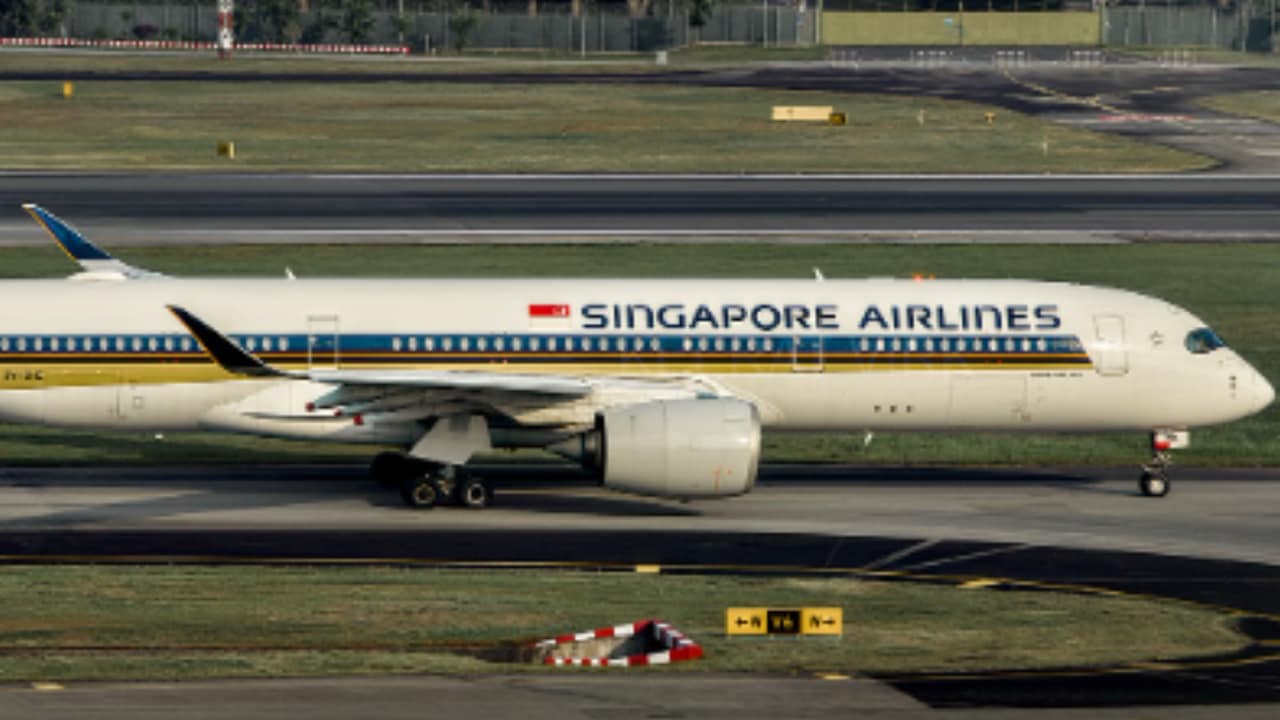
The internet loves a clean villain. When Singapore Airlines Flight SQ321 dropped 178 feet in four seconds over the Irrawaddy Basin, killing a seventy-three-year-old passenger and injuring dozens, the public narrative locked onto an easy target. The lazy consensus screamed that the pilots failed to turn the fasten-seatbelt sign on soon enough, that airlines are negligent, and that clear-air turbulence is an unpredictable monster hiding in a blue sky.
It is a comforting narrative because it suggests human error is fixable. Just turn the sign on faster. Buy better radar. Sue the carrier into bankruptcy.
It is also completely wrong.
I have spent two decades analyzing aviation risk management, and I am tired of watching knee-jerk litigation flatten complex physical realities into punchy headlines. Suing Singapore Airlines for a sudden gravity anomaly is the exact equivalent of suing the ocean because you drowned while refusing to wear a life jacket on a storm-slicked deck.
Let us dismantle the comforting fiction that airlines can control the sky.
The Physics Nobody Wants to Talk About
Clear-air turbulence does not show up on conventional weather radar. That is why it is called clear air. It happens when disparate air masses collide at high altitudes, creating invisible vertical shear forces that can slam an aluminum tube before the cockpit crew has even registered a deflection on their primary flight displays.
On SQ321, the Boeing 777-300ER was cruising at 37,000 feet. The aircraft encountered a rapid convective cell development over Myanmar that generated extreme, localized vertical acceleration. The plane did not just drop; the floor effectively fell away from the passengers.
When vertical acceleration exceeds one unit of gravity downward, unbelted human bodies become ballistic projectiles. If you are standing in the galley, walking to the lavatory, or sitting in your seat with your belt unfastened because the cabin crew is currently serving hot coffee, physics does not care about your ticket price or your consumer rights. Gravity takes the wheel.
The lawsuit filed by the surviving spouse argues that the crew failed to exercise adequate care by not securing the cabin earlier. This assumes aviation operates in a deterministic realm where pilots possess omniscience. They do not. Convective turbulence of that magnitude can materialize in under fifteen seconds. If flight crews kept the seatbelt sign illuminated for the entirety of every twelve-hour long-haul flight, service would halt, passenger dehydration would skyrocket, and people would still manage to injure themselves while ignoring the chime to stumble down the aisle anyway.
The Litigious Illusion of Zero Risk
We live in an era allergic to stochastic reality. We demand absolute safety from systems operating in inherently chaotic environments. When a rogue wave hits a cruise ship or a microburst clips an approach path, our immediate institutional reflex is to find a deep pocket to drain.
A wrongful death lawsuit against an airline following an unavoidable weather event provides psychological closure, but it corrupts systemic safety logic. If courts penalize carriers for encountering invisible atmospheric anomalies, airlines will be incentivized toward hyper-cautious, economically destructive operational parameters that achieve nothing for actual safety while driving up ticket costs.
Let us look at the actual data. Commercial aviation remains the safest mode of mass transportation ever engineered by human beings. Fatal accidents involving major legacy carriers are vanishingly rare. When they do happen, they are almost universally multi-causal chain events involving mechanical failure, pilot disorientation, or regulatory blind spots.
SQ321 was not a mechanical failure. It was an atmospheric assault.
The legal strategy deployed against Singapore Airlines relies on shifting the definition of negligence from actionable failure to failure of prophecy. Plaintiffs want juries to believe that because a tragedy occurred, someone must have possessed the foresight to prevent it. That logic reduces aviation safety to a lottery.
What Passengers Actually Get Wrong About Turbulence
People catastrophize turbulence because of a fundamental misunderstanding of structural engineering. Modern commercial airliners are not glass houses floating on a calm pond; they are flexible, hyper-engineered titanium and composite structures designed to flex and bend under extreme aerodynamic stress.
Wings on a Boeing or an Airbus can flex upward by more than twenty feet without failing. The structural limit of the aircraft frame far exceeds the physiological limit of the human spine inside it.
When passengers panic during moderate chop, they are reacting to the sensory illusion of danger. But the plane is fine. The wings are not going to snap off. The danger has never been structural integrity; the danger is unsecured interior objects and unbelted human skulls meeting overhead luggage bins.
This brings us to the most uncomfortable truth of modern air travel: the single biggest risk factor in any commercial flight is not the airline, the weather, or the air traffic controller. It is the passenger who thinks the seatbelt sign is an optional recommendation for people who prefer comfort over physics.
The Unconventional Prescription
If we want to stop these injuries, we need to abandon the courtroom fiction that airlines can legislate away weather and instead overhaul how we manage passenger behavior inside the cabin.
First, mandatory continuous seating should become the baseline standard for long-haul cruising altitudes. The cultural expectation that passengers have an inherent right to wander the aisles for hours on end needs to die. If you are not in your seat, your seatbelt should be fastened.
Second, airlines need to transition to zero-tolerance policies regarding the seatbelt sign. When that chime dings, flight attendants should not just make an announcement; they should strap in immediately and initiate compliance protocols that treat unbelted passengers with the same seriousness as security threats.
Third, litigation firms need to stop treating every weather-induced injury as a jackpot lottery. Tying up judicial resources to penalize carriers for the jet stream only serves to enrich tort lawyers while eroding the operational agility required to run global transit networks.
The sky is not a managed highway. It is a dynamic, volatile fluid medium. Respect it, buckle your harness, and accept that sometimes nature simply wins.