The $230 Million Security Theater
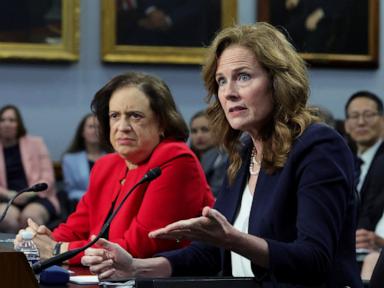
Justices Elena Kagan and Amy Coney Barrett marched up to Capitol Hill to pitch a 10% budget hike, crying out that the Supreme Court's security detail is stretched to its limits. They painted a harrowing picture: swatting incidents, bulletproof vests, and a projected 38% surge in threats. The lazy consensus of the media and lawmakers is a collective nod, ready to sign off on a $230 million budget, including millions to give every justice six more personal bodyguards.
But throwing more taxpayers' cash at personal protection details misses the entire point.
The security crisis facing the Supreme Court is not a physical staffing deficit. It is a profound, self-inflicted institutional crisis. By framing their safety purely as a funding gap, the justices are attempting to treat a systemic, metastasizing infection with a handful of expensive band-aids. More bodyguards will not fix a broken docket, and higher walls will not restore public trust.
The Deficit is Legitimacy, Not Liquidity
Let’s look at the actual numbers. The Supreme Court is demanding $20.6 million more for fiscal 2027, with $14.6 million dedicated solely to expanding the Supreme Court Police. Each justice currently has four to eight officers assigned to them. They want to balloon this, claiming they receive less security than cabinet officials.
But why are the threats escalating? The justices blame "political rhetoric" and "radical activism". This is a deflection.
The real driver of public hostility is the erosion of the court's institutional guardrails—many of which the justices themselves have dismantled or ignored.
- The Shadow Docket Abuse: Justice Kagan herself admitted during her testimony that the court’s aggressive, opaque use of the emergency docket has spiked. When the highest court in the land hands down monumental, life-altering decisions in the middle of the night with zero written explanation, it stops acting like a court and starts looking like a Star Chamber. Is it any wonder the public reacts with fury?
- The Unenforceable Ethics Code: The court finally adopted a code of conduct in 2023, but it remains a toothless public relations stunt with absolutely no enforcement mechanism. Barrett expressed hesitancy about an independent body enforcing ethics rules, stating "the court moves slowly".
Imagine a corporation where the executives fly on private jets funded by stakeholders, refuse to adhere to an independent compliance board, make major structural decisions behind closed doors without explanation, and then demand those same stakeholders pay for more private security when the shareholders get angry. They would be laughed out of the boardroom. Yet, this is exactly what the Supreme Court is doing.
The Illusion of Safety in a Fortress
In my years analyzing organizational risk and institutional design, one rule holds absolute: Fortress architecture breeds hostility.
When you insulate decision-makers entirely from the consequences of their public standing, you do not make them safer; you make them more detached. Bolstering the Supreme Court Police into a miniature standing army creates an echo chamber. It signals to the public that the court is an occupying force rather than a co-equal branch of a representative democracy.
Furthermore, the operational math of personal security details is fundamentally flawed. You cannot out-secure a democracy that has lost faith in your impartiality. Six extra guards per justice will not stop a determined bad actor in a country awash with firearms. It will, however, ensure that the justices never have to look at, speak to, or understand the citizens whose lives they govern.
If the Court wants to reduce the threat level, the solution is not tactical; it is behavioral.
The Unpopular Cure: Rebuilding Trust
If Congress wants to actually protect the justices, they should make the budget contingent on structural reform. Do not give them a single extra dollar for bodyguards until they implement the following:
- A Binding, Externally Enforced Ethics Code: If the other federal courts can be bound by real rules, the Supreme Court can too. An independent panel of retired federal judges should handle complaints.
- A Hard Limit on the Emergency Docket: Force the court to reserve the "shadow docket" for actual, verifiable emergencies, requiring full written opinions for any order that alters national policy.
- Radical Transparency: Open the courtroom to live television broadcasts. Demystify the proceedings. Let the public see the intellectual rigor of the arguments instead of relying on partisan media filters to interpret the decisions.
Safety is a byproduct of legitimacy. When the Supreme Court remembers that its authority rests entirely on public consent, the temperature of the nation will drop. Until then, taxpayers are simply funding the barricades of an imperial judiciary.
To see the direct testimony of the justices attempting to justify this budget increase, you can watch the Supreme Court Justices Testifying Before Congress to understand the gap between their security demands and the systemic issues they face.