The industry loves a good underdog story. We adore the narrative that two giants face off in a fair fight, duking it out for the hearts, minds, and wallets of the global elite. It makes for excellent headlines. It sells consultancy reports. It keeps the chattering classes occupied.
Here is the inconvenient truth: the battle for Singapore’s gaming crown ended years ago. Calling the current state of affairs a "competition" between Marina Bay Sands (MBS) and Resorts World Sentosa (RWS) is not just lazy—it is a categorical error that blinds investors to the realities of modern integrated resort economics.
If you are waiting for a comeback, you are waiting for a ghost.
The Location Fallacy
The lazy consensus is that RWS suffers from an "inherent location disadvantage." They want you to believe that if the monorail were faster, or if the island were connected better, the gap would vanish.
Nonsense.
Location is not a physical coordinate; it is a manifestation of brand gravity. MBS is not "winning" because it is closer to the financial district. It is winning because it positioned itself as the mandatory social signal for the global traveler. When you see a photograph of Singapore, you see the three towers and the surfboard-shaped sky garden. MBS is part of the city’s architectural identity. It is a landmark, not a building.
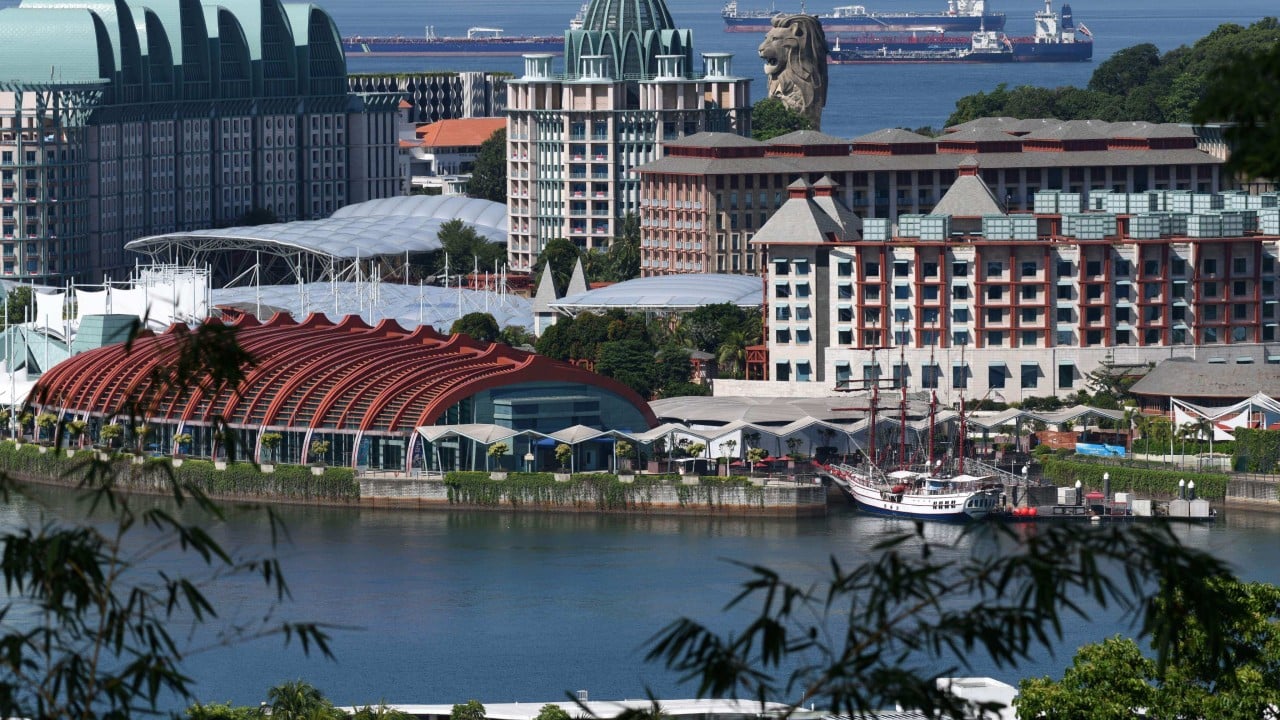
RWS, conversely, is a destination you have to decide to go to. It requires effort. It requires a detour. In an era where the ultra-wealthy prize convenience and visibility above all else, forcing your customer to cross a bridge is a death sentence. MBS captured the "walk-in" prestige market that defines high-margin gaming; RWS is fighting for the scraps of the family-vacation demographic, a segment notoriously allergic to the kind of high-stakes table play that moves the needle on quarterly results.
The Institutional Rot of "Satisfactory" Performance
Singapore’s Gambling Regulatory Authority recently flagged RWS for "unsatisfactory" tourism performance. Analysts love to frame this as a temporary setback, a stumble on the road to recovery.
Look closer at the mechanics. When a regulator issues a two-year license rather than a three-year one, they are sending a signal far more potent than a slap on the wrist: they are signaling that the business model is stale.
I have seen countless organizations try to fix structural decay with cosmetic upgrades. RWS is currently pouring billions into "RWS 2.0," attempting to renovate its way out of a relevance crisis. They are adding shiny new things to a floor plan that no longer matches the psychological profile of the modern gambler. You can install the most advanced slot machines in the world, but if your brand identity is "the place we took the kids to see the aquarium," you will never win the high-roller demographic.
High-stakes play is driven by peer recognition and ego. Look at the marketing optics: earlier this year, RWS offered a bottle of cognac as a high-roller lucky draw prize. Across the harbor, MBS was handing out a Mercedes-Benz.
This is not a marketing difference; it is an IQ test. MBS understands that their VIPs are playing for the status, not the alcohol. RWS is still operating as if they are competing on value, while their rival is competing on aspiration.
The Trap of the "Integrated" Myth
The industry standard dogma suggests that if you just build enough "non-gaming" attractions—theme parks, aquariums, malls—you will naturally foster a lucrative gaming environment.
Imagine a scenario where a CEO decides to pivot their entire revenue strategy based on the assumption that a family at a theme park will spontaneously decide to drop five figures at a blackjack table after a long day of sunscreen and sticky soda. It sounds absurd because it is.
The data confirms the disconnect. While MBS successfully blended high-end luxury retail with a casino floor that acts as the heartbeat of the building, RWS allowed its non-gaming attractions to languish into a state of "shambles," as frequent visitors and local observers have noted. When your secondary attractions—the very things meant to drive foot traffic—become a source of social media complaints about maintenance and heat, they stop being assets. They become liabilities. They occupy the physical space and the operational budget, but they generate zero loyalty.
Why The Conventional Wisdom Fails
You are likely asking: "Can RWS turn it around with the new leadership team?"
The answer is found in the numbers. In the first half of 2026, MBS generated over $2.1 billion in casino revenue. RWS clocked in at less than one-third of that. This isn't a "gap" you close with a new marketing campaign or a fresh coat of paint. This is a fundamental divergence in market share that has been compounding for a decade.
Genting Singapore’s management talks about "narrowing the gap." That is shareholder-pleasing rhetoric. The reality is that the market for high-end gaming in Singapore has reached a saturation point where the winner takes almost everything. MBS has achieved the "network effect" of luxury: they have the best events, the best MICE (Meetings, Incentives, Conferences, and Exhibitions) facilities, and the most iconic skyline presence.
If you want to understand the future of this industry, stop looking at "turnaround" press releases. Start looking at where the whales park their yachts.
The Brutal Reality of Asset Allocation
If I were holding a stake in this sector, I would stop betting on the "restoration" of RWS and start questioning the viability of the entire asset. The cost of capital to maintain a sprawling, underwhelming resort on an island that is losing its cultural cachet is a losing trade.
The industry is obsessed with "rectification." They want to believe that every resort can be saved if the management is just smart enough. It is the gambler’s fallacy applied to corporate strategy. Sometimes, the right decision is to recognize that you have lost your competitive advantage and stop burning cash trying to replicate a model—MBS—that relies on a singular, replicable location advantage.
Stop looking for the "fix." Stop analyzing the "revival." The market has spoken, the regulator has confirmed it, and the high-rollers have voted with their feet.
The game is over.
Move your chips to the table that is actually paying out.