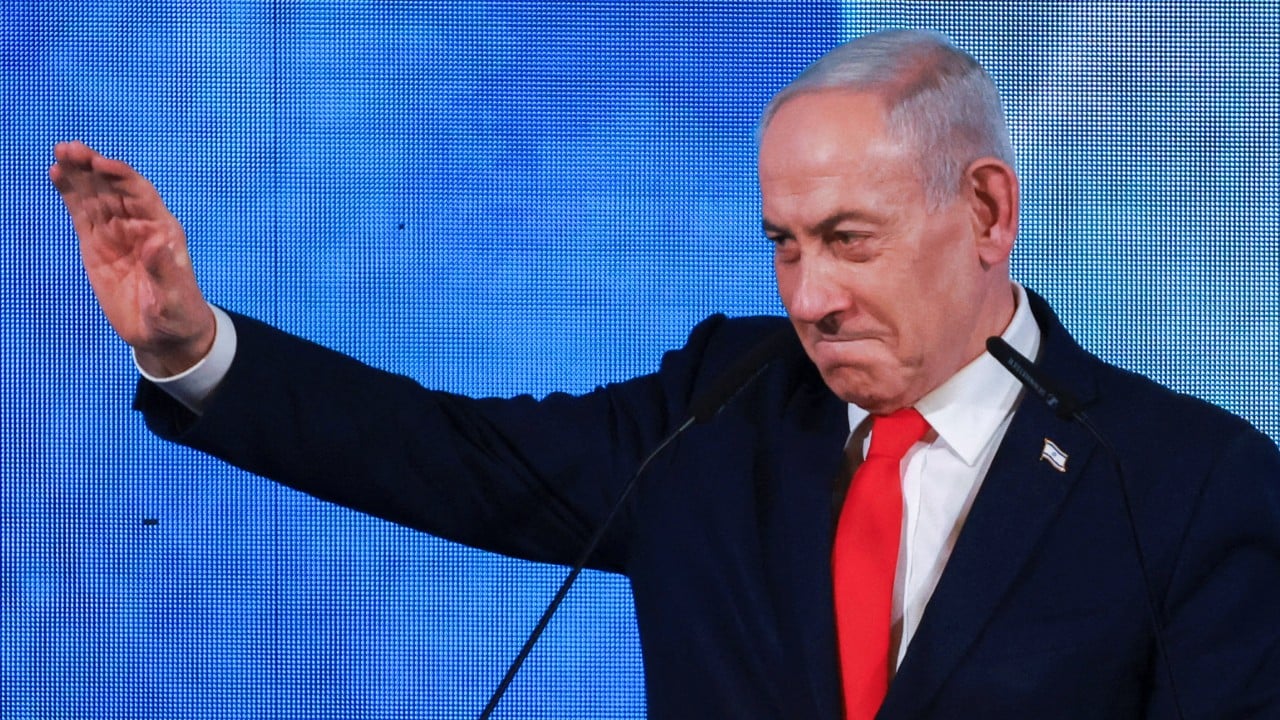
Every time Israel goes to the polls and produces a hung Knesset, Western correspondents dust off the exact same template. They call it a "crisis." They call it "paralysis." They write breathless dispatches about Benjamin Netanyahu clinging to power as a "caretaker" Prime Minister while the country supposedly drifts rudderless into an abyss.
They are completely missing the point.
If you read the mainstream coverage of Israel’s latest inconclusive election, you are being fed a comforting, lazy fiction: that a decisive 61-seat majority is the norm, and an interim government is an aberration. In reality, caretaker governance is not a bug in Israeli democracy. It is the primary operating system.
The Myth of the "Lame Duck" Caretaker
Let’s dismantle the biggest misconception first. When an American or British journalist hears the word "caretaker," they picture a powerless placeholder warming a leather chair, barred from signing major legislation or launching military operations.
That is not how Israeli constitutional law works.
Under Israel's Basic Law: The Government (specifically Section 30), an outgoing government continues to hold full executive authority until a new one is sworn in. There is no statutory expiry date. There is no constitutional handcuff preventing a caretaker Prime Minister from deploying troops, approving intelligence operations, or managing state budgets through continuing resolutions.
I have spent over a decade tracking parliamentary breakdowns across the Mediterranean, and watching foreign analysts treat Jerusalem like Westminster is exhausting. In 2020 and 2021, during a historic run of four consecutive elections in two years, interim Israeli cabinets signed the Abraham Accords, rolled out the fastest per-capita COVID-19 vaccination campaign on earth, and passed multi-billion-shekel emergency economic packages.
Does that look like paralysis to you?
The "caretaker" label is a linguistic pacifier used by opposition pundits to pretend Netanyahu’s grip on the Prime Minister's Office is temporary, illegitimate, or weakened. In truth, an interim status actually shields a Prime Minister. Without a functioning Knesset majority to pass votes of no confidence—because the Knesset has already dissolved itself or failed to form a government—the sitting Prime Minister cannot be toppled until a rival coalition actually reaches 61 signatures.
Why You Are Asking the Wrong Question
Search engines are flooded with the exact same query right now: "When will Israel finally get a stable government?"
Throw that question in the trash. You are asking when a system designed to fracture will suddenly solidify.
Israel uses a pure proportional representation system with a single nationwide district and a low electoral threshold of 3.25%. That means any faction winning roughly four seats enters the Knesset. Unlike the United States, where two massive tents force ideological compromises before Election Day, Israel forces ideological warfare after the ballots are counted.
When you combine an ultra-low threshold with deep, irreconcilable tribal cleavages—secular versus ultra-Orthodox, hawkish settlers versus center-left urbanites, Arab citizens versus Zionist parties—a 60-60 deadlock isn't a fluke. It is the mathematical equilibrium of the electorate.
Political scientists like Gideon Rahat and Reuven Hazan at the Hebrew University of Jerusalem have documented this structural fragmentation for decades. Their research shows that Israel’s party system didn't break recently; it has been steadily atomizing since the 1990s. Expecting a single election cycle to magically produce a clean, four-year mandate is like expecting a coin toss to land on its edge.
The Hidden Incentives of Perpetual Deadlock
Here is the uncomfortable truth nobody in the diplomatic press corps wants to say out loud: almost every major player in Jerusalem benefits from the stalemate.
Let’s look at the mechanics of why nobody rushes to break the tie:
- The Incumbent’s Fortress: For Netanyahu, caretaker status is the ultimate defensive posture. As long as the opposition cannot unite behind a single alternative—a task made nearly impossible by the ideological gulf between right-wing defectors, centrist generals, and Arab factions—Netanyahu remains the sole executive authority. He controls the security cabinet. He greets foreign heads of state. He sets the daily news cycle.
- The Kingmakers’ Leverage: Small sectarian parties—whether ultra-Orthodox factions like Shas and United Torah Judaism or far-right nationalist blocs—thrive in deadlocks. When a coalition needs every single vote to hit 61, a six-seat party commands the cabinet budgets and ministerial portfolios of a twenty-seat party.
- The Opposition’s Purity Trap: For opposition leaders, entering a unity government with Netanyahu is political suicide, as Benny Gantz learned the hard way in 2020 when his Blue and White alliance shattered into pieces. Staying in permanent opposition during an interim period allows rival leaders to keep their ideological purity intact without making painful governing compromises.
What People Also Ask (And Why the Premises Are Flawed)
Does a caretaker Prime Minister have the legal authority to take Israel to war?
Yes. Full stop. Under Israeli jurisprudence, the principle of continuity of government overrides conventional democratic norms about interim restraint. The High Court of Justice has repeatedly ruled that while a caretaker cabinet should exercise "restraint" in appointing senior civil servants or passing irreversible structural reforms, its authority over national security and urgent state matters is absolute.
Why doesn't the President just force the two biggest parties to form a unity government?
Because the Israeli Presidency is ceremonial. Unlike a head of state with executive decree powers, the President can only hand the mandate to form a coalition to the Knesset member with the highest mathematical chance of securing 61 votes. You cannot force rival politicians into a marriage when their voters will punish them at the ballot box for saying "I do."
Can Israel pass a state budget under a caretaker government?
Not a new one, and this is the one genuine vulnerability of the system. Without a confirmed coalition, the government operates on a 1/12th monthly allocation based on the previous year’s budget. While critics scream that this starves public services, fiscal hawks quietly love it—it acts as an automatic spending cap that prevents coalition partners from looting the treasury with pork-barrel promises.
The Contrarian Playbook: How to Actually Read Israeli Politics
If you are an investor, a policy analyst, or just someone trying to understand what happens next in the Middle East without getting whiplash from sensationalist headlines, stop watching the coalition negotiations. They are mostly theater.
Watch these three indicators instead:
- The Attorney General’s Opinions: In an interim government, the real check on executive power isn't the Knesset—it's the legal bureaucracy. When the Attorney General blocks a ministerial appointment or freezes a budget transfer, that is the true boundary of caretaker power.
- The 1/12th Budget Squeeze: Ignore the rhetoric about "constitutional crises" and watch the Ministry of Finance. The real breaking point in any Israeli deadlock isn't ideological; it's the exact month when automatic monthly spending limits begin choking defense procurement or infrastructure contracts.
- Defector Math, Not Party Platforms: Manifestos mean nothing in Jerusalem. Watch individual Knesset members sitting on the backbenches of mid-sized parties. Israeli coalitions don't form through grand ideological compromises; they form when two or three ambitious backbenchers are offered deputy ministries in exchange for crossing the aisle.
Admit the Downside
Let’s be brutally honest about the cost of this permanent interim state. While caretaker governance prevents total administrative collapse, it destroys long-term strategic planning. You cannot overhaul a failing education system, reform housing zoning laws, or restructure public healthcare on a month-to-month 1/12th budget. Chronic caretaker rule turns a dynamic state into a reactive crisis-management machine—brilliant at tactical survival, terrible at ten-year vision.
Stop Waiting for the Tie-Breaker
The next time a headline warns you that Israel is plunging into chaos because Netanyahu remains a caretaker Prime Minister after another split vote, close the tab.
Deadlock isn't an interruption of Israeli politics. Deadlock is Israeli politics. Until Israel raises its electoral threshold to wipe out micro-parties or shifts to regional representation, the caretaker isn't a temporary substitute waiting to hand over the keys—he is the permanent driver.