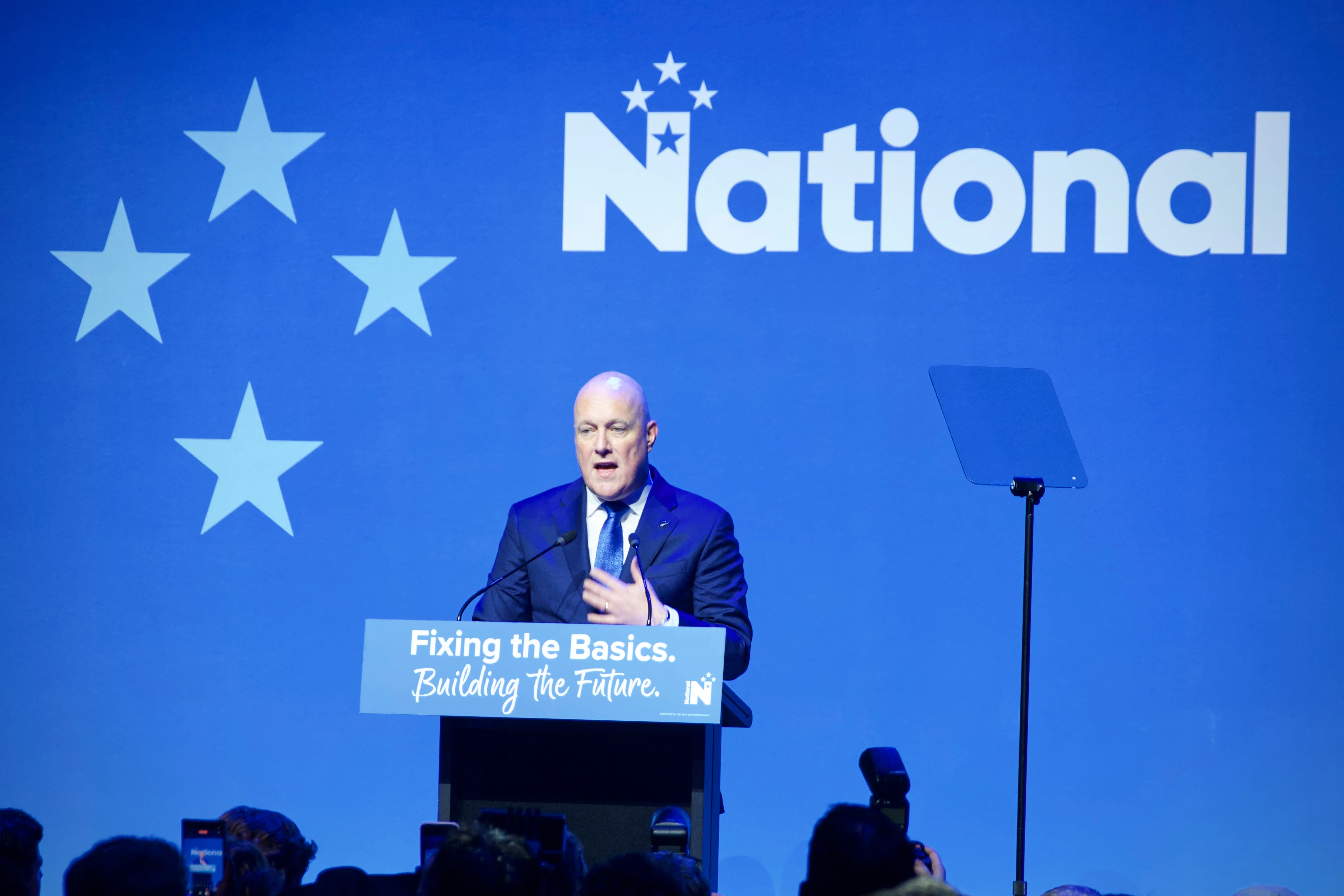
Every three years, international newsrooms dust off the exact same breathless template for New Zealand’s general election. A hung parliament emerges. Party leaders retreat behind closed doors in Wellington. Foreign correspondents immediately file stories framing the weeks-long negotiation period as a failure of democracy, a paralyzing crisis, or proof that the electoral system is broken.
They are completely wrong.
The lazy consensus in political journalism equates immediate results with democratic health. In First-Past-the-Post systems like the United States or the United Kingdom, a winner is usually declared before the morning coffee gets cold. Pundits mistake that speed for efficiency. In reality, what they are celebrating is a system where a party with 38 percent of the popular vote can seize 100 percent of executive power and spend the next several years ramming through ideological wish lists without asking a single tough question.
New Zealand deliberately burned that model to the ground in 1993 when voters adopted Mixed-Member Proportional representation, known as MMP. The weeks of post-election horse-trading that follow are not a bug in the Wellington machine. They are the entire point of the architecture.
The Myth of the Decisive Mandate
Walk into any newsroom in London, Washington, or Sydney on election night, and you will hear anchors fawn over the phrase "clear mandate." It is the ultimate political security blanket. It implies that the electorate spoke with one unified voice and handed a blank check to a single leader.
That is a fantasy. Electorates are fractured, contradictory, and deeply divided on how to solve economic and social problems.
When a system forces a binary outcome, it manufactures a fake consensus. The winning party claims an absolute right to govern, while the losing 60 percent of the country is told to sit quietly until the next cycle. This breeds the exact brand of hyper-partisan whiplash currently rotting Western democracies. One administration passes sweeping legislation; the next administration spends its first hundred days tearing it up. Businesses cannot plan capital expenditure. Public institutions suffer constant reorganization.
MMP refuses to participate in this theater. Under New Zealand’s rules, a party’s share of the 120 seats in Parliament directly reflects its share of the nationwide party vote. Because no single party has won an outright majority under MMP—with the solitary, pandemic-warped exception of Jacinda Ardern’s Labour Party in 2020—coalitions are mathematically required.
When headlines scream that there is "no clear winner," they are projecting majoritarian expectations onto a proportional reality. The voters did speak clearly. They explicitly told the political class that no single faction deserves unchecked power.
What Actually Happens Behind Closed Doors
If you have spent time around the Beehive—New Zealand’s iconic executive wing—during coalition negotiations, you quickly realize the media narrative of panicked, chaotic backroom dealing is pure fiction.
I have watched senior policy advisors and chief of staff veterans navigate these post-election windows up close. While the press pack camps out in the lobby chasing motorcades and reading tea leaves from coffee orders, the people inside are doing the hardest, most honest work in politics. They are writing the actual governing contract before a single minister is sworn in.
Compare this to majoritarian systems, where party manifestos are treated as disposable marketing brochures. In a Westminster majority government, a Prime Minister can abandon a flagship tax promise six weeks after taking office because nobody inside the caucus has the institutional power to stop them.
In Wellington, those manifesto promises are laid out on a table and stress-tested line by line.
- Policy Vetting: Minor parties act as aggressive auditors. If a major party proposes an uncosted infrastructure splurge or a legally dubious regulatory overhaul, their potential coalition partners demand the Treasury numbers before signing off.
- Portfolio Allocation: Ministerial roles are distributed based on leverage and competence rather than blind loyalty to a single leader.
- Dispute Resolution: The resulting coalition agreements contain explicit "agree to disagree" clauses and formal consultation mechanisms.
This takes time. In 2017, Winston Peters and New Zealand First kept the country waiting for weeks before choosing Labour over National. In 2023, Christopher Luxon spent six weeks hammering out a three-way governing arrangement with ACT and New Zealand First. Critics called both instances agonizing. Investors wrung their hands.
Yet once those ink-dried agreements hit the public domain, something remarkable happened. The governments largely stuck to the script. Because every major friction point had been dragged into the light and negotiated before power was assumed, the coalitions exhibited extraordinary legislative discipline. You rarely see a New Zealand coalition collapse mid-term, precisely because the messy compromises were front-loaded.
Dismantling the Kingmaker Fallacy
Whenever coalition talks drag past the second week, a predictable chorus rises from pundits and frustrated voters alike. They argue that smaller parties—whether New Zealand First, the Greens, or ACT—wield disproportionate power. They call it the "tail wagging the dog."
Let us examine the logic of that complaint.
Suppose Party A wins 42 percent of the vote, and Party B wins 8 percent. Neither can govern alone. Together, they hold 50 percent, crossing the 61-seat threshold needed to command confidence and supply in Parliament. To secure Party B’s support, Party A must adopt three of Party B’s core policies and hand over two cabinet posts.
Critics call this undemocratic because 8 percent of voters are dictating terms to 42 percent.
That math is backward. Party A does not own the government. Without Party B, Party A has zero ability to pass a budget. Party B is not hijacking democracy; it is representing the exact slice of the electorate that put it in Parliament to act as a check on Party A. Furthermore, Party A always retains the nuclear option: walk away, talk to another party, or force a fresh election. The leverage only exists because the major party prefers sharing power to sitting on the opposition benches.
Political scientist Arend Lijphart spent decades studying this exact dynamic across dozens of democracies. His empirical research in Patterns of Democracy demonstrated that consensus-based, proportional systems consistently outperform majoritarian systems on macroeconomic stability, inflation control, and democratic satisfaction. They avoid wild policy swings because every major decision requires multi-party buy-in.
The "kingmaker" is not a dictator. The kingmaker is a circuit breaker.
The Real Cost of Coalition Friction
Defending the weeks-long negotiation period does not mean pretending it is painless. Anyone arguing that MMP has zero downsides is selling ideological snake oil.
The price of consensus is friction, and sometimes that friction stalls necessary structural reform.
- The Lowest Common Denominator Trap: When three parties must agree on housing policy or tax reform, the boldest ideas often get shaved down into watered-down compromises that satisfy everyone politically while solving nothing economically.
- Accountability Blur: When a policy fails three years later, voters struggle to assign blame. The major party blames its coalition partner for blocking the original design; the minor party claims it prevented an even worse outcome. At the ballot box, punishing the guilty party becomes a guessing game.
- The Caretaker Vacuum: During the weeks of talks, the outgoing administration operates under strict caretaker conventions. Major appointments freeze. Urgent regulatory decisions sit in an inbox. If an acute external shock hits—a sudden financial contagion or a major diplomatic crisis—the executive branch must consult opposition leaders before acting, slowing response times.
These are genuine trade-offs. New Zealanders accept them because the alternative—handing unchecked executive authority to a party that lost the popular vote—is demonstrably worse.
Stop Reading Election Coverage Like a Horse Race
If you are an investor, a business operator, or simply a citizen trying to understand what a hung parliament in New Zealand means for the country’s trajectory, stop reading the daily blow-by-blow coverage from political reporters.
Journalists are incentivized to manufacture drama. A quiet Tuesday where three working groups quietly reconcile agricultural emissions targets does not generate clicks. A five-second clip of a party leader walking past a microphone without smiling does.
Instead of tracking the personalities, track the structural mechanics that actually dictate how the next three years will play out:
- Ignore the Campaign Rhetoric, Read the Confidence and Supply Clauses: Campaign speeches are poetry; coalition agreements are prose. Wait until the final document is published, then look strictly at what is explicitly written into the text. In Wellington, if a policy is not in the coalition agreement, it is dead on arrival.
- Watch the Finance Portfolio: Whoever holds the Minister of Finance role controls the purse strings, regardless of what minor parties demand. If the primary governing party retains Finance without a minor-party associate minister holding veto power over spending, the core economic trajectory remains firmly locked in.
- Measure the Margin, Not the Noise: A coalition holding 62 seats out of 120 operates on a razor's edge; a single rogue backbencher or medical emergency can stall legislation. A coalition holding 68 seats has massive breathing room, no matter how loudly the partners bicker in the press.
Imagine a scenario where New Zealand scrapped MMP tomorrow and returned to a winner-take-all system. The election would be over by 10:00 PM on Saturday night. The headlines on Sunday morning would praise the clarity, speed, and decisiveness of the result.
And by Monday morning, roughly 60 percent of the country would wake up completely disenfranchised, bracing for three years of unilateral rule by a government they actively voted against.
The empty podiums in Wellington and the weeks of closed-door talks are not signs of a democracy breaking down. They are proof that the guardrails are holding. If you want fast, frictionless political outcomes, move to an autocracy. If you want a government forced to earn its majority before it spends a single dollar of taxpayer money, let the negotiators take all the time they need.