Every major news outlet loves a feel-good cultural heritage story. Look at the latest round of breathless coverage surrounding the restoration of Bala Hissar in Kabul. The narrative is predictable, sanitized, and entirely backwards. Western media and international preservation bodies want you to believe that digging up thousands of coins, ceramics, and mud-brick foundations beneath a crumbling Afghan fortress is an unqualified triumph for human history.
It is not. In fact, it is a textbook example of how modern archaeology frequently destroys the very history it claims to save, all while wrapping itself in the moral vanity of international rescue missions.
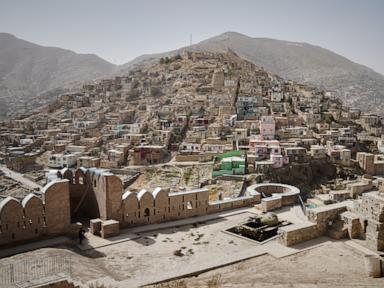
Let’s look at the actual facts on the ground. Over the past few years, the Aga Khan Trust for Culture (AKTC) has been working to stabilize the Bala Hissar citadel, an ancient fortress overlooking Kabul that has survived everything from the Hephthalites and the Ghaznavids to the British Empire and the Soviet-Afghan War. During routine stabilization and drainage work, crews uncovered roughly 1,000 artifacts—ceramics, coins, arrowheads, and architectural fragments—spanning millennia of Central Asian history.
The mainstream press treats this like a miracle. They frame the excavation as a race against time to rescue treasures from war and decay. What they ignore is a fundamental truth that every honest conservator knows but rarely says out loud in press releases: archaeology is an unrepeatable experiment. The moment you stick a trowel into undisturbed soil, you permanently obliterate the stratigraphic context. You destroy the site to read it. And doing that in a volatile, cash-strapped environment with minimal long-term conservation infrastructure is not preservation. It is salvage looting with academic credentials.
The Myth of the Noble Rescue Excavation
If you have spent any time on actual dig sites in conflict zones or developing regions, you have seen this tragedy play out a hundred times. International non-governmental organizations secure grant money—in this case, backed by entities like the ALIPH Foundation—with a mandate to "save" a monument. Donors want deliverables. They want dramatic before-and-after photos of rebuilt mud-brick walls, and they want shiny artifacts laid out on velvet tables for diplomatic photo ops.
Nobody funds a twenty-year plan to keep the dirt undisturbed until better technology arrives.
This is the core hypocrisy of modern heritage management. Since the Venice Charter of 1964, the theoretical gold standard in architectural conservation has been minimal intervention and reversibility. We are supposed to stabilize structures without falsifying history or needlessly disturbing intact archaeological layers. Yet, when a high-profile site like Bala Hissar gets funding, the urge to dig, reconstruct, and display takes over.
Consider what happens to those 1,000 newly unearthed artifacts. In Kabul, the National Museum of Afghanistan has spent decades recovering from the catastrophic looting of the 1990s and the iconoclasm of the first Taliban regime. While staff there have performed heroic work under impossible conditions, the reality of storage, climate control, and cataloguing capacity in Afghanistan remains precarious. Pulling fragile organic materials, corroded metals, and unglazed pottery out of an anaerobic, stable underground environment and placing them into boxes in a facility facing chronic funding shortfalls and political isolation does not save them. It accelerates their decay.
Underground, those artifacts survived two thousand years of empires rising and falling. Above ground, their survival clock just dropped to a few decades.
Stratigraphy Is Worth More Than Shiny Objects
To understand why the celebration over "archaeological treasures" is misguided, you have to understand what actually creates historical value. Amateur enthusiasts and journalists obsess over objects. A Kushan-era coin or a Timurid ceramic bowl looks great in a high-resolution photograph.
Professional archaeologists care about stratigraphy—the precise, three-dimensional relationship between soil layers, pollen grains, ash deposits, and structural alignments. Once you excavate a trench to install modern drainage or rebuild a collapsed bastion, that matrix is gone forever. You cannot put the dirt back. Even with the best photogrammetry and GIS mapping available today, our current recording methods are primitive compared to what will exist in fifty years.
Think about what happened to sites excavated in the 1920s. Early archaeologists threw away animal bones, discarded plain pottery sherds, and ignored soil chemistry because they only cared about royal inscriptions and gold. Today, we can extract ancient DNA from tiny bone fragments, analyze lipid residues trapped in unglazed pottery to see what people ate, and use optically stimulated luminescence (OSL) to date the exact last time a quartz grain saw sunlight.
Every time we dig up Bala Hissar right now to satisfy a five-year grant cycle, we are blinding future scientists who will have tools we cannot yet imagine.
The Reconstruction Trap
The physical restoration of the fortress walls presents an equally thorny problem. Mud-brick (pisé and adobe) architecture is inherently ephemeral. In Central Asia, mud-brick monuments were never meant to be frozen in amber like a Roman marble temple. Traditionally, they survived through continuous, cyclical maintenance—slapping new mud plaster onto eroding walls every spring after the snow melts.
When modern restoration teams step in, they face an impossible choice:
- Leave the ruins as decaying mounds, which accurately reflects their history and preserves the archaeological core, but looks unimpressive to donors and local politicians.
- Rebuild the walls using traditional materials, which requires quarrying massive amounts of earth, employing labor, and essentially building a modern replica on top of ancient foundations.
At Bala Hissar, stabilization work has involved rebuilding massive sections of wall and creating an archaeological park. While this creates vital local jobs—a genuine, undeniable benefit—it also blurs the line between authentic medieval masonry and 21st-century conjecture. We saw the disastrous extreme of this approach at the Citadel of Herat and across various sites in Central Asia, where over-enthusiastic reconstruction turned evocative ruins into sterile theme-park backdrops.
When you rebuild a wall to look "complete," you erase the physical evidence of the violent, messy history that actually shaped the city. Bala Hissar was burned by the British in 1879 during the Second Anglo-Afghan War. It was shelled into oblivion during the Afghan Civil War in the 1990s. Those scars are just as historically valid as the 5th-century Hephthalite foundations. Smoothing them over with fresh mud plaster is a form of historical amnesia.
The Hard Truth About Heritage Politics
We also need to strip away the romanticism surrounding who is doing the work and why. International heritage organizations operate in Afghanistan through a delicate, uncomfortable dance with the de facto Taliban authorities.
Let’s be clear: cultural diplomacy is a real thing, and engaging local authorities to protect monuments from bulldozers is infinitely better than total abandonment. The AKTC has an exceptional track record in Kabul—their work in the Murad Khane district and Bagh-e Babur proved that heritage restoration can drive urban revitalization, improve sanitation, and give impoverished communities a tangible stake in preserving their neighborhoods.
However, there is a dark side to this success. High-profile archaeological discoveries hand immense propaganda value to a regime that actively suppresses human rights, bans girls from secondary and higher education, and erases women from public life. When international bodies celebrate "saving Afghan heritage" while half the Afghan population is barred from studying archaeology, history, or conservation at the university level, the moral math stops working.
Who exactly are we preserving this heritage for? If Afghan women cannot become the next generation of curators, conservators, and historians, then foreign experts and male laborers are simply curating a museum for an audience locked outside the gates.
What People Get Wrong About Ancient Fortresses
If you look at how the public searches for information on Bala Hissar, the questions always revolve around the same predictable tropes: What treasure was found? How old is it? Who built it? These questions miss the entire point of how ancient cities actually function.
- The "Who Built It" Fallacy: People want a single founder—Alexander the Great, the Kushans, Babur. In reality, Bala Hissar is a geological layer cake of human occupation. Nobody "built" it; it accumulated over two millennia as successive rulers piled new rubble over the ruins of their predecessors to gain elevation. Trying to restore it to a single "authentic" era is like trying to restore a forest to a single tree.
- The "Hidden Treasure" Delusion: Media headlines love the word treasures. In reality, 99% of what comes out of an urban citadel dig is broken domestic trash—cracked cooking pots, corroded iron nails, and worn copper coins of negligible monetary value. Calling them treasures inflates their market value, which directly fuels illegal looting at unguarded sites across the countryside. When local villagers read in the news that "priceless treasures" are buried under ancient mounds, they don't call an archaeologist. They buy a metal detector and a shovel.
The Contrarian Blueprint for Real Preservation
If we want to stop destroying heritage in the name of saving it, the industry needs a radical shift in how it funds, executes, and measures success at sites like Bala Hissar.
First, decouple stabilization from excavation. If a historic wall is leaning and threatens to collapse, buttress it externally. Install surface drainage using non-invasive geotextiles and shallow grading rather than digging deep trenches into undisturbed cultural layers. Leave the dirt alone. Accept that the greatest gift we can give future generations is unexcavated ground.
Second, ban "treasure" PR. Heritage organizations must stop issuing press releases celebrating artifact counts. Every time an NGO boasts about finding 1,000 coins and ceramics to justify its grant renewal, it validates the antiquities black market's core marketing pitch: that the ground is full of valuable loot waiting to be extracted. Public communication should focus entirely on structural engineering, water management, and architectural history—boring, unglamorous, and safe from looters.
Third, prioritize invisible infrastructure over visible walls. If you have two million dollars to spend on a crumbling fortress, spend 80% of it on drainage, roof caps, and moisture barriers, and 0% on rebuilding picturesque battlements. Water is the primary killer of mud-brick and stone monuments. Fix the hydrology, and the ruins will stand for another five hundred years without anyone needing to play architect.
Finally, tie international heritage funding to educational access. International donors cannot stop the Taliban from restricting women's rights, nor should they abandon Afghan heritage to crumble. But they can refuse to fund flashy, public-facing archaeological digs and instead redirect 100% of those funds into remote digital fellowships, off-site conservation training, and archival preservation that includes Afghan women in the diaspora and underground networks inside the country.
The Real Cost of Good Intentions
There is a legitimate counterargument to this approach, and it deserves honesty. If you do not excavate and create visible, dramatic parks like Bala Hissar, local governments and communities often view ruins as useless wasteland. In rapidly expanding cities like Kabul, an unexcavated, un-landscaped mound of dirt is a prime target for illegal housing encroachment, garbage dumping, or military repurposing. Sometimes, turning a ruin into a manicured park with a visitor center is the only way to draw a permanent boundary line around it that developers and generals will respect.
That is a brutal trade-off. You sacrifice archaeological integrity and risk long-term artifact degradation in exchange for immediate territorial protection of the site.
Maybe that trade-off is necessary in Kabul right now. Maybe sacrificing a slice of Bala Hissar's underground history is the ransom we have to pay to keep the hill from being bulldozed for concrete apartment blocks.
If that is the case, fine. Make the deal. Do the work. Pay the local masons, fix the drainage, and build the park. Just stop insulting our intelligence by calling it a triumph of preservation. Admit what it really is: controlled destruction to prevent total annihilation.