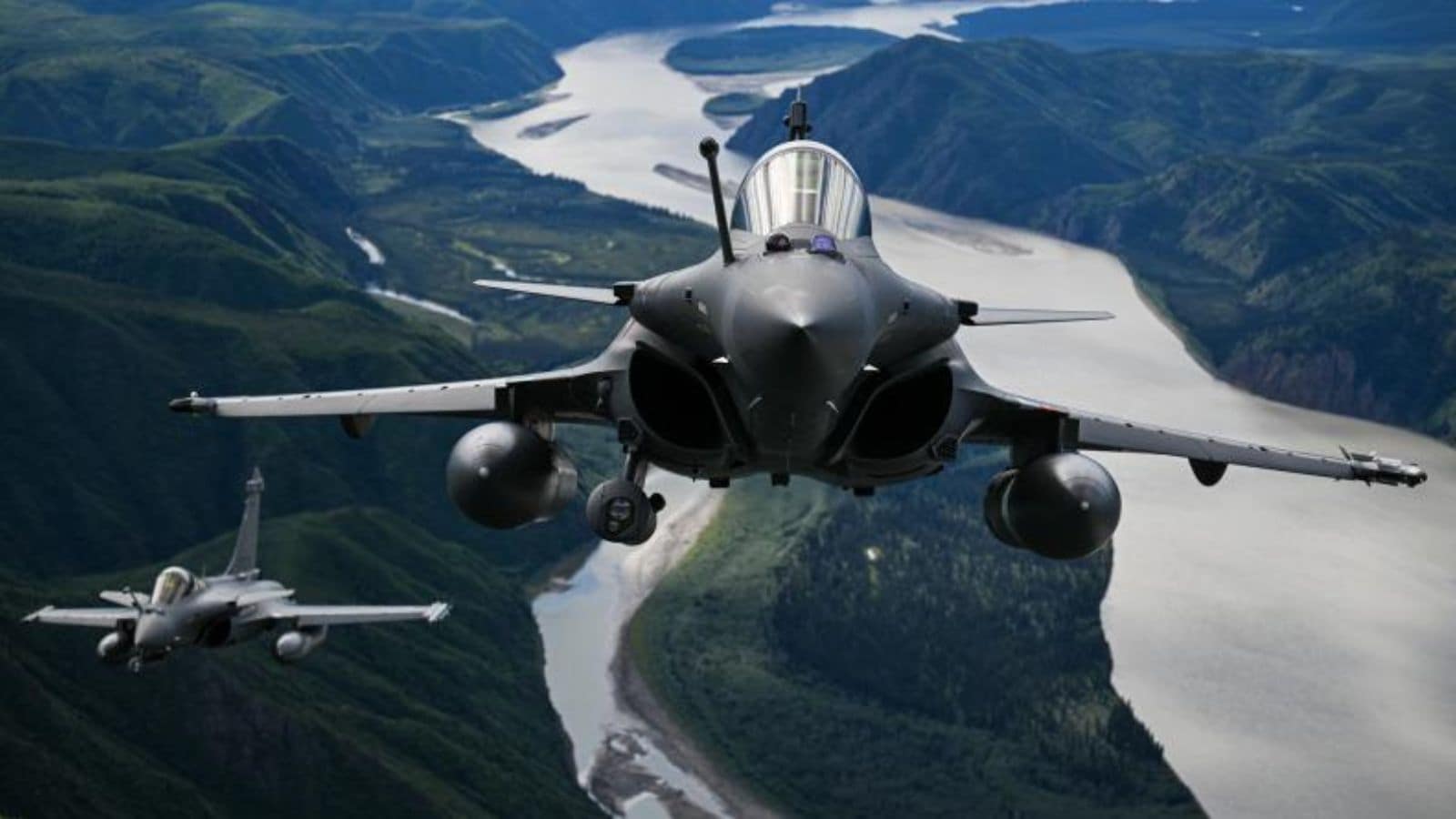
Every defense analyst in New Delhi and Paris is hyperventilating over Mission Pegase 26, treating the arrival of French Rafales at Jodhpur for Exercise Tarang Shakti as a masterclass in global power projection. The lazy consensus claims that flying four multirole fighters, three tankers, and two heavy airlifters across forty thousand kilometers proves France can drop unannounced air power anywhere on earth.
It is a comforting illusion. It is also completely wrong.
Four combat aircraft do not an expeditionary air force make. Pegase 26 is not a muscle-flexing exercise designed to intimidate regional hegemons or alter strategic equations in the Indo-Pacific. If you look past the glossy defense ministry press releases and examine the engineering reality of long-range aerial logistics, you realize something far more cynical and practical is happening.
France is running a high-cost sales brochure.
The Tanker Truth Everyone Ignores
Let us strip away the patriotic varnish and look at the actual asset utilization of Pegase 26. The media loves photographing the Dassault Rafale. Its delta-canard lines make for gorgeous front-page thumbnails. But the Rafales are passengers on their own deployment.
The real workhorses of this mission are the three A330 MRTT Phénix tankers. Without them, the four fighters would be expensive lawn ornaments parked in the Greenlandic or Alaskan snow. France is not projecting combat power; it is testing the fragile umbilical cord that connects European defense contractors to lucrative Asian buyers.
When a detachment hops from France to Greenland, across Canada, down through Alaska, past Japan, South Korea, and Indonesia before landing in India, they are executing a stress test for future export maintenance chains. Indonesia has already committed to the Rafale and integrated the A400M. India operates thirty-six Rafales with more variants constantly under discussion.
This deployment is an after-sales service demonstration disguised as geopolitics. Paris is telling Delhi, Tokyo, and Jakarta: Look how easily our ecosystem plugs into yours. It is a logistical audit, not a combat rehearsal.
The Myth of Independent Reach
We need to stop pretending that European mid-tier powers operate outside American security architecture. France maintains an independent posture on paper, but missions like Pegase 26 rely entirely on a network of allied permissions, standardized NATO-compatible refueling interfaces, and host-nation infrastructure that would evaporate in a peer-to-peer conflict.
Imagine a scenario where a contested airspace closes unexpectedly due to active kinetic denial systems. Four Rafales supported by three lumbering A330 tankers cannot punch through heavily defended anti-access area-denial bubbles. They require permissive environments, polite diplomatic clearances, and friendly tarmac to reset their maintenance cycles every few thousand miles.
Calling this "strategic autonomy" is a marketing triumph. True autonomy means sustaining high-intensity combat operations without stopping at friendly fueling stations every four hours to check hydraulic seals.
What the Indo-Pacific Actually Needs
India does not need foreign air detachments flying halfway across the planet to remind everyone that international airspace exists. The Indian Air Force knows how to fly long-range missions; it faces two active, hostile borders daily.
The real value of Tarang Shakti is not the diplomatic theater of welcoming French pilots onto tarmac in Rajasthan. It is data sharing on maintenance footprints, software integration, and turning-time efficiencies. When foreign jets land, the local technicians check how fast spare parts can be swapped and how seamlessly cryptographic comms synchronize.
France wants to lock buyers into a proprietary lifecycle loop. Every time a Phénix tanker refuels a Rafale over the Indian Ocean, Dassault and Airbus lock in decades of maintenance contracts.
Stop viewing Pegase 26 through the lens of 19th-century gunboat diplomacy. It is a corporate logistics tour. And until defense commentators start evaluating military exercises by their spare-parts supply chains instead of their photo-op formations, we will keep falling for the oldest sales pitch in the aerospace industry.
France Begins India Leg of PEGASE 26 RAFALE MISSION
This short clip captures the official arrival and ground reception of the French Air and Space Force detachment during the India leg of Mission Pegase 26.