Viral applause is cheap. Institutional stagnation is expensive.
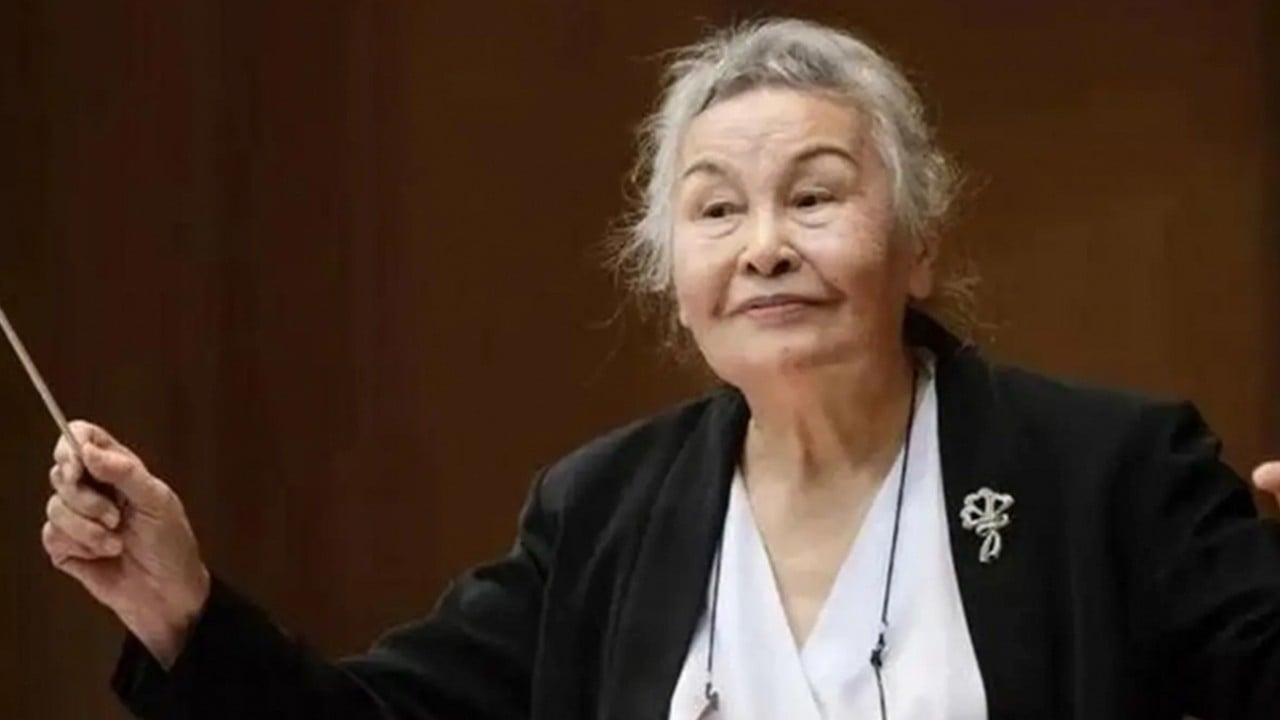
Every few months, a feel-good profile of Zheng Xiaoying—China’s first female orchestral conductor, still taking the podium well into her nineties—makes the rounds on social media. The narrative is always identical. It is wrapped in soft-focus sentimentality about grit, longevity, and breaking glass ceilings in the mid-twentieth century. Audiences love it. Editors love it because it requires zero investigative effort and generates effortless clicks. Meanwhile, you can find related developments here: La violence littéraire d'Hemley Boum n'est pas un courage politique mais le refuge des écrivains francophones.
The classical music establishment loves it most of all, because cheering for a nonagenarian pioneer allows them to ignore the rot currently eating their industry alive.
Let’s get the facts straight before the outraged comments start. Zheng Xiaoying is a titan. Born in 1929, educated at the Central Conservatory of Music and the Moscow Conservatory, she shattered gender barriers in Chinese symphonic and operatic conducting at a time when women were actively barred from the podium worldwide. She founded the Xiamen Philharmonic Orchestra in her late sixties after retiring from the China National Opera House. Her technical command, historical weight, and sheer physical stamina at nearly a century old are extraordinary. To explore the bigger picture, we recommend the detailed article by Rolling Stone.
Nobody is questioning her legacy. We are questioning what the industry is doing with it.
When arts organizations and media outlets fetishize extreme longevity on the podium, they aren't celebrating musical excellence. They are indulging in museum-piece nostalgia that actively blocks the pipeline for the next generation of female conductors.
The Podium Bottleneck Nobody Wants to Measure
Conducting is the only high-level profession where the labor market actively punishes anyone under the age of forty while treating octogenarians as indispensable gods.
In corporate boardrooms, surgical theaters, and tech startups, succession planning is a fiduciary duty. In symphonic music, succession planning is treated like an insult. I have sat in artistic planning meetings where boards of directors renewed the contracts of conductors well into their eighties—men and women whose physical gestures had shrunk to a two-inch twitch—simply because donors liked the familiar silhouette on stage. Meanwhile, brilliant thirty-two-year-old conductors with sharper ears, modern rehearsal techniques, and actual connections to living audiences were told to wait their turn.
Wait for what? Another twenty years?
The math of the orchestral podium is brutal. There are a finite number of top-tier music director posts globally. When a conductor holds onto major podium appearances into their late eighties or nineties, that isn't just a heartwarming solo triumph. It is a zero-sum displacement of rehearsal hours, repertoire choices, and podium time that young conductors desperately need to develop their craft. You cannot learn to conduct a Mahler symphony in a practice room. Your instrument is eighty human beings sitting in front of you. If the elders never step off the box, the juniors never touch the instrument.
The Myth of the Indispensable Maestro
Why does the classical world cling to the gerontocracy? Because the industry has bought into the nineteenth-century romantic myth of the conductor as an infallible, mystical shaman whose wisdom only matures after six decades of suffering.
This is nonsense. Conducting is a physical, psychological, and organizational discipline.
Let’s look at the actual mechanics of the job:
- Score Study and Auditory Processing: A conductor must hear vertical harmonies and horizontal counterpoints simultaneously while tracking phrasing across dozens of transposing instruments. Cognitive processing speed peaks decades before ninety. Experience compensates for a lot, allowing veterans to rely on muscle memory for standard repertoire like Beethoven or Tchaikovsky. It does not help when tackling rhythmically complex contemporary scores that require split-second physical clarity.
- Somatic Communication: The baton is silent. An orchestra plays based on the micro-tensions in a conductor’s shoulders, wrists, eyes, and breath. As the human body ages past ninety, physical range of motion inevitably narrows. Musicians in the back desks of the second violins end up watching the concertmaster’s bow rather than the podium just to stay together.
- Rehearsal Efficiency: Modern unionized orchestras are brutally expensive. Every minute of rehearsal is tracked to the second. Getting an ensemble from a cold read to performance readiness requires relentless vocal projection, physical stamina, and rapid-fire diagnostic adjustments.
When a 97-year-old conductor steps up to lead a major work, the orchestra does something miraculous: they play out of sheer respect. They listen harder to one another. They compensate for small beats. They carry the performance across the finish line out of love and deference to history.
Audiences see a triumph. Musicians see a high-wire act where the ensemble is doing the heavy lifting to protect a legend.
How Token Praise Replaces Structural Reform
Look closely at the headlines surrounding Zheng Xiaoying. Almost every single one leads with two data points: her age (97) and her status as "China's first female conductor."
Notice the trap? By endlessly spotlighting the first woman to break through seventy years ago, media coverage creates the illusion of progress while masking the dismal numbers of women holding permanent music directorships today.
According to data tracked by organizations like the Donne Foundation and the League of American Orchestras, women still account for a small fraction of chief conductors and music directors globally. In Asia, Europe, and North America alike, the pattern is identical: female conductors are frequently hired as guest conductors for mid-season subscription concerts, summer festivals, or youth orchestras, while the permanent, high-paying, repertoire-shaping Music Director titles remain overwhelmingly locked down by men—often men who have held those posts for decades.
Celebrating a 97-year-old pioneer is safe. It requires zero structural change. It doesn't force conservatories to overhaul biased audition practices. It doesn't force artistic administrators to take a risk on a 29-year-old woman with unconventional programming ideas. It lets everyone pat themselves on the back for valuing diversity and respect for elders in a single, tidy viral video.
Imagine a scenario where the same energy, publicity budgets, and prime-time media slots dedicated to profiling ninety-year-old maestros were redirected toward twenty-eight-year-old female conductors premiering new works. Ticket sales wouldn't collapse. The audience demographic would actually drop below retirement age for the first time since the 1990s.
The Brutal Truth About Classical Audiences
Let’s address the standard defense from symphony executives: "Our subscribers want tradition. They love seeing legends. It sells tickets."
Yes, it sells tickets—to people who are already seventy-five years old.
Classical music is facing an existential demographic cliff. Subscription models built in the twentieth century are crumbling because the core audience is aging out faster than it is being replaced. When an orchestra programs a 97-year-old conductor leading warhorse repertoire from the 1800s, it is executing a short-term cash grab at the expense of long-term survival. It is feeding comfort food to a shrinking room.
I’ve watched major arts institutions burn through millions of dollars in endowment funds trying to market nostalgia to millennials and Gen Z. It fails every time. Younger audiences don't care that someone broke a barrier in 1956. They care whether the art happening in front of them right now feels urgent, dangerous, and alive.
A concert hall is not a wax museum. If the primary selling point on the marquee is the conductor’s birth certificate rather than their artistic vision for the next decade, the institution has already surrendered its cultural relevance.
What Real Mentorship Actually Looks Like
None of this means senior conductors should be locked in a closet at age sixty-five. Institutional memory matters. Watching how a master shapes a Brahms transition or balances a brass section in an acoustically dead hall is priceless education.
The failure isn't that veteran conductors are still active; it's how they are deployed.
If the classical music world actually wanted to honor pioneers like Zheng Xiaoying, it wouldn't keep pushing them out onto mainstage subscription concerts to prove they can still wave a stick. It would restructure their roles entirely:
- Emeritus Residency Over Mainstage Billing: Put legendary conductors in charge of intensive, multi-week conducting fellowships where young conductors get real podium time with professional ensembles, while the master critiques from the hall. You pass the torch by handing over the baton, not by holding onto it until your fingers freeze.
- Hard Term Limits on Music Directorships: No conductor should hold a chief music director post for thirty years. Cap tenures at eight to ten years maximum. Force institutional turnover. Force artistic renewal.
- Blind Preliminary Conducting Auditions: Yes, conducting is visual, so completely blind auditions aren't possible forever. But early rounds of assistant conductor searches can and should be screened via standardized video angles from behind the orchestra—showing only the conductor's hands and face from the players' perspective, stripped of resumes, ages, and pedigree.
- Programming Quotas Tied to Podium Access: If a guest conductor—veteran or rookie—wants to lead Beethoven's Fifth for the four-hundredth time, make it conditional on pairing it with a work written within the last ten years by a living composer.
The Downside of Burning the Pedestal
There is a real cost to stripping away the cult of the ancient maestro.
Great conducting genuinely requires deep musical digestion. A twenty-five-year-old prodigy can nail the tempo changes in Stravinsky’s The Rite of Spring with mechanical perfection, yet completely miss the spiritual gravity of a late Bruckner adagio because they haven't lived enough life to understand grief, restraint, and silence. Pushing elders off the podium too aggressively risks turning orchestral performance into an athletic competition—all flash, hyper-accurate rhythms, zero soul.
Some works truly do sound different in the hands of someone who has spent seventy years living inside the score. You lose a specific kind of slow-cooked musical architecture when you optimize purely for youth and turnover.
That trade-off is worth making. An art form can survive a few shallow interpretations of Bruckner while young conductors grow into their powers. It cannot survive turning itself into an assisted-living facility for historical icons while an entire generation of talent withers in the lobby.
Stop Confusing Survival With Progress
Zheng Xiaoying earned her place in history decades ago. Her resilience is remarkable, her contribution to Chinese orchestral music undeniable, and her personal vitality inspiring.
Give her a standing ovation. Write the history books. Name the conservatory halls after her.
Then turn around, look at the roster of your local symphony orchestra, count how many women under forty are holding the baton this season, and stop pretending that clapping for a 97-year-old counts as moving the needle.