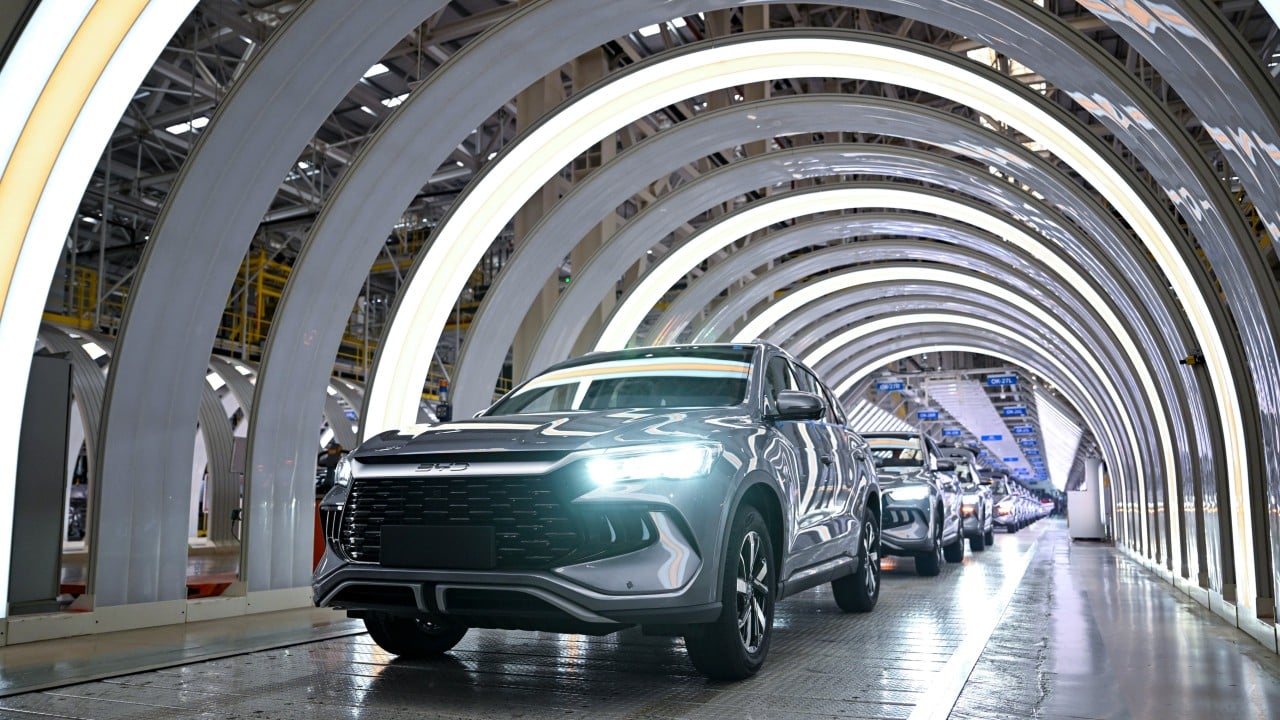
The industry is currently obsessed with a shiny, singing toy. Watch any analyst talk about the recent wave of Chinese electric vehicles and you will hear the same tiresome refrain: karaoke machines, integrated VR headsets, and ambient mood lighting are the "future of quality." They claim that because these features are selling, they represent a fundamental shift in what a vehicle is supposed to be.
They are wrong. You are being sold a distraction.
What the current market discourse misses is that these "innovations" are not evidence of a new definition of quality. They are evidence of a manufacturing industry reaching a point of total parity in basic mechanical competency. When every competitor can build a battery-electric powertrain that is "good enough," the only way to differentiate is to stop selling transportation and start selling attention.
The Illusion of Feature-Led Quality
For a century, automotive success was built on physical reality: chassis rigidity, braking distances, thermal management, and noise, vibration, and harshness levels. If you failed these, you were finished. Today, the bar for these fundamentals has been cleared by almost every major manufacturer globally.
When you strip away the digital vanity, what you find is a desperate scramble for relevance in a crowded space. Chinese OEMs like BYD and Xpeng are not genius visionaries who "invented" a lifestyle-first approach; they are hyper-efficient manufacturers operating in a market where the average consumer has been conditioned to demand smartphones on wheels.
If you think a built-in karaoke microphone makes a car "better," you have been successfully lobotomized by marketing. A car is an enclosure for high-speed travel. Its primary quality metric is, and always will be, its ability to keep the occupants alive and get them to their destination without incident. By shifting the conversation to app integration and touchscreen response times, the industry is subtly nudging you to ignore the things that actually matter—like long-term software stability, repairability, and data privacy.
The Hidden Cost of the Digital Cockpit
There is a glaring omission in every "smart terminal" puff piece: the lifecycle of software versus hardware. A car is a ten-to-fifteen-year asset. A tablet or an entertainment app is a three-to-five-year asset.
When you integrate deeply into a proprietary, rapid-cycle ecosystem, you are tying your vehicle’s functional lifespan to a corporate patch schedule. Imagine trying to use a smartphone from 2014 today. Now, imagine that phone controls your climate, your braking bias, and your headlights.
Industry leaders like to talk about over-the-air updates as the savior of the modern vehicle. In practice, these updates are frequently used to hide behind unfinished product launches. We have moved from "shipping a car with a defect" to "shipping a beta-test platform and calling it a recurring revenue model." This is not innovation. It is an offloading of quality control costs onto the customer.
Decoding the Strategy
The narrative that Western manufacturers are "scrambling to catch up" by adding more gadgets is a fundamental misreading of the situation. It isn't a failure of engineering; it is a strategic choice.
- The Attention Economy Trap: Your car is now a walled garden. By keeping you occupied with karaoke or VR games, the OEM keeps you within their software ecosystem, harvesting data that is worth significantly more than the profit margin on the vehicle itself.
- The Depreciation Problem: When the tech becomes obsolete, the car becomes a chore. A well-engineered mechanical machine holds its value because its utility remains constant. A car that relies on a specific digital ecosystem is effectively a brick once the servers go dark or the OS becomes too bloated for the original hardware.
Why You Should Ignore the Hype
If you are a buyer, stop looking at the screen. Ask yourself if the manufacturer is prioritizing the modularity of the cabin. Can you replace the computer without replacing the dashboard? Is the software open-source enough to survive if the manufacturer pivot to a different business model?
The companies winning today are not the ones with the best karaoke software. They are the ones who can keep their software stack agnostic enough to persist. True, the market is shifting toward digital-first interactions, but do not mistake a feature for a foundation.
Stop buying the noise. Demand a vehicle that serves you, not one that demands your attention to justify its existence. The next time someone tells you that a car with a "crystal ball" feature is the future, remind them that a car’s purpose is to move people, not to provide a karaoke booth in traffic.
The industry is currently running a race to see who can build the most distracting cabin. You are the passenger, and you are being driven toward a cliff of planned obsolescence. Keep your eyes on the road. The screen is lying to you.