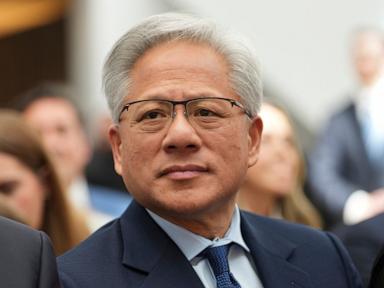
Jensen Huang did not resign from Nvidia. If you clicked a frantic headline claiming the leather-jacketed billionaire walked away from the most valuable semiconductor empire on earth, you just fell for algorithmic rage-bait designed to harvest your attention.
The financial internet runs on manufactured panic. Every few months, a rumor mill churns out a fabricated executive exit, pairs it with a real corporate officer's name to manufacture credibility, and watches retail traders hyperventilate. In this specific circus, the rumor-mongers dragged Nvidia’s long-standing Chief Financial Officer, Colette Kress, into the spotlight as the supposed successor or interim replacement.
Here is the reality nobody wants to talk about because it lacks cheap drama. Huang is still the Chief Executive Officer, President, and co-founder of Nvidia. Colette Kress is still the Executive Vice President and Chief Financial Officer. Neither of them went anywhere. More importantly, the people obsessing over whether Huang might step down are asking completely the wrong question. They are staring at the face of the company while ignoring the financial architecture that actually makes Nvidia untouchable.
Why the Internet Invents Executive Exits Out of Thin Air
Spend fifteen years watching institutional trading desks and Silicon Valley rumor cycles, and you recognize the pattern immediately. Whenever a single company represents a massive chunk of the S&P 500's total gains, short-sellers and click-farm operators look for any lever to trigger volatility.
You cannot easily attack Nvidia’s product roadmap. Their architecture dominates data center compute. You cannot easily attack their margins, which routinely make legacy hardware manufacturers look like low-margin grocery stores. So what do bad actors attack? Key-person risk.
Key-person risk is the financial vulnerability a company faces when its valuation relies heavily on the continued presence, vision, or charisma of a single individual. Because Jensen Huang co-founded Nvidia in 1993 and has led it uninterrupted for over three decades, Wall Street treats him as synonymous with the stock ticker. An AI-generated scrapers' blog publishes a fabricated story claiming Huang resigned, throws Colette Kress’s name into the headline to trick search engines into validating the entity association, and waits for algorithmic trading bots to twitch.
I have watched retail investors and junior fund managers blow millions of dollars reacting to unverified executive-departure headlines over the last decade. They see a name they recognize—Colette Kress—paired with a sensational verb—"resigned"—and they hit the sell button before checking an SEC Form 8-K. If a publicly traded company’s CEO actually resigns, federal securities law requires an immediate Form 8-K filing with the Securities and Exchange Commission. No 8-K means no resignation. Everything else is noise.
Who Colette Kress Actually Is and Why Lazy Journalists Get Her Wrong
When the clickbait articles ask "Who is Colette Kress?" they usually regurgitate a two-sentence LinkedIn bio. They mention she joined Nvidia in 2013 after stints at Cisco and Microsoft. They call her the "money person."
That description is an insult to corporate strategy.
Colette Kress is not merely an accountant counting GPUs in a back office in Santa Clara. Having served as Senior Vice President and CFO of Cisco’s Business Technology and Operations organization, and having spent thirteen years at Microsoft in senior finance roles, Kress brought hyper-scale enterprise discipline to a company that used to be viewed primarily as a PC gaming graphics vendor.
When Kress took the CFO seat at Nvidia in September 2013, Nvidia was a mid-cap chipmaker fighting for relevance in mobile processors while selling GeForce cards to gamers. Under her financial stewardship, Nvidia executed one of the most aggressive capital allocation pivots in corporate history.
To understand what Kress actually does, look at three mechanisms she oversees:
- Supply Chain Pre-Payments and Capacity Locks: Semiconductor manufacturing requires billions of dollars in upfront capital commitments years before a single wafer leaves Taiwan Semiconductor Manufacturing Company (TSMC). Kress structured the balance sheet to lock up advanced packaging capacity (specifically CoWoS—Chip-on-Wafer-on-Substrate) while competitors were still debating whether the artificial intelligence boom was a temporary bubble.
- Software-Style Gross Margins on Hardware: Traditional hardware companies suffer from cyclical margin compression. Kress helped transition Nvidia’s revenue mix toward full-stack data center solutions—bundling proprietary interconnects like NVLink, networking gear acquired via the Mellanox deal, and enterprise software licenses like Nvidia AI Enterprise. That pushed gross margins past the 70 percent threshold, numbers previously reserved for pure-play software monopolies.
- Disciplined Capital Return: While tech peers burned tens of billions on vanity metaverse projects or overpriced acquisitions that regulators blocked, Kress managed share repurchases and balance sheet liquidity so Nvidia had a fortress of cash ready when supply chains tightened.
Calling Colette Kress "just the CFO" misses the entire operational engine of the company. Huang sets the technical vision and evangelizes the roadmap; Kress turns those architectural bets into an impenetrable financial moat.
The Myth of the Indispensable Founder
Let’s address the uncomfortable truth that Nvidia bulls hate hearing. Even though Jensen Huang has not resigned, he will leave eventually. Time is undefeated. Whether it happens in five years or fifteen years, the day will come when Huang hands over the leather jacket.
The consensus on Wall Street is that when Huang retires, Nvidia’s valuation will collapse because no one else possesses his engineering intuition or cult-like command over the supply chain. That consensus is dead wrong. It misunderstands how deep-tech monopolies actually sustain themselves after their founders depart.
Look at Apple after Steve Jobs. In August 2011, when Jobs resigned as CEO and handed the reins to his operations chief, Tim Cook, pundits declared Apple’s golden era dead. They claimed an operations and supply-chain executive could never replicate a visionary founder's magic. Over the next decade, Cook turned Apple from a roughly $350 billion company into a $3 trillion juggernaut. Why? Because Jobs had already built the ecosystem lock-in, and Cook knew how to monetize, scale, and defend the supply chain with ruthless efficiency.
Look at Microsoft after Steve Ballmer handed the company to Satya Nadella. Institutional momentum, developer lock-in, and enterprise distribution channels matter infinitely more than a single charismatic keynote speaker.
Nvidia’s real moat is not Jensen Huang’s personality. Nvidia’s real moat is CUDA—Compute Unified Device Architecture.
Since 2006, Nvidia has poured billions of dollars into building a proprietary software layer that allows developers to program directly on Nvidia GPUs. Millions of researchers, enterprise engineers, and university students write code specifically optimized for CUDA. Switching away from Nvidia hardware does not just mean unplugging one server rack and plugging in another from AMD or a custom hyperscaler chip. It means rewriting millions of lines of legacy code, retraining engineering teams, and risking catastrophic latency in production models.
Even if Huang walked out the door tomorrow morning, those millions of lines of CUDA code would still exist. The TSMC supply agreements negotiated by Colette Kress would still exist. The NVLink switching architecture would still exist.
What Would Actually Happen If Colette Kress Took Over
Imagine a scenario where Jensen Huang genuinely did step down tomorrow, and the Nvidia board of directors named Colette Kress as interim or permanent CEO. How would the market react, and what would actually happen inside the company?
In the first forty-eight hours, algorithmic panic would wipe hundreds of billions of dollars off Nvidia’s market capitalization. Financial television anchors would scream about the end of the AI supercycle. Retail traders who bought at the top would dump their shares at a loss.
And six months later, those same sellers would be scrambling to buy back in at higher prices.
Why? Because Kress has sat beside Huang on every single earnings call, capital allocation review, and strategic acquisition for over a decade. She knows every major customer—from Microsoft and Meta to sovereign wealth funds building national data centers—on a first-name basis. Unlike an external CEO brought in to "shake things up," Kress understands the exact unit economics of every Blackwell and Rubin architecture rollout.
However, I will admit the massive downside to a finance-led succession at a semiconductor giant. History provides brutal warnings about what happens when CFOs and operations executives hold power for too long at engineering-first companies.
Look at Intel. Under Brian Krzanich and later CFO-turned-CEO Bob Swan, Intel prioritized margin protection, stock buybacks, and incremental financial engineering over risky, capital-intensive process node breakthroughs. That hesitation allowed TSMC to seize the manufacturing crown and opened the door for AMD and Nvidia to eat Intel’s data center lunch. When accountants run a chip company without an aggressive engineering counterweight, they inevitably optimize for this quarter’s gross margin at the expense of next decade’s architectural leap.
If Kress ever took the top job, she could seamlessly run the commercial empire for five years, but Nvidia would eventually need an engineering maniac—someone from the ranks of their architecture or hardware engineering leadership—to bet the company on whatever comes after silicon transistors.
Answering the Real Questions Investors Are Afraid to Ask
When people search for rumors about Jensen Huang resigning, they are usually looking for an excuse to time the top of the market. They feel uneasy about how fast Nvidia grew, so they look for a narrative catalyst that justifies their fear. Instead of chasing fake resignation rumors, look at the actual threats to Nvidia’s dominance.
1. Is Nvidia’s leadership team showing signs of internal succession planning?
Yes, and it has been happening quietly for years. Nvidia operates with a remarkably flat organizational structure—Huang famously has dozens of direct reports rather than traditional layers of middle management. This forces senior executives across hardware engineering, software systems, and finance to operate with total transparency. Kress sits at the center of that matrix, translating engineering ambitions into multi-year capital commitments. When succession eventually happens, it will not be a chaotic surprise; it will be an internal elevation from a bench that has worked together for over a decade.
2. Why do Colette Kress’s stock sales keep making headlines?
Every time Kress or Huang sells shares, conspiracy theorists scream that insiders are abandoning ship. This is complete financial illiteracy. Both executives execute trades under Rule 10b5-1 trading plans. These are automated, pre-scheduled selling programs filed months in advance with the SEC to prevent any accusation of insider trading. When an executive’s compensation is overwhelmingly weighted in stock awards, selling a tiny fraction of holdings on a pre-set calendar date is standard wealth management and tax planning—not a secret signal of impending doom.
3. What actually threatens Nvidia if it isn't a CEO resignation?
Forget executive drama. Watch customer concentration and custom silicon. Nearly half of Nvidia’s data center revenue comes from a handful of hyperscale cloud providers—Microsoft, Amazon, Google, and Meta. Every single one of those giants is pouring billions into designing their own custom ASICs (Application-Specific Integrated Circuits) like Google’s TPUs or Amazon’s Trainium chips to reduce their dependence on the "Nvidia tax." Furthermore, geopolitical export controls restricting the sale of advanced chips to China permanently sliced off a massive addressable market. Those structural pressures are real. A fabricated resignation rumor is a distraction.
How to Stop Getting Played by Financial Clickbait
If you manage money, run a business, or simply try to stay informed in the technology sector, your information diet is your greatest competitive edge. Allowing fabricated headlines about executive resignations to dictate your decisions is amateur hour.
Apply three strict filters before reacting to any breaking corporate news:
- Verify via Primary Filings, Never Aggregators: Do not trust a blog post, a social media thread, or a syndicated finance blurb. Go directly to the SEC’s EDGAR database or the company’s official Investor Relations press release page. If a C-suite executive at a Fortune 500 company resigns, it is a material event that requires formal regulatory disclosure. No filing means the story is fiction.
- Follow the Balance Sheet, Not the Podium: Keynotes and leather jackets make great television, but corporate survival is written in cash flow statements and purchase commitments. Pay attention to what CFOs like Colette Kress say about inventory days, gross margin guidance, and multi-year supply obligations. Numbers do not lie; headlines do.
- Separate Narrative Volatility from Structural Decay: A rumor causes a temporary price swing. A structural shift—like developers abandoning CUDA or hyperscalers halting GPU orders—takes years to unfold and shows up in quarterly revenue deceleration long before it hits the front page of mainstream news.
Stop refreshing your feed waiting for Jensen Huang to quit. He is still running the show, Colette Kress is still guarding the vault, and the real war for the future of computing is happening in silicon foundries and software compilers—not in the imagination of clickbait writers.