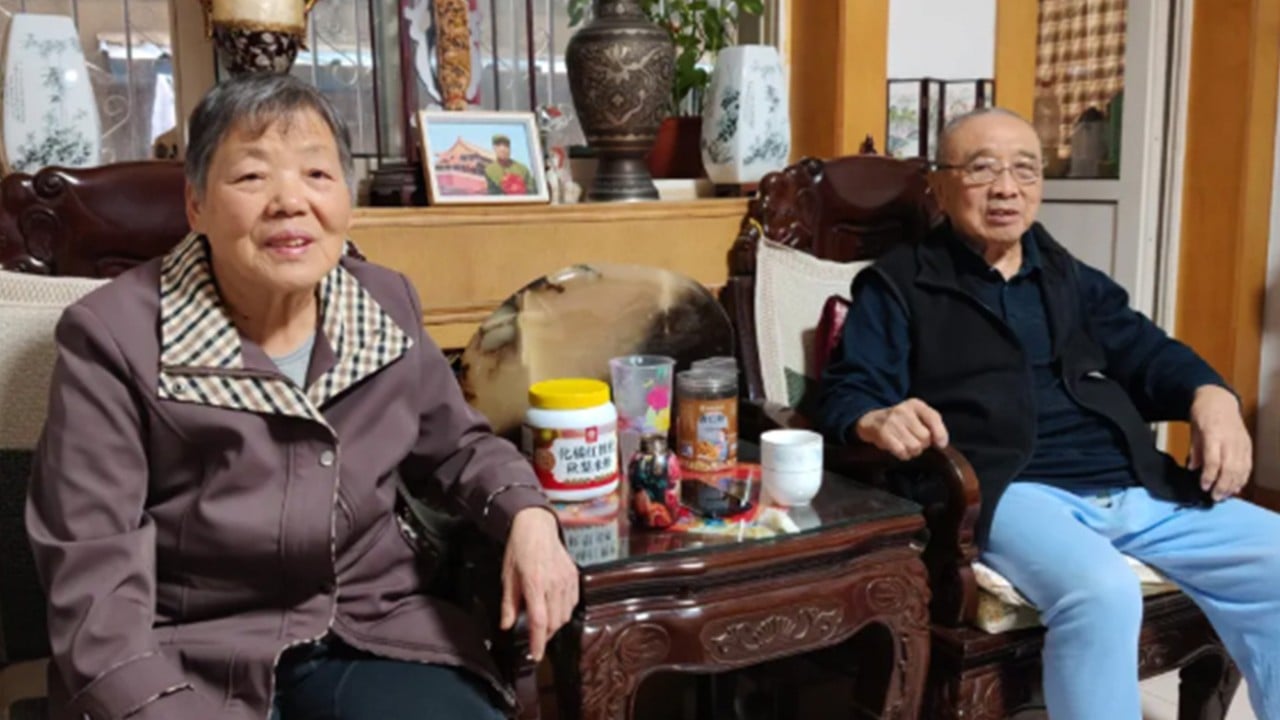
They want you to cry. They want you to share the headline, applaud the saintly patience of a retired woman spending ten years of her golden years wiping the brow of an ailing former colleague, and feel a warm, fuzzy glow about human decency.
It is pure emotional pornography. Read more on a similar issue: this related article.
When media outlets run feel-good viral stories like the widely circulated account of a retired Chinese woman caring for her cancer-stricken ex-colleague for a decade while "defying neighborhood gossip," they are selling a dangerous lie. The lazy consensus frames this as an inspirational triumph of human grit over petty social judgment. In reality, it is a horrifying indictment of broken eldercare infrastructure, cultural guilt, and the silent physical destruction of unpaid caregivers.
We need to stop handing out medals for martyrdom and start looking at the blood on the floor. Further journalism by The Spruce highlights comparable perspectives on the subject.
The Lie of the Feel-Good Viral Caregiver Story
Mainstream lifestyle and human-interest journalism thrives on what sociologists call "perseverance porn." Take a story about systemic abandonment, slap a filter of individual heroism over it, and watch the clicks roll in.
Consider the mechanics of the narrative. A retiree—someone who has already worked decades and entered the brief window of life meant for rest—steps into the breach for a former coworker who has no adequate safety net. Neighbors whisper because society views caregiving outside bloodlines or marriage as suspicious, transactional, or weird. The headline celebrates her for ignoring the chatter.
The competitor’s framing misses the actual scandal entirely. Why was a retired coworker the last line of defense for a terminal or chronic cancer patient over a ten-year span?
In my years analyzing healthcare economics and aging demographics across East Asia and Western markets, I have watched this exact script play out thousands of times. Media outlets romanticize informal caregiving because doing so absolves institutions of responsibility. If one heroic individual can shoulder a decade of medical labor for free, policymakers and hospital networks never have to answer why palliative care, long-term nursing facilities, and social safety nets failed to catch that patient in year one.
Gossip wasn't the villain in that story. Abandonment by every formal support structure was.
The Clinical Reality of Decade-Long Informal Care
Let us strip away the sentimental adjectives and look at what ten years of unpaid oncology and chronic care actually does to a human body.
Medical researchers call it caregiver burden, defined precisely as the multidimensional strain—physical, psychological, financial, and social—experienced by an unpaid person looking after someone with a chronic or terminal illness. It is not a poetic badge of honor. It is a recognized clinical risk factor for premature mortality.
Heavy hitters in geriatric and behavioral medicine have documented this ruthlessly:
- Accelerated Cellular Aging: Nobel laureate Elizabeth Blackburn and health psychologist Elissa Epel demonstrated in landmark telomere research that chronic caregiving stress shortens telomeres—the protective caps on chromosomes—by the equivalent of nine to seventeen years of additional aging.
- Mortality Risk: Landmark epidemiological work led by Richard Schulz and Scott Beach at the University of Pittsburgh found that elderly spousal caregivers experiencing mental or emotional strain had a 63 percent higher mortality risk than non-caregiving controls over a four-year period.
- Immune Suppression: Janice Kiecolt-Glaser’s psychoneuroimmunology studies at Ohio State University proved that long-term caregivers exhibit measurably slower wound healing and blunted immune responses to vaccines compared to peers.
When a retired woman gives ten years of her life to care for an ex-colleague, she isn't just giving her time. She is trading away her own cardiovascular health, immune resilience, and remaining lifespan. Calling that "inspirational" without mentioning the physiological toll is journalistic malpractice.
Why Neighborhood Gossip Is Actually a Symptom of Cultural Rigidity
The original framing leans heavily on the phrase "defying gossip," turning nosy neighbors into cartoon villains. That is a shallow reading of social dynamics.
In tight-knit urban residential compounds—particularly in China, where rapid urbanization collided with traditional Confucian family structures—social surveillance is how communities enforce reciprocal obligation. Under traditional filial piety (xiao), eldercare and sick care belong strictly within the family unit. When an unrelated former colleague steps in, it breaks the community’s mental model of duty.
People whisper because they assume one of two things:
- Financial Extraction: The caregiver must be after the patient’s pension, savings, or apartment deed.
- Hidden Romance: Two older adults of the opposite sex—or even the same sex—living in close domestic proximity must have an undisclosed romantic history.
The gossip isn't born out of pure malice; it is the friction caused when modern demographic reality outpaces ancient cultural rules. China’s decades-long One-Child Policy and massive internal labor migration created millions of "empty-nest" seniors and childless adults whose biological families are either nonexistent, estranged, or working a thousand miles away.
Chosen family and workplace solidarity are stepping into the vacuum left by shrinking nuclear households. The neighbors aren't evil; they are running outdated social software that cannot compute non-kin altruism.
Dismantling the Wrong Questions People Ask About Caregiving
When viral caregiver stories trend, search engines fill up with predictable, fundamentally broken questions. Let us tear down the premises behind what people actually ask.
"How do caregivers stay motivated for ten years?"
They don't. Motivation is a myth sold by self-help grifters. After month six, motivation evaporates and is replaced by enmeshment and moral entrapment. Once you become the sole person keeping someone alive, fed, and medicated, walking away feels identical to murder. You do not stay for a decade because you feel inspired every morning; you stay because the exit doors have been welded shut by guilt and institutional absence.
"Is caring for a non-relative legally risky?"
Yes, wildly so—and pretending otherwise is reckless. Without formal legal instruments like durable power of attorney, healthcare proxies, or notarized guardianship agreements, a non-relative caregiver operates in a legal no-man's-land. Distant relatives who vanished for nine years routinely materialize the moment a patient dies to contest wills, accuse the caregiver of financial abuse, or demand the keys to the property. Love does not hold up in probate court. Paperwork does.
"Should more people step up to care for lonely seniors?"
No. Asking untrained, aging individuals to absorb catastrophic medical labor is a terrible solution to a structural crisis. Telling retirees to become unpaid nurses for their peers is like telling passengers on a sinking ship to bucket out the ocean with teacups instead of fixing the hull. Community connection matters; unpaid, unsupported, ten-year medical servitude does not.
Imagine a Scenario Where We Stop Romanticizing Martyrdom
Imagine a scenario where the exact same retired woman noticed her former colleague struggling with a cancer diagnosis, and instead of moving in for a decade of solitary sacrifice, she triggered a coordinated support network.
In that scenario, three things happen immediately:
- Institutional Triage: A municipal palliative social worker assigns subsidized home-health aides for heavy physical tasks—bathing, lifting, wound dressing, and medication management.
- Micro-Community Rotation: Five former colleagues from the same workplace split non-medical logistics—groceries, hospital transport, bill paying, and afternoon company—so no single retiree loses their autonomy or health.
- Legal Insulation: A local legal aid clinic drafts a transparent, witnessed care agreement and medical proxy on day one, eliminating any basis for neighborhood speculation about inheritance theft.
Notice what vanishes in this scenario. The viral headline disappears. Nobody writes an article about a well-organized municipal care team and a five-person spreadsheet rotation. It isn't cinematic. It doesn't make you weep over your morning coffee.
It just keeps both people alive and healthy.
The Uncomfortable Downside of My Own Argument
I will admit the obvious flaw in tearing down individual heroism: systems move slowly, and cancer does not wait for policy reform.
If you are standing in a hospital hallway today next to a friend who has nobody else, telling them to wait for better geriatric infrastructure is useless. In acute crises, raw human loyalty is the only bridge across the abyss. Without individuals willing to absorb irrational amounts of inconvenience and pain for people they care about, thousands of vulnerable adults would die alone in filthy apartments.
The contrarian position does not mean abandoning your friends. It means refusing to confuse an emergency measure with a sustainable lifestyle—and refusing to let society applaud your sacrifice while leaving you to drown.
How to Help Someone Without Destroying Yourself
If you find yourself pulled into long-term care for a friend, former colleague, or aging relative, abandon the martyr playbook immediately. Execute these four rules instead.
- Draw Hard Boundaries Before Day Thirty. Define exactly what you will and will not do. Driving someone to chemotherapy twice a month is sustainable; becoming their 24/7 live-in nursing aide is a slow-motion suicide pact. State your limits out loud before dependency hardens into expectation.
- Force Formal Documentation Early. Before cognitive decline or heavy medication sets in, insist on written clarity. Get a healthcare proxy, a clear list of emergency contacts, and documented financial transparency—keep receipts for every cent spent on their behalf in a shared ledger so distant relatives cannot weaponize suspicion later.
- Build a Pod, Never a Solo Act. If you are helping a former colleague, recruit three to five other people from that same company, neighborhood, or social circle. Assign specific, small recurring tasks. People rarely volunteer for "help me take care of John," because that sounds infinite. People readily say yes to "can you bring John groceries every Tuesday at 4 PM?"
- Treat Respite as Non-Negotiable Infrastructure. Caregivers who skip their own medical appointments, abandon their social lives, and stop sleeping inevitably crash—leaving the patient in an even worse emergency. Schedule mandatory off-duty days where someone else covers the phone.
Stop Clapping for the Wrong Ending
Society loves a martyr because a martyr is cheap. A martyr doesn't demand better hospice funding, doesn't sue for inadequate outpatient support, and doesn't force neighbors to confront their own apathy. A martyr quietly absorbs the damage until there is nothing left of them.
The retired woman who spent ten years caring for her ex-colleague showed extraordinary loyalty in the face of small-minded chatter. Respect her humanity. Admire her grit.
Just stop calling it a happy ending.



