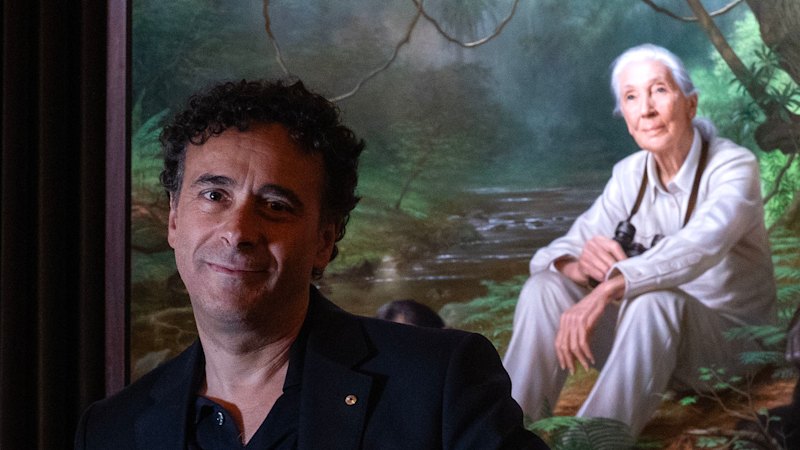
The obituary industrial complex loves a good canvas. When a cultural titan passes or makes a final sentimental pilgrimage, the predictable machinery cranks into gear. Easels are dragged out. Watercolors are mixed. Journalists swoon over the romanticism of an aging pioneer looking out over the Tanzanian canopy one last time, framed by brushstrokes that capture the golden hour on the Gombe hills.
It makes for a great headline. It sells prints. It lets comfortable people feel deeply spiritual about the natural world from the climate-controlled safety of a downtown apartment.
It is also an absolute waste of cultural energy.
While painters immortalize Jane Goodall on her final sweeping trips to East Africa, the actual infrastructure of conservation is quietly starving. We are drowning in hagiography while the ground-level mechanics of wildlife preservation face a funding cliff. Romanticizing the twilight of a legend is much easier than doing the tedious, unglamorous work she spent six decades demanding: paying local field researchers, stopping illegal bushmeat trade, and fighting corporate encroachment on indigenous lands.
Let us dismantle the comforting myth that art and passive admiration equate to environmental action.
The Cult of Personality Versus Structural Reality
For decades, the narrative surrounding conservation has been reduced to a simplistic Hollywood script. A lone Westerner walks into the wilderness, achieves cinematic communion with animals, and becomes a global symbol. Then, years later, artists canonize that person on canvas to immortalize their spirit.
This hero-worship model creates a dangerous psychological trap. It teaches the public that saving ecosystems is something special people do, while everyone else's job is to stand back, buy a commemorative print, and clap.
I have watched organizations blow millions on high-profile gala events, vanity art projects, and awareness campaigns that raise zero awareness where it counts. They spend fortunes celebrating the icon while the boots-on-the-ground rangers in Gombe and surrounding reserves struggle with underpaid salaries, outdated telemetry gear, and constant pressure from poachers backed by well-funded international syndicates.
If your tribute to a conservationist involves buying a limited-edition portrait rather than funding a local anti-poaching patrol unit, you are not a conservationist. You are a consumer of sentimentality.
The Misunderstanding of Preservation Economics
People love to ask why wildlife reserves in Tanzania and across Africa continually face severe financial strains despite billions of global dollars flowing into environmental charities. The lazy consensus blames local corruption or simple apathy.
That explanation collapses under the weight of basic economics.
International donors prefer throwing money at charismatic mega-projects—fancy visitor centers, documentary film crews, and symbolic tree-planting ceremonies—because those deliverables photograph well for annual reports. They rarely want to fund the boring stuff: long-term operational costs, regional infrastructure, fair living wages for local Tanzanian scientists, and community-led buffer-zone management.
When Jane Goodall established her roots in Gombe in 1960, she did not do it with an easel and a palette. She did it through grueling, meticulous, day-after-day observation. She sat in the mud, contracted tropical illnesses, and endured isolation. The modern cultural impulse to sanitize this gritty reality into a pastel-hued painting does a profound disservice to the harsh truths of field science.
Why the Status Quo is Failing
Imagine a scenario where every dollar spent on celebratory artwork, bronze busts, and commemorative global tours was instantly redirected into direct-action habitat defense funds.
The immediate result would terrify the art world and thrill ecologists.
We would see fully staffed reserves, sustainable agricultural initiatives that stop local populations from needing to clear forest for subsistence farming, and independent monitoring units that do not have to beg Western foundations for scraps every fiscal quarter.
Instead, we get more coffee-table books. We get more sentimental articles about an aging giant's final trip to the savannah. We treat conservation as an aesthetic choice—something to hang on the living room wall alongside abstract landscapes—rather than an existential war of attrition against habitat loss.
Reclaiming the Legacy
If you genuinely want to honor what Goodall and her peers sacrificed their bodies and minds to build, stop looking at the paintings. Look at the balance sheets of community-led conservation groups in East Africa. Look at the legislative loopholes allowing multinational extraction companies to squeeze wildlife corridors from all sides.
Goodall herself spent the latter half of her life shouting from every stage on earth that individual action and systemic pressure are the only things that matter. She did not want passive admirers. She wanted radicals who were willing to disrupt institutional inertia.
Tear down the mental gallery wall. Stop confusing passive grief or artistic appreciation with actual stewardship. When the last brushstroke dries on the portrait of an icon, the real work remains untouched, waiting for people brave enough to get their hands dirty.