Every time a news helicopter drops out of the sky, the broadcasting industry goes through the exact same ritualistic grief. Executives clutch their pearls, anchors choke back tears on live television, and viewers send thoughts and prayers to the families of the fallen crew. Then, within forty-eight hours, every major network dispatches the exact same chopper right back into the atmosphere to circle a fender-bender at three hundred feet.
It is institutional insanity masked as public service. In other developments, take a look at: Why the New Orbital Arms Race Changes Everything You Know About Future Wars.
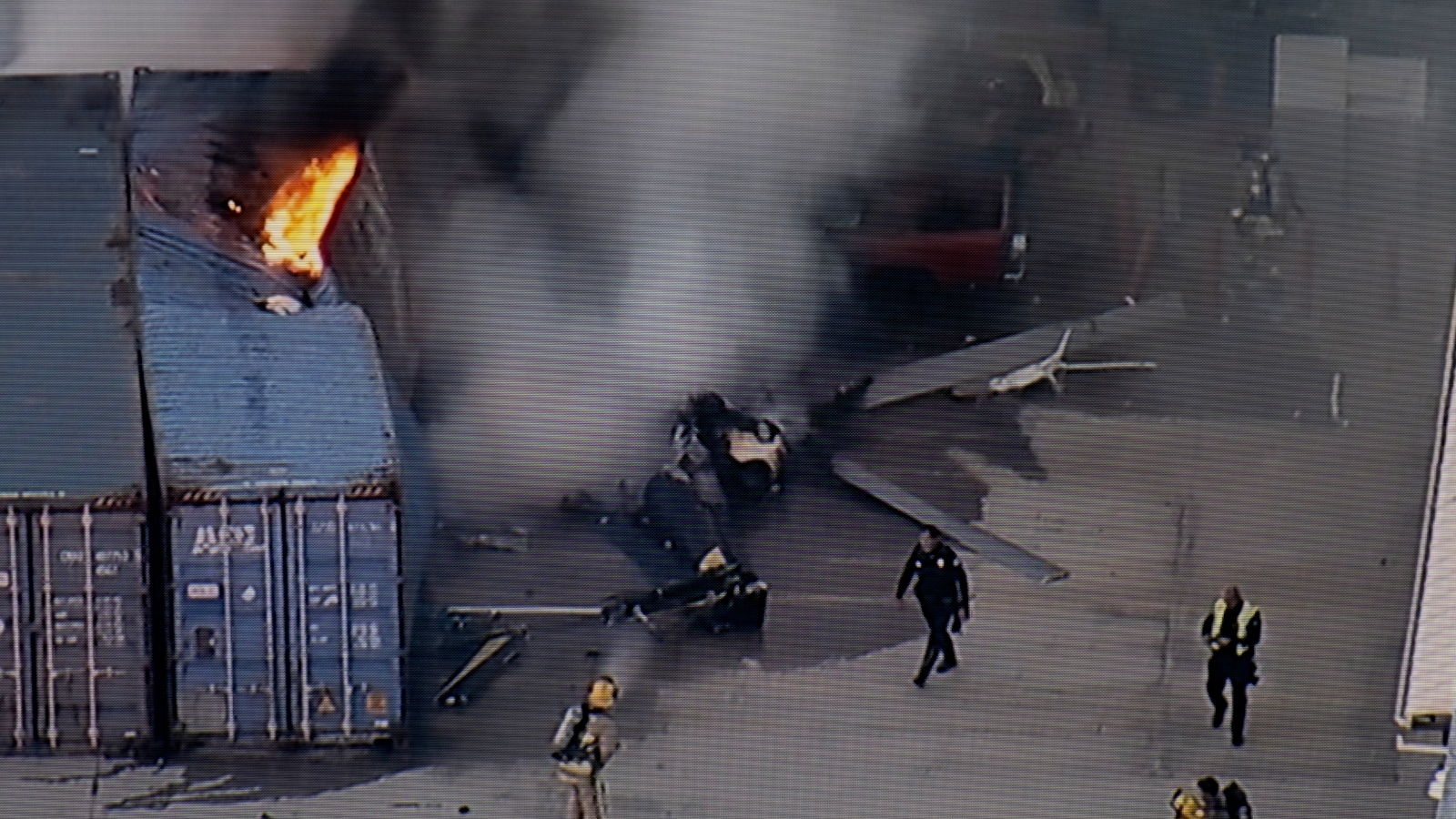
When a NewsChopper4 aircraft crashed in Los Angeles while covering a routine bus collision, killing those on board, the media machine immediately framed it as a tragic workplace accident. They talked about the bravery of airborne reporters. They praised the dedication of the pilots. They mourned the loss of life in the line of duty.
They completely missed the real story. BBC News has provided coverage on this critical issue in extensive detail.
The crash was not an unforeseeable tragedy. It was a statistical inevitability engineered by an industry addicted to low-altitude sensationalism. We are flying multi-ton mechanical beasts over congested urban centers at dangerously low altitudes simply to capture shaky aerial footage of traffic jams that could be filmed by a stationary drone or tracked via a municipal traffic camera.
The lazy consensus in journalism dictates that live aerial reporting is an indispensable tool for public safety. If you do not have a bird's-eye view of a catastrophe, the argument goes, the public is left in the dark.
That argument expired twenty years ago.
Let us look at the mechanics of modern news gathering. In the era of widespread high-definition traffic feeds, ubiquitous municipal cameras, smartphone journalism, and relatively inexpensive unmanned aerial vehicles, the manned news helicopter is an anachronism. It is a flying dinosaur burning aviation fuel to provide a visual spectacle that adds virtually zero investigative value to a story.
When a bus collides with a car, viewers do not need a wide-angle shot from five hundred feet up to understand that traffic is backed on the freeway. They need accurate reporting, timely emergency updates, and analysis of transit safety. An anchor narrating a live picture of flashing red lights from a helicopter cabin is performing theater, not journalism.
And that theater carries a terrifying risk profile.
Helicopters flying low and slow over urban environments operate in the most hazardous segment of aviation. They deal with shifting wind patterns off skyscrapers, invisible power lines, radio towers, and the constant threat of engine failure with nowhere safe to autorotate down to. When you park a helicopter in a tight hover or a slow circular pattern over a breaking news scene, you are throwing away safety margins for visual aesthetics.
I have spent decades watching newsrooms prioritize spectacle over substance. I have seen assignment desks pressure pilots to push weather minimums, ignore mechanical flags, and fly lower than safe operating guidelines permit because the rival station's chopper got airborne first. The competitive pressure of live television creates a toxic safety culture where taking stupid risks is rewarded with ratings and safe caution is punished with lost ad revenue.
The defenders of the status quo will argue that helicopters save lives by guiding emergency responders. That claim falls apart under basic scrutiny. Ground units, GPS routing, and dispatch systems are vastly superior to a reporter shouting out freeway lane numbers from the sky. Emergency services do not look up at local news choppers to figure out where to drive their engines. They use coordinated dispatch protocols.
Another common objection claims that drone technology cannot fully replace the range and endurance of a manned helicopter. That is technically true, but practically irrelevant. For the vast majority of urban breaking news—car crashes, routine fires, local police pursuits—you do not need a twenty-million-dollar turbine-powered aircraft with a pilot and a camera operator. You need a standard traffic feed or a local camera drone operated under strict visual line-of-sight safety rules. And for rare, major catastrophic events where wide aerial context is genuinely required, established FAA protocols and professional aerial survey companies can supply safe, high-altitude imagery without maintaining a perpetual, low-altitude hazard circling over residential neighborhoods every single day.
The industry refuses to acknowledge this because the helicopter is a brand logo. It is a floating billboard with call letters painted on the belly. Networks keep them in the air because they look impressive in promotional spots during the local news broadcast.
Every time a news helicopter goes down, we talk about honoring the victims. The best way to honor them is to ground the fleet.
As long as we reward networks for trading human lives for a slightly better angle on a highway pileup, more wreckage will scatter across our cities. Stop calling these crashes accidents. Start calling them what they are: the predictable cost of a vanity metric.
Sell the aircraft. Put the cameras on the ground. Protect the lives of the crews instead of mourning them after the inevitable next disaster.