Every major newsroom wants you to believe that the French high school unrest is a quaint, routine labor dispute about moldy ceilings, overcrowded classrooms, and tight timetables. They point to the 266,000 marchers, the thousands of minors swept up by the state, and the weeping editorials about decaying post-industrial infrastructure. It is a comforting narrative for comfortable people. It frames teenage discontent as a maintenance ticket that the Ministry of Education forgot to file.
It is also complete nonsense.
I have spent enough years analyzing civil disobedience loops across Western Europe to recognize when a structural crisis is being disguised as local plumbing complaints. The lazy consensus among mainstream pundits is that teenagers woke up one Tuesday in September, looked at their 8:00 AM to 6:00 PM schedules, and decided to launch a national insurrection over chemistry lab equipment.
They are missing the entire architecture of the pressure cooker.
The Myth of the Maintenance Ticket
Let us define terms precisely. A protest is a negotiated demand for specific policy adjustments within an existing framework. What is happening in France is not a protest. It is an institutional rejection of a conveyor belt that no longer leads anywhere.
When you look at the raw data coming out of the Ministry of Justice, notice what happens after the smoke clears. Thousands of minors and citizens get scooped up in the dragnet during high-intensity flashpoints, yet the vast majority are cycled out of detention almost immediately. Why? Because the state knows these aren't organized criminal cadres; they are symptoms of a systemic failure of social mobility.
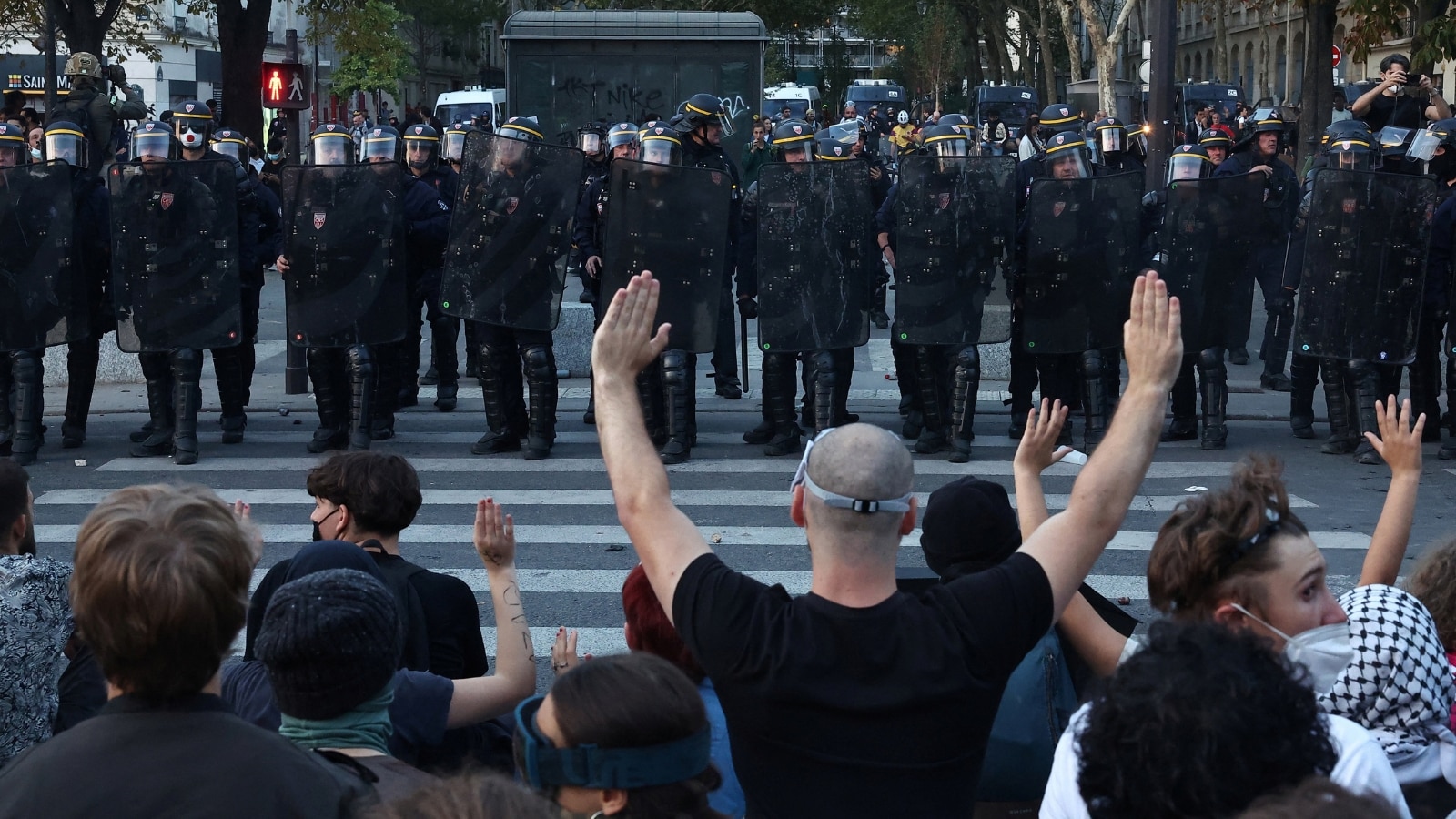
The lazy narrative treats the barricaded lycée gates as a localized spasm. But when high schoolers in Paris, Marseille, Lille, and Lyon simultaneously adopt urban guerrilla tactics—complete with bin fires, fireworks, and coordinated blockades—they aren't negotiating for a fresh coat of paint on a gymnasium wall. They are signaling that the social contract of the Fifth Republic has expired for anyone under eighteen.
Imagine a scenario where every single structural reform promised to the working-class banlieues over the last twenty years was quietly shelved to fund national debt servicing and bureaucratic bloat. You do not get moderate dialogue out of that environment. You get teenagers throwing paving stones because they realize the math of modern European citizenship no longer pencils out.
Why the State Overshoots Every Single Time
The French state has a predictable reflex when youth unrest reaches critical mass: saturate the perimeter, deploy tear gas, run up astronomical arrest numbers to project absolute authority, and then scramble to throw minor funding concessions at the problem once the tear gas clears.
It is a theatrical cycle of mutual radicalization. The government needs the unrest to look like criminal vandalism so they can justify maintaining public order through riot shields. The student leadership needs the state to overreact so they can prove that the institutions meant to educate them are actually designed to police them.
Look at how the political class frames the violence. They express shock—shock!—that teenagers show up with masked faces and projectiles, waiting for law enforcement to bite. But what do you expect when you build an educational track record that sorts children into economic dead-ends before they can legally vote? The timetables aren't just long; they are irrelevant to the economic reality waiting for them outside the school gates.
The Cost of Convenient Delusions
Pretending this is merely about leaking roofs allows politicians to promise a few million euros in renovations, wait for the school term to cycle over, and call it a day. It lets pundits write tidy columns about French exceptionalism and the eternal tradition of student rebellion.
It completely ignores the structural rot underneath.
When a generation figures out that the credentialist machine produces debt and alienation rather than security, they stop playing the game by the rules. They blockade the doors because the doors lead to a room where the chairs are already taken.
Stop asking if the schools need better funding. Of course they do. Start asking what happens when a state runs out of legitimate futures to distribute to its youth, leaving only batons and barricades to fill the silence.