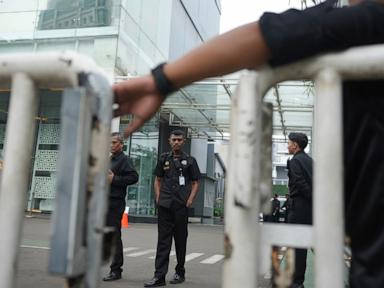
The raid on the Indonesian National Nutrition Agency by the Attorney General’s Office is being treated by the global press as a shocking twist. It is not. It was entirely predictable.
When President Prabowo Subianto sacked the agency’s chief, Dadan Hindayana, alongside former military and police bigwigs turned suspects, the immediate reaction from the lazy consensus was a chorus of predictable commentary. Analysts began hand-wringing over "governance failures," "unfortunate supply chain disruptions," and "the urgent need to implement stricter standard operating procedures."
This commentary misses the entire point.
The standard media narrative is that a noble, $28 billion humanitarian crusade to feed 90 million children and pregnant women has been temporarily derailed by bad actors and corrupt kitchen contractors. Fix the procurement, they say. Install ultraviolet sterilization kits, they argue. Tighten the audits, and the program will work.
This is a delusion. The Makan Bergizi Gratis (MBG) program is not a broken logistical triumph waiting to be repaired. It is a fundamentally flawed structural nightmare that cannot be engineered into efficiency. The mass food poisonings, the multi-million-dollar budget cuts, and the 5,000 fictitious kitchens exposed by the legislature are not bugs in the system. They are the inevitable features of attempting to run a hyper-centralized, state-mandated catering service across a massive archipelago of 17,000 islands.
The Massive Scale Delusion
I have watched public sector entities and massive enterprises burn fortunes trying to force centralized supply chains onto highly fragmented, infrastructure-poor regions. It fails every single time.
The core assumption of the program is that you can take $28 billion from the central state budget, funnel it through a newly minted bureaucracy, and cleanly distribute fresh food and milk to rural schools from Sumatra to Papua. This assumption ignores the basic laws of thermodynamics and economics.
Consider a fundamental reality of food logistics: cold chain infrastructure. Fresh milk and raw meat require continuous refrigeration. In industrialized nations, this is supported by a seamless web of refrigerated trucks, stable power grids, and climate-controlled distribution centers.
Now, look at the reality on the ground. Imagine a scenario where a local fulfillment unit, staffed by politically connected operators, receives a massive bulk shipment of chicken and milk in a remote regency. The local power grid experiences daily blackouts. The temperature outside is a steady 32°C with 85% humidity. The final leg of delivery involves a two-hour motorbike ride over unpaved mountain roads.
What happens? The food spoils. Bacteria multiply exponentially long before the meal reaches an old metal lunch tin at a school.
No amount of standard operating procedures can fix a complete lack of physical infrastructure. When the government dictates that thousands of kitchens must suddenly buy massive quantities of highly perishable ingredients, it creates an artificial supply squeeze. Kitchen managers face a choice: buy sub-standard, improperly stored ingredients from unregulated local markets, or fail to meet their daily quota. They choose survival, and the children pay the price.
The Myth of the Clean Bureaucracy
The second great misconception is that the program's corruption can be audited away. The Attorney General's Office can lock out employees and arrest directors all day long, but they are fighting a multi-headed hydra created by the policy itself.
When you inject billions of dollars into a completely new, top-down distribution network without an established legal foundation, you create an open invitation for rent-seeking behavior. The program did not utilize existing, battle-tested regional networks. Instead, it created isolated nutrition fulfillment units that quickly became lucrative prizes for local politicians, retired generals, and well-connected contractors.
Let's break down the basic mechanics of procurement corruption:
| Level of Operation | Stated Objective | Economic Reality | Resulting Failure |
|---|---|---|---|
| Central Agency | Allocate national budget to regional hubs based on demographic data. | Billions of Rupiah are funneled through opaque internal guidelines with minimal oversite. | Pervasive mark-ups and the creation of thousands of fictitious kitchens on paper. |
| Regional Fulfillment Units | Partner with qualified local cooks to prepare balanced meals. | Monopolistic contracts are handed out to political allies with zero catering experience. | Total lack of professional food safety standards and certified kitchen staff. |
| Local Kitchens | Source fresh, highly nutritious ingredients from local farmers. | Managers maximize profit margins by purchasing cheap, near-expiration ingredients. | Widespread bacterial contamination and mass food poisoning incidents. |
When the very people tasked with legislative oversight are suspected of owning the kitchens, expecting the system to self-correct is absurd. The problem is not that the governance is weak; the problem is that the financial incentive to cheat is far greater than the incentive to deliver a clean, safe meal.
Dismantling the Wrong Premise
The public discussion surrounding this crisis focuses entirely on the wrong questions. The media asks: "How can the government make these kitchens safer?" and "Who will replace the fired officials to restore order?"
The brutal truth is that the government should not be running a nationwide restaurant chain in the first place.
When you ask how to make a state-run catering monopoly safe, you accept the premise that the state is the appropriate vehicle for daily food preparation and delivery. It is not. The state is exceptional at broad cash transfers, macro-infrastructure investment, and baseline regulatory enforcement. It is profoundly terrible at ensuring a piece of fish served to a child in a remote village does not contain Salmonella.
Every dollar spent trying to build, monitor, and clean 1,500 state-run kitchens is a dollar stolen from deep structural interventions. If the goal is genuinely to eliminate malnutrition and child stunting, the solution is not a daily logistics race against tropical spoilage.
The alternative is highly unglamorous, far harder to turn into a political slogan, and completely effective: direct, unconditional cash transfers to mothers, combined with aggressive local market deregulation.
When you give funds directly to a mother, you completely bypass the central agency, the corrupt regional coordinator, the fictitious kitchen operator, and the broken cold chain. Mothers do not source rancid meat from a politically connected middleman. They buy fresh, local ingredients from the market they visit every single day. They know exactly how to cook for their children, and they have a personal stake in ensuring the food does not land their child in a hospital hallway on a stretcher.
Of course, this approach has a massive downside for the ruling class: it removes the opportunity for massive corporate photo-ops, it eliminates billions in lucrative procurement contracts, and it prevents politicians from branding a basic biological necessity with their party's logo.
The Hard Choice
The current leadership will likely double down. They will promise ultraviolet scanners, water filtration systems, and stricter background checks for cooks. They will tell the public that the program is too big and too important to fail.
But you cannot engineer your way out of a bad premise. No level of technology or administrative discipline can force a centralized bureaucratic apparatus to safely feed 90 million people across an ocean-separated landscape without the underlying industrial infrastructure to support it.
The raid in Jakarta isn't a bump in the road. It is the destination. Until the entire concept of state-run mass nutrition is abandoned in favor of decentralized, family-led economic empowerment, the kitchens will remain empty, the budgets will continue to vanish, and the meals will remain dangerous. Stop trying to fix a machine designed to fail. Turn it off.