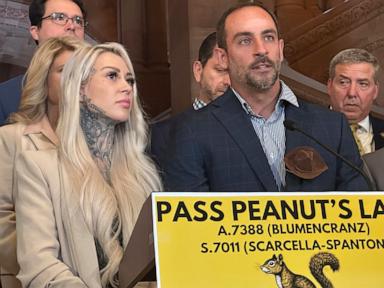
The internet loves a martyr. Especially one with a cute animal on his shoulder.
When headlines broke that the former caretaker of Peanut the squirrel—Mark Longo, or whoever the latest viral proxy happens to be in the endless churn of social media outrage—had been swept up in an Immigration and Customs Enforcement detention, the comment sections predictably combusted. On one side, a chorus of digital activists screamed about government overreach, weaponized bureaucracy, and the cruelty of immigration enforcement targeting a grieving pet owner. On the other, hardliners cheered the strict application of the law, treating a niche social media celebrity like a cartel kingpin.
Both sides are completely missing the point. They are fighting a culture war battle over a phantom, completely ignoring the mundane, mechanical reality of how federal agencies, local municipalities, and the attention economy actually collide.
If you are reading coverage that frames this as a targeted political hit over a famous rodent, you are consuming lazy journalism designed to harvest your clicks. Let’s strip away the emotional bait and look at the cold, hard operational mechanics of what actually happens when internet fame meets federal jurisdiction.
The Myth of the Coordinated State Vendetta
Media outlets thrive on narrative symmetry. They want you to believe there is a straight, sinister line connecting New York State Department of Environmental Conservation (DEC) officers seizing an unpermitted Eastern gray squirrel in Pine City, New York, and federal ICE agents executing a detainer months or years later.
It makes for a great conspiracy theory. It makes for terrible analysis.
Having spent over a decade watching how regulatory compliance, municipal code enforcement, and federal immigration databases interact, I can tell you one undeniable truth: government agencies are rarely competent enough to orchestrate the kind of cinematic vendettas the internet attributes to them. They do not need a grand conspiracy to ruin your life. Automated data-sharing protocols do the job for free.
When someone becomes a viral sensation—whether through an OnlyFans account, a TikTok sanctuary, or a local zoning dispute—they voluntarily erase their own anonymity. Every county clerk filing, every state wildlife violation, every minor traffic infraction gets pulled out of dusty local filing cabinets and digitized into the public square.
Once local law enforcement or state regulators open an administrative file on an individual, that person's biometric and biographical data enters the wider law enforcement ecosystem. Programs like Secure Communities and standard NCIC (National Crime Information Center) database queries do not care about your follower count. They do not care about your GoFundMe total. They run an automated check against Department of Homeland Security (DHS) databases. If an individual has an overstayed visa, a lapsed green card, a prior removal order, or an unresolved immigration status, the system flags it automatically.
There is no shadowy bureaucrat twirling a mustache in Washington, D.C., plotting revenge for a viral squirrel. There is just an algorithm matching a name and a date of birth across two government servers.
Why Viral Fame Is an Existential Threat to Vulnerable People
Here is the uncomfortable reality that social media managers and PR crisis firms will never tell you: virality is poison if your legal paperwork is not bulletproof.
I have watched independent creators, small business owners, and hospitality workers destroy their own livelihoods because they chased internet clout while sitting on unresolved legal vulnerabilities. They treat social media like a shield, assuming that having hundreds of thousands of followers grants them immunity from mundane legal reality.
The exact opposite is true. Fame acts as a high-powered spotlight on every single corner you ever cut.
Consider the mechanics of modern internet notoriety:
- Crowd-Sourced Auditing: The moment you go viral, thousands of amateur sleuths—many of them hostile—begin pulling your public records, business registrations, tax filings, and immigration history.
- Mandatory Agency Response: A local wildlife agency or zoning board might ignore an unpermitted exotic pet for seven years if nobody complains. The second you post a video that gets ten million views, their phone lines jam with complaints from licensed rehabbers and angry neighbors, forcing them to act by the book.
- The Paper Trail Trap: Monetizing a viral brand requires bank accounts, tax IDs (EINs or ITINs), payment processors, and corporate filings. Every single one of those steps creates a permanent, searchable federal footprint.
You cannot operate as an underground, off-the-books operator while simultaneously running a public-facing media empire. Trying to do both is like robbing a bank and livestreaming your getaway route.
Dismantling the Internet’s Favorite Misconceptions
When news of an ICE detention hits the timeline, the public immediately floods search engines with questions rooted in pure fantasy. Let’s tear down the three biggest lies people believe about how these cases actually work.
Does Viral Public Outrage Stop Deportation Proceedings?
No. Not even slightly.
There is a widespread delusion that if a petition gets enough signatures or a hashtag trends long enough on X, an immigration judge will magically tear up a Notice to Appear (NTA). Immigration courts under the Executive Office for Immigration Review (EOIR) operate under strict statutory frameworks established by the Immigration and Nationality Act (INA).
Judges are bound by statutes, precedent from the Board of Immigration Appeals (BIA), and evidentiary rules. A stack of supportive tweets is inadmissible hearsay. In fact, aggressive public campaigns often backfire by drawing scrutiny from DHS trial attorneys, making them far less likely to exercise prosecutorial discretion or agree to administrative closure.
Can Local Politicians Just Pardon Someone Out of ICE Custody?
This misconception stems from a fundamental ignorance of federalism. A governor can pardon state crimes. A mayor can tell local police to stand down. Neither of them has a shred of authority over federal immigration enforcement.
Immigration law is exclusively federal jurisdiction, a principle cemented by the U.S. Supreme Court in Arizona v. United States. Even in self-declared "sanctuary" jurisdictions, local non-cooperation policies only prevent municipal jails from honoring voluntary ICE detainer requests. They do not stop federal Enforcement and Removal Operations (ERO) officers from arresting someone at their home, workplace, or courthouse.
Are Pet Violations Considered Deportable Offenses?
On their own? Almost never. A misdemeanor charge for possessing wildlife without a permit does not automatically trigger deportation under the "crimes involving moral turpitude" (CIMT) or "aggravated felony" provisions of the INA.
However, you do not need a felony conviction to be detained by ICE. If you are present in the United States without inspection, have overstayed a non-immigrant visa, or have violated the terms of your admission, you are already removable under civil immigration law. An arrest or citation for a minor state offense is simply the tripwire that alerts federal authorities to your presence.
The Grift Economy of Outrage Journalism
We need to talk about why the mainstream press covers these stories with such breathy, manipulative framing.
Look at the headline structure of the standard news piece on this topic. It pairs an emotionally resonant, universally understood symbol—a beloved rescued pet—with a polarizing political acronym like ICE. It does not matter if the detention has zero causal link to the animal. Juxtaposition creates implied causation in the reader’s brain.
Editors know that a nuanced breakdown of administrative law, 287(g) agreements, and civil removability statutes will generate roughly twelve pageviews. A headline implying that federal agents are deporting a guy because of his squirrel will generate twelve million.
This is the attention economy at its most cynical. Outrage outlets take complex, tragic, deeply human legal crises and flatten them into partisan cartoons. They rob the public of an actual understanding of how the legal system functions, replacing civic literacy with cheap tribal dopamine.
The Uncomfortable Downsides of Reality
Let me be clear about the limitations of this purely mechanical view of the law. Acknowledging that the system runs on automated databases and strict statutory triggers does not mean the system is just, humane, or efficient.
The reality of U.S. immigration detention is brutal. Individuals with deep community ties, zero violent criminal history, and legitimate equities in the country routinely get caught in the exact same dragnet as serious offenders. Once inside an ICE processing facility, due process moves at a glacial pace, legal representation is not guaranteed at government expense, and families are shattered over paperwork discrepancies that could have been resolved in fifteen minutes at a normal administrative window.
Furthermore, strict adherence to regulatory codes—whether wildlife permitting or visa compliance—often ignores common sense. Everyone knows a domesticated squirrel living indoors is not an ecological threat to the state of New York, just as everyone knows deporting a non-violent taxpayer does not make a single neighborhood safer.
Saying "that’s just how the database works" explains the mechanism. It does not excuse the dysfunction.
What Actually Protects People Caught in the Crosshairs
If you, a family member, or a client are navigating public visibility while carrying any unresolved immigration or regulatory exposure, stop listening to internet commentators and start operating like a strategist.
- Audit Your Digital Footprint Before You Monetize: Never launch a public brand, accept media interviews, or register a public-facing LLC until a qualified immigration attorney—specifically a member of the American Immigration Lawyers Association (AILA)—has pulled your complete FOIA (Freedom of Information Act) records from USCIS, CBP, and EOIR. Know what the government knows about you before the public does.
- Never Fight Local Regulators in the Press: If a municipal code officer, health inspector, or wildlife warden knocks on your door, hire a local administrative lawyer and comply quietly. Turning a minor administrative violation into a viral crusade guarantees that every agency in the state will scrutinize your entire life.
- Separate Personal Identity from Public Ventures: Use properly structured corporate entities, registered agents, and legitimate legal counsel to shield personal residential addresses and biographical details from casual public data scraping.
- Ignore Crowdfunded Legal Advice: GoFundMe campaigns pay for lawyers, not legal outcomes. Keep your case details off TikTok, stop venting on livestreams, and let counsel negotiate directly with DHS Office of the Principal Legal Advisor (OPLA) attorneys behind closed doors.
The internet will forget this story by Tuesday. The hashtags will fade, the outrage merchants will move on to the next viral spectacle, and the comment sections will empty out.
The only thing left standing when the dust settles will be a federal case file, a court docket number, and the cold reality of the law. Stop treating real-world legal jeopardy like content.