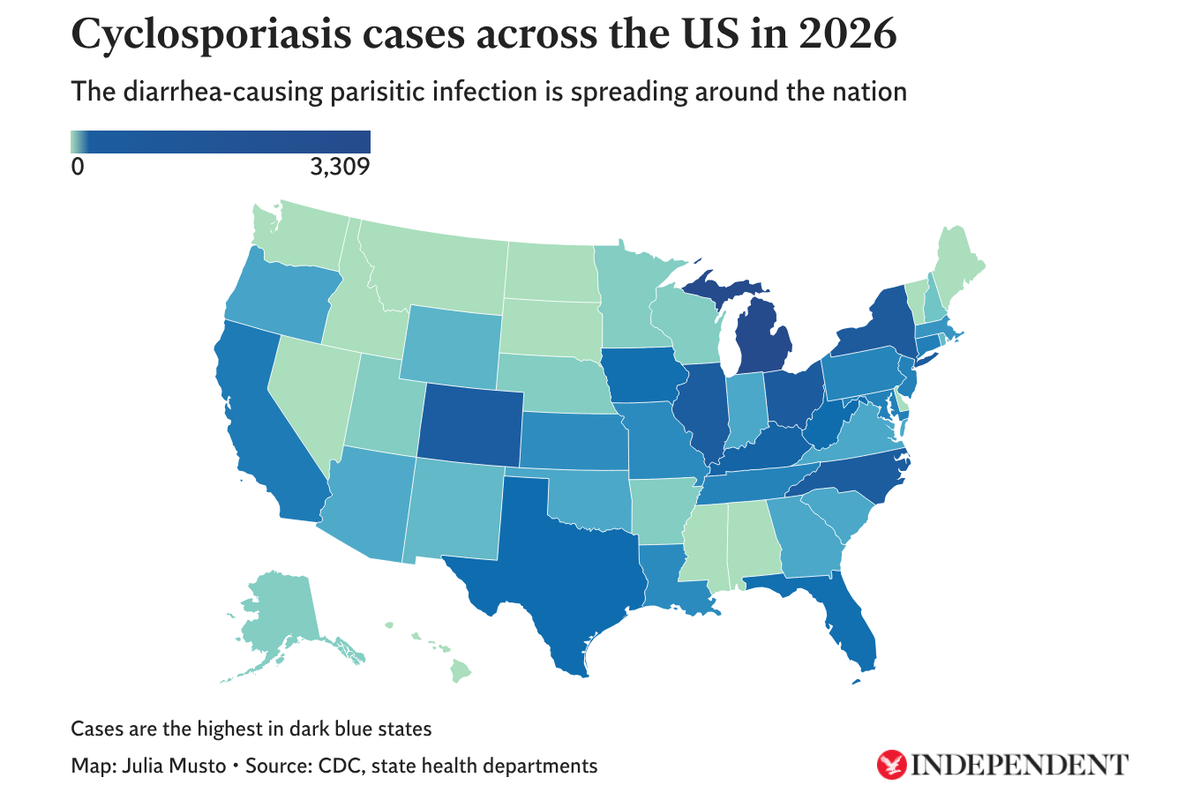
The map is bleeding red, and the media is in a state of predictable, highly profitable panic.
"Cyclosporiasis Outbreaks Hit More Than Half of the US," the headlines scream. They warn you that a mysterious, microscopic parasite is invading your kitchen. They show maps of thirty-plus states lit up in warning colors. They interview solemn public health officials who offer the same tired, useless advice: Wash your fresh produce. Rinse your cilantro. Scrub your berries.
It is a masterclass in public health theater. It is also completely wrong.
This annual summer panic is not the result of a sudden, catastrophic failure in our food supply. It is not because Mexican farms or domestic packing houses have suddenly become filthier than they were last year.
The skyrocketing number of reported Cyclospora cases is a diagnostic illusion. And the advice to simply wash your salad greens to protect yourself is a comforting lie designed to shift the blame from a centralized agricultural system onto your kitchen sink.
If you want to understand why these outbreaks keep "expanding," you have to stop looking at the farms and start looking at the laboratory technology.
The Diagnostic Illusion of the Multiplex PCR
To understand why Cyclospora cayetanensis suddenly seems to be everywhere, we have to look at how medicine actually diagnoses a stomach bug.
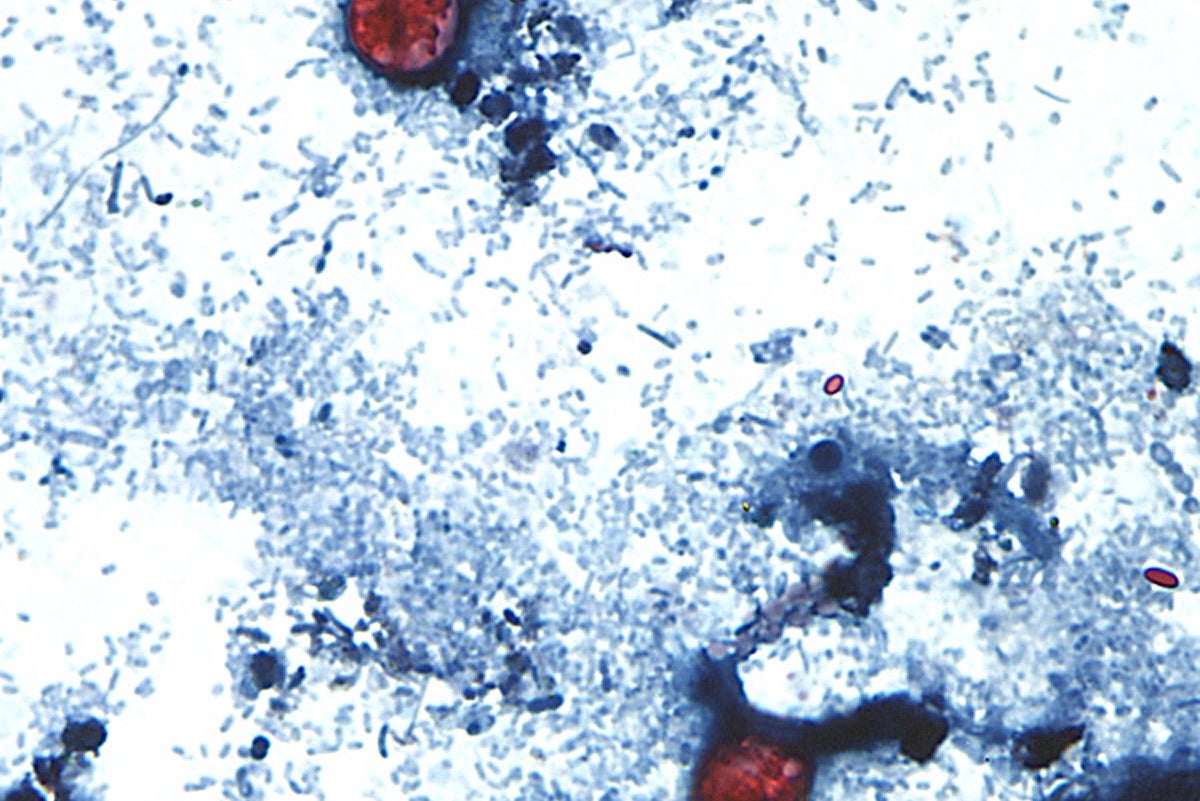
For decades, if you went to the doctor with watery diarrhea, cramping, and bloating, the diagnostic process was slow, expensive, and incredibly inefficient. Your doctor would order an "Ova and Parasite" (O&P) stool test. A laboratory technician would smear your sample onto a glass slide, stain it, and peer through a microscope, hoping to spot a parasite.
But Cyclospora is tiny, measuring just 8 to 10 micrometers. It is incredibly easy to miss. To find it, a lab technician had to perform a highly specific, modified acid-fast stain. Unless your doctor specifically suspected Cyclospora—which they rarely did, unless you had just returned from a tropical vacation—nobody ever ordered that stain. Thousands of cases of cyclosporiasis were misdiagnosed as generic "stomach flu" or food poisoning, treated with hydration, and forgotten.
Then came the clinical shift to syndromic multiplex PCR panels, such as the BioFire FilmArray Gastrointestinal Panel.
Instead of a technician hunting under a microscope, a machine now extracts DNA from a stool sample and tests it for 22 different pathogens simultaneously in about an hour. These panels do not care what the doctor suspects. They test for everything on the menu. And guess what is on that menu? Cyclospora.
The massive spike in cases over the last decade is not a sudden migration of parasites. It is the simple biological reality that we are finally testing for it. We did not suddenly invite a pathogen into our food supply; we simply turned the lights on in a dark room.
The Greenwashing Lie: Your Tap Water is Useless
Let us address the most pervasive piece of misinformation repeated by every health department from Atlanta to Sacramento: the idea that you can wash Cyclospora off your food.
It is a scientifically bankrupt recommendation.
Cyclospora cayetanensis is not like E. coli or Salmonella, which are bacteria that cling to the surface of leaves and can sometimes be reduced with a thorough wash or mild sanitizing rinse.
The Cyclospora oocyst is a biological fortress. It possesses a double-layered, highly resilient outer wall composed of proteins and lipids that are virtually impervious to environmental stressors.
- Chlorine Resistance: The parasite laughs at the chlorine washes used in commercial processing facilities. Standard municipal water treatment levels do not phase it.
- Sticky Surface Chemistry: The outer wall of the oocyst has a sticky physical chemistry. It binds tightly to the microscopic, textured crevices of leafy greens like cilantro, basil, and romaine, as well as the bumpy, porous surfaces of raspberries and blackberries.
If you wash your berries under tap water, you are not removing the parasite. You are simply giving it a bath.
Even commercial vegetable washes and vinegar solutions fail to degrade the oocyst's protective shell. Expecting a consumer to wash away an organism that survived industrial-grade agricultural washing flumes is absurd. It is a classic liability-shifting tactic. If you get sick, the industry can claim you simply did not wash your food well enough.
The Centralization Trap
When an outbreak map shows cases in 35 states, the natural assumption is that the entire country is covered in contaminated food. The reality of modern agriculture is far more concentrated.
We no longer have a decentralized food system. We have a hyper-centralized distribution network where a tiny handful of massive consolidation facilities handle the vast majority of our fresh herbs and leafy greens.
Imagine a single packing facility in a major agricultural hub. It receives cilantro from dozens of different small farms. All of that cilantro is dumped into massive, shared water flumes to be cooled and washed.
If a single worker on one small farm has an active Cyclospora infection and lacks access to proper sanitation, their contribution to the harvest goes into the water. That shared flume does not wash the parasite away; it acts as a highly efficient distribution system, cross-contaminating thousands of pounds of clean cilantro from other farms.
That contaminated batch is then packaged, loaded onto refrigerated trucks, and shipped to regional distribution hubs. Within 48 hours, a single localized contamination event is sitting in grocery store salad bars, fast-food kitchens, and home refrigerators across thirty states.
The geographic spread of an outbreak is not a measure of the pathogen's strength. It is a measure of our logistics network's efficiency.
Dismantling the FAQs
The standard advice surrounding this parasite is built on myths. Let us address the realities directly.
Can you kill Cyclospora by freezing your food?
No. Home freezers do not reliably kill Cyclospora oocysts. While extreme cold can degrade some parasites over long periods, the typical temperature of a home freezer (0°F or -18°C) is not cold enough or fast enough to guarantee sterilization.
Does buying organic produce protect you?
Absolutely not. In fact, organic produce may carry a slightly higher risk for parasitic contamination. Cyclospora is transmitted exclusively through the fecal-oral route, meaning human feces contaminated the food or water supply. Organic farming frequently relies on natural fertilizers, and many organic crops are grown in regions with less developed sanitation infrastructure. Organic certification focuses on the absence of synthetic pesticides, not the absence of biological pathogens.
Why not just cook everything?
Cooking does kill Cyclospora. The parasite cannot survive temperatures above 140°F (60°C). But nobody wants to eat cooked romaine lettuce, cooked cilantro, or warm, mushy raspberries. The foods most commonly associated with these outbreaks are consumed raw by design.
The Uncomfortable Truth About Food Safety
If you want to completely eliminate your risk of contracting cyclosporiasis, there is only one real solution, and it is one that foodies and clean-eating advocates hate to hear: Stop eating raw, imported leafy greens and berries during the summer peak.
That is the trade-off.
You cannot wash the risk away. You cannot buy your way out of it by choosing organic or paying premium prices at high-end grocery stores. The very nature of our globalized, year-round fresh produce supply chain means that eating raw agricultural commodities is an exercise in statistical probability.
Most of the time, the odds are in your favor. But when a nationwide outbreak occurs, running your lettuce under the kitchen tap is nothing more than superstition. Accept the risk, or change your diet. Everything else is just theater.