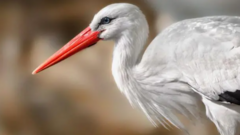
The white stork is the ultimate PR bird. It’s got the long legs, the chimney-nesting charm, and a folklore pedigree that makes it impossible to hate. Conservationists in Britain are currently patting themselves on the back for the Knepp Wildland project and various other reintroduction schemes, claiming the return of Ciconia ciconia is a victory for biodiversity.
They are wrong.
This isn't conservation. It's gardening with feathers. We are spending massive amounts of social and financial capital to bring back a species that was likely never a significant part of the British ecosystem in the first place, all while ignoring the silent collapse of the species that actually belong here.
The Archaeological Fiction of the Native Stork
The "lazy consensus" driving these projects suggests we are simply restoring a lost piece of the British puzzle. Look at the data, and that puzzle falls apart.
Archaeological records for the white stork in Britain are embarrassingly thin. Unlike the common crane or the beaver—both of which have left behind mountains of bone evidence and place-name history—the stork is a ghost. We have a few bones from Roman sites (likely imported as food or curiosities) and one famous nesting record on St. Giles Cathedral in Edinburgh in 1416.
That’s it. One nest in 600 years.
By treating the white stork as a "native" species that we have a moral duty to restore, we are rewriting natural history to fit a Disney-fied version of the past. If we use the "1416 rule" for every species that happened to blow off course and build a nest once, we should be spending millions to reintroduce snowy owls to the Norfolk Broads.
Ecological Junk Food
Reintroduction should be about functional ecology. You bring back a keystone species—like the wolf or the beaver—because they change the physical structure of the environment to benefit thousands of other organisms.
What does a stork do? It eats frogs.
In a country where our amphibian populations are already decimated by habitat loss and chytrid fungus, dropping a colony of massive, hungry apex predators into a small, isolated "rewilding" patch is a questionable move. We aren't creating a self-sustaining ecosystem; we are creating a high-end safari park.
The storks currently breeding in Sussex aren't "wild" in any meaningful sense. They are heavily managed. They are supplementary fed. They are essentially outdoor pets that happen to have wings. When conservation becomes about "seeing" a specific charismatic animal rather than "fixing" the underlying soil and water health, it ceases to be science and becomes entertainment.
The Opportunity Cost of Charisma
Every pound spent on a stork tracking tag is a pound not spent on the scrubland needed by the nightingale or the complex water systems required by the European eel.
Conservation has a "cute" problem. We gravitate toward species that look good on a tote bag. This creates a dangerous distortion in funding and public attention.
- The Turtle Dove: Declining by 98% since the 1970s. It’s a drab, small pigeon. It doesn't nest on your roof. It is dying out because we have sterilized our farmland.
- The Curlew: Britain holds a global responsibility for this species, yet they are sliding toward extinction in the English lowlands.
- The White Stork: A species that is doing perfectly well across Europe and Africa. It is under no global threat.
By obsessing over the stork, we are choosing a "safe" win. It’s easy to get people to care about a bird that delivers babies in fairy tales. It’s much harder to get them to care about the radical land-use changes needed to save the red-backed shrike. We are choosing the vanity project over the emergency room.
The Migration Lie
The ultimate test of a reintroduction is whether the animals can actually live like their wild counterparts. White storks are migratory. They should be spending their winters in Sub-Saharan Africa.
Many of the British storks aren't bothering.
Because they were raised in captivity or are being fed by humans, the migratory instinct is haywire. We are seeing birds stay through the British winter, huddled near supplemental feeding stations. A stork that doesn't migrate isn't a stork; it’s a statue. If we have to intervene every time the temperature drops or the food supply runs low, we haven't reintroduced a species—we've just expanded the zoo.
Stop Gardening and Start Rewilding
True rewilding is terrifying to the British public because it involves a lack of control. It means letting land go "messy," allowing predators to kill things we like, and accepting that we don't get to choose which species thrive.
The stork project is the opposite of that. It is highly controlled, highly visible, and perfectly curated for social media. It gives the illusion of progress while the foundational health of our countryside continues to rot.
If we want to fix Britain’s nature, we need to stop looking for the next celebrity bird to drop into a field. We need to focus on:
- Hydrological Restoration: Breaking the drainage pipes and letting the land flood.
- Soil Health: Ending the chemical dependency that has turned our fields into biological deserts.
- Connectivity: Creating corridors that allow existing, struggling species to move, rather than plopping new ones into "island" reserves.
The stork is a distraction. It’s a beautiful, elegant, leggy distraction that allows us to feel good about ourselves while we ignore the fact that our common birds—the sparrows, the starlings, the skylarks—are vanishing in plain sight.
We don't need more storks. We need more courage to fix the boring stuff.
Stop cheering for the bird on the chimney. Look at the empty hedgerow instead.