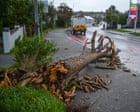
More than 18,000 homes lost power in south-west England when Storm Austen swept across the region on October 23, 2026.
That headline sound familiar? It should. Every autumn and winter, the south-west peninsula takes the first heavy punch from Atlantic weather systems, and every time, thousands of households end up staring at dark rooms, cold radiators, and spotty cell signal. Storm Austen was the season's first named storm in the UK, arriving with Met Office amber wind warnings, gusts reaching up to 80 mph on exposed headlands, torrential rain, school closures across Cornwall, and rail speed restrictions.
Most breaking news stories stop right there. They tally the outage figures, mention a fallen tree or two, and move on to the next weather alert. Honestly, that leaves out the stuff that actually matters if you live in Devon, Cornwall, or the Isles of Scilly—or if you're trying to figure out why a peninsula with plenty of wind and rain still struggles to keep the lights on when gale-force gusts hit.
Why Power Cuts Hit South West England So Hard
Geography does half the damage before the wind even peaks.
Cornwall, Devon, and the Isles of Scilly stick out into the Atlantic like a weather magnet. When low-pressure systems spin in off the ocean, coastal headlands and high moorland get battered first and hardest. Add saturated ground and heavy foliage to the mix, and trees lose their grip fast. When a wind-felled branch or trunk clips an overhead line in a rural parish, power doesn't just flicker—it drops out for whole pockets of homes at once.
During Storm Austen, outages concentrated heavily around Penzance and central Cornwall, with National Grid reporting thousands of affected properties in Cornwall—including more than 2,200 vulnerable households—as engineers worked through the morning. Elsewhere in the wider storm event, power loss at a reservoir in Sussex even forced Southern Water to arrange bottled water deliveries. That detail is worth paying attention to. A power cut isn't just an electrical problem. Pumps, telecoms boosters, and home heating controls all rely on electricity, so a local outage can quickly ripple into water pressure drops or lost connectivity.
What Standard Storm Coverage Misses
When a storm hits, people usually ask three quick questions: How bad is it? When will power come back? What did I forget to prepare?
Standard wire reports answer the first one and barely touch the other two. Here are the practical realities that get brushed past when everyone is rushing to publish live updates.
Restoration Estimates Aren't Promises
When you check a live outage map or National Grid's storm information, estimated restoration times can feel maddeningly vague or shift mid-day. That isn't necessarily bad communication—it's physics and logistics. A single fault might look simple on a screen until a crew reaches a waterlogged lane blocked by fallen timber and finds snapped conductors or damaged poles.
Also, estimated times typically reflect when the final customer in a fault group is expected to be reconnected, meaning plenty of neighbors get power back earlier. Still, planning your day around a single static timestamp is a mistake. Treat an estimate as a working window, not a guarantee.
Back-to-Back Storms Change the Math
One of the biggest traps in UK autumn and winter weather is treating a named storm as a one-off event. Storm Austen arrived on Friday, October 23, right as forecasters were already tracking Storm Boelo heading toward Scotland, Northern Ireland, and northern England over the weekend, with engineers across the Midlands, South West, and South Wales eventually reconnecting over 180,000 properties across the two systems.
Even when the next named system tracks further north, residual gusts, heavy rain, and travel bottlenecks can slow regional recovery or stretch repair resources. If your power comes back on Friday afternoon, don't immediately drain your power banks and assume the worst is over for the week.
Candles and Paraffin Heaters Are a Bad Idea
People still reach for candles the minute the lights go out. It makes sense—they're cheap and already in the cupboard. Yet National Grid Electricity Distribution specifically warns households to keep torches handy and avoid candles or paraffin heaters during storm outages.
Open flames in a dark, cluttered house carry an obvious fire risk, especially if kids, pets, or drafty doors are involved. Unvented fuel heaters bring indoor air and safety hazards of their own. A decent LED torch or headlamp plus a charged power bank beats a row of tea lights every single time.
Preparing Your Home Without Overbuying
You don't need a bunker to ride out a south-west gale. Most of the prep that actually helps costs very little and takes ten minutes before the wind picks up.
- Charge now, not during the warning: Top up phones, tablets, and portable battery packs a day ahead of amber or yellow wind alerts. Mobile networks often get congested or lose backup power during prolonged cuts.
- Keep a non-electric way to get news: A wind-up, solar, or battery-powered radio gives you updates when broadband drops and cellular data crawls.
- Protect sensitive electronics: Surge-protected extension leads help guard TVs, routers, and computers against voltage spikes when supplies are switched or restored.
- Check medical and vulnerability support: Anyone relying on powered medical equipment should have a backup plan and speak with their medical team ahead of severe weather. Eligible households can also join National Grid's free Priority Services Register for tailored support during outages.
- Leave the fridge shut: Unless food safety is clearly in doubt, keep fridge and freezer doors closed so temperatures hold as long as possible.
What to Do Right Now If an Outage Hits
If the power drops during a storm like Austen, skip the guesswork and take three straightforward steps.
- Report it even if you think everyone else already has: Call 105 (a free 24-hour UK electricity emergency number) or report online through your network operator's power tracker. Fault detection isn't always instant at the local level, and reporting helps crews pinpoint where lines are down.
- Stay clear of damaged infrastructure: Never touch or approach fallen cables, leaning poles, or branches tangled in overhead wires—treat any downed line as live and dangerous.
- Check in on nearby neighbors: Elderly relatives, people living alone, or families with young children in rural lanes are often the first to feel the strain when heating and lighting go out.
If you live in south-west England or anywhere prone to autumn gales, save 105 in your phone contacts today, put a working torch somewhere you can find in the dark, and sign up for storm alerts or the Priority Services Register before the next Atlantic system lines up off the coast.