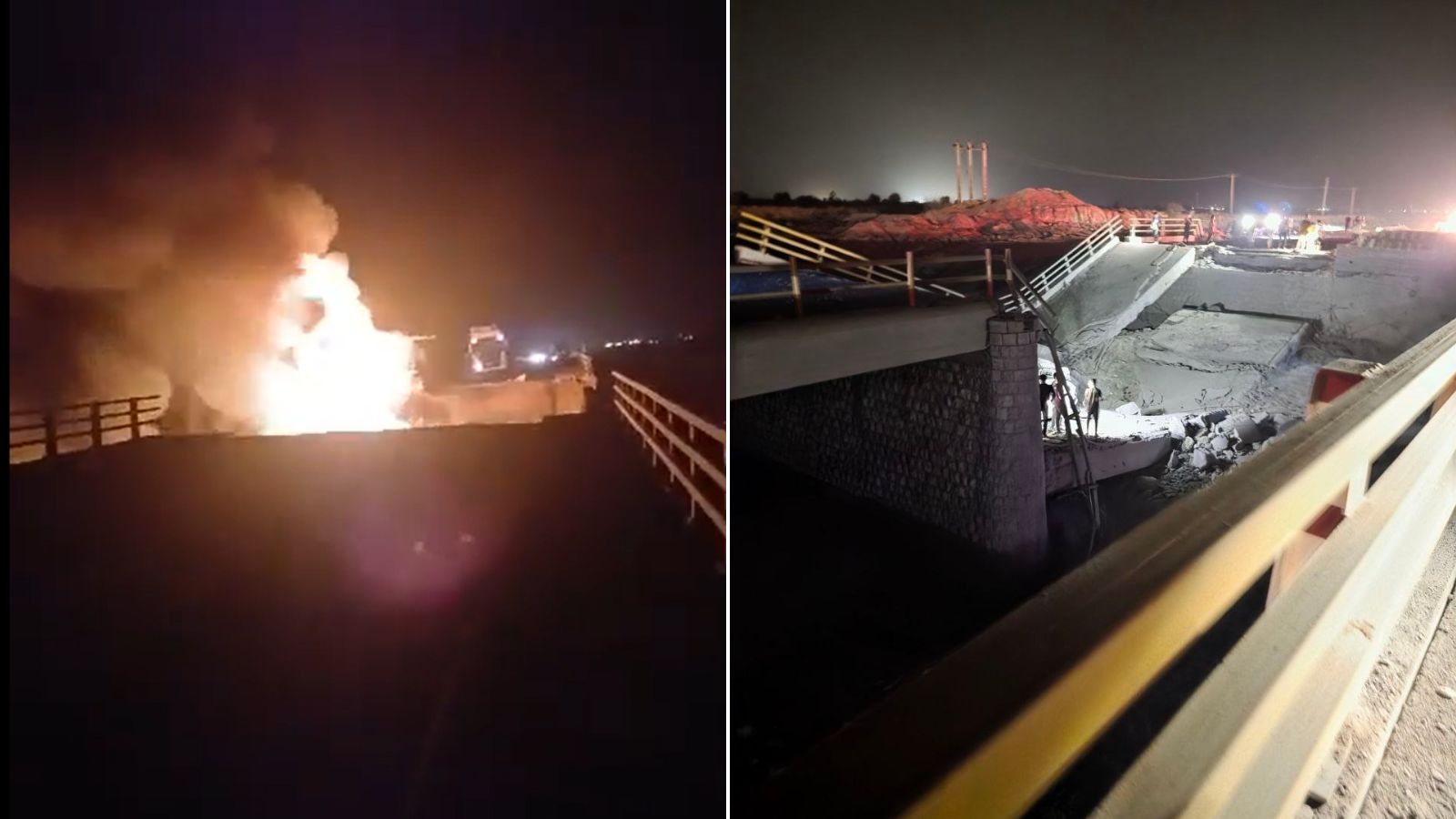
The targeted destruction of six bridges in southern Iran by American forces signals a dangerous transition from localized containment to an unmanageable regional conflagration. By striking key infrastructure around the critical port of Bandar Abbas, Washington is no longer just targeting missile sites; it is attempting a total economic blockade. This rapid escalation effectively shatters the fragile memorandum of understanding signed just last month. Tehran has responded not by backing down, but by widening its target list across the Persian Gulf, launching retaliatory strikes into Kuwait, Qatar, and Bahrain, while pushing the conflict deeper into the Levant.
What the Pentagon terms a campaign to degrade Iranian maritime capabilities has quickly evolved into an infrastructure war that threatens the foundations of global energy transport. The strategy relies on a flawed assumption that economic strangulation will force Iran back to the negotiating table. Instead, it is dragging the entire Middle East into a multi-theater battle where lines between military and civilian infrastructure have blurred completely.
The Logistics of a Blockade
The American aerial campaign over the last six nights has systematically isolated Iran's primary maritime economic hubs. Striking the highway and railway bridges in Hormozgan province, specifically around Bandar Khamir, was a deliberate move to sever the arteries connecting Bandar Abbas and Shahid Rajaee port to the Iranian interior.
Bandar Abbas handles the vast majority of Iran's non-oil containerized trade. Without these bridges, goods arriving at the docks cannot be easily moved north toward Tehran. Rail lines are twisted, and freight must now be awkwardly rerouted via secondary roads or transferred manually to buses and light trucks at regional bypasses like Fin. This creates a massive logistics bottleneck.
[ Shahid Rajaee Port ] ---> ( Twisted Rail Junction ) ---> [ Rerouted via Fin ] ---> [ Tehran Interior ]
                                     |
                         [ Destroyed Bridges ]
The destruction did not stop at bridges. The collapse of the maritime traffic control tower at Chabahar port on the Gulf of Oman further illustrates the scope of this blockade. Chabahar, historically developed with Indian assistance to bypass Pakistani trade routes, represents Iran’s gateway to landlocked Central Asia and Afghanistan. Knocking out its control tower effectively paralyzes commercial shipping operations in the outer gulf, signaling that the US naval blockade is absolute.
This is a traditional siege adapted for modern warfare. By combining a hard naval blockade—which included the boarding of a merchant vessel in the Gulf of Aden and the targeting of an Iranian-bound tanker near Kharg Island—with the destruction of domestic transport infrastructure, the United States is attempting to induce domestic economic collapse.
The Illusion of Precision and the Civilian Toll
Washington continues to maintain that its strikes target military logistics and air defense assets. The physical reality on the ground contradicts this sterile narrative. When a bridge or a power grid is hit, the immediate casualties may be few, but the downstream effects on civilian populations are catastrophic.
The Iranian Energy Ministry's urgent appeal for citizens to ration electricity across southern provinces highlights a critical vulnerability. US strikes have damaged transmission lines and transformer stations feeding Bandar Abbas and neighboring municipalities. In the middle of July, temperatures in southern Iran regularly exceed forty-five degrees Celsius. Striking the power grid under these conditions transforms electricity from a modern convenience into a basic requirement for survival.
Human rights organizations have repeatedly warned that targeting dual-use infrastructure—facilities that serve both military transport and civilian survival—can cross the threshold into war crimes. The destruction of telecommunications towers in Bandar Abbas and the targeting of Iranshahr airport further paralyze civil society.
Iran’s response has shown that it views regional infrastructure as fair game if its own assets are destroyed. Islamic Revolutionary Guard Corps (IRGC) spokesmen have made it clear that Western allies hosting American bases will no longer enjoy immunity. This is no longer a localized border dispute or a low-intensity grey-zone conflict. It is an unvarnished infrastructure war.
Gulf Allies Caught in the Crossfire
The expansion of the conflict into Iraq, Syria, and the broader Gulf Cooperation Council (GCC) states reveals the limits of American deterrence. Tehran understands that it cannot match the raw firepower of the US Navy and Air Force in a conventional, symmetrical engagement. Consequently, it relies on asymmetric distribution of pain across the region.
Kuwait bore the brunt of this strategy when Iranian retaliatory drone and missile barrages struck a vital power and water desalination plant. For a desert nation, a desalination facility is the single most sensitive piece of critical infrastructure. Damaging the generators at such a facility sends a clear message to the Kuwaiti government, which hosts thousands of American personnel at Camp Arifjan and Ali Al Salem Air Base.
Regional Retaliation Matrix:
+------------+------------------------------------+---------------------------------------+
| Target     | Facility Affected                  | Strategic Purpose                     |
+------------+------------------------------------+---------------------------------------+
| Kuwait     | Desalination and Power Plant       | Threaten basic resources of US hosts  |
| Qatar      | Al-Udeid Air Base Radar Systems    | Blind American forward coordination   |
| Bahrain    | Sakhir Air Base Assets             | Disrupt Fifth Fleet air operations    |
| Syria      | Al-Tanf Garrison Area              | Harass American frontier outposts     |
+------------+------------------------------------+---------------------------------------+
Simultaneously, Iranian forces launched salvos aimed at Qatar’s Al-Udeid Air Base, the forward headquarters of US Central Command, claiming the destruction of long-range radar networks. Though air defenses intercepted several threats, the falling shrapnel and explosions over Doha fractured the illusion of safety that has long protected the Gulf’s financial hubs. In Bahrain, home to the US Fifth Fleet, air raid sirens shattered the night as air defenses scrambled to intercept drone vectors targeting Sakhir Air Base.
The conflict has also bled heavily into the Levant. While Syrian military sources officially deny that the US garrison at Al-Tanf was hit, the IRGC claims to have struck a special operations command post near the tri-border area of Syria, Jordan, and Iraq. These conflicting reports underscore the chaotic nature of the current intelligence environment, where every actor is managing domestic optics while attempting to avoid a total systemic collapse.
Why the Red Sea Could Be Next
The true danger of the current escalation lies in the potential closure of secondary global transit corridors. As maritime traffic through the Strait of Hormuz plummets—slowing from over 130 transits a day to a single-digit trickle of eight ships—the economic pressure on global markets is compounding rapidly.
Brent crude has already jumped significantly, and the volatility is spreading to global tech stocks and broader financial systems. Intelligence reports suggest that Tehran has already instructed its Houthi allies in Yemen to prepare for a coordinated shutdown of the Bab al-Mandab strait in the Red Sea if the US continues to dismantle the Iranian domestic power network.
This would create a dual-choke-point crisis that the global economy is entirely unprepared to absorb. If both the Strait of Hormuz and the Red Sea are closed simultaneously, approximately one-quarter of the world’s maritime energy transport and consumer trade would be severed overnight.
The United States entered this campaign believing that targeted infrastructure destruction could isolate Iran and force a diplomatic concession without committing boots on the ground. The events of the last twenty-four hours prove the opposite. By dropping the bridges of Hormozgan, the US has not contained Iran. It has simply forced Tehran to use its regional proxy network to bridge the gap, transforming a localized blockade into a global economic emergency.
The escalation cannot be easily unwound. Every bridge destroyed reduces Iran's incentive to negotiate, as the economic damage has already been sustained. With regional capitals now actively taking fire and global shipping firms abandoning the Persian Gulf entirely, the war has outgrown the narrow constraints of the Strait of Hormuz, leaving both sides with fewer exit ramps and a rapidly accelerating slide toward total regional war.
To see the physical devastation of the infrastructure targeted during these latest operations, watch this breakdown of the US Bombs Iran Bridge and Highway Infrastructure Strikes which details the exact locations hit during the air campaign.