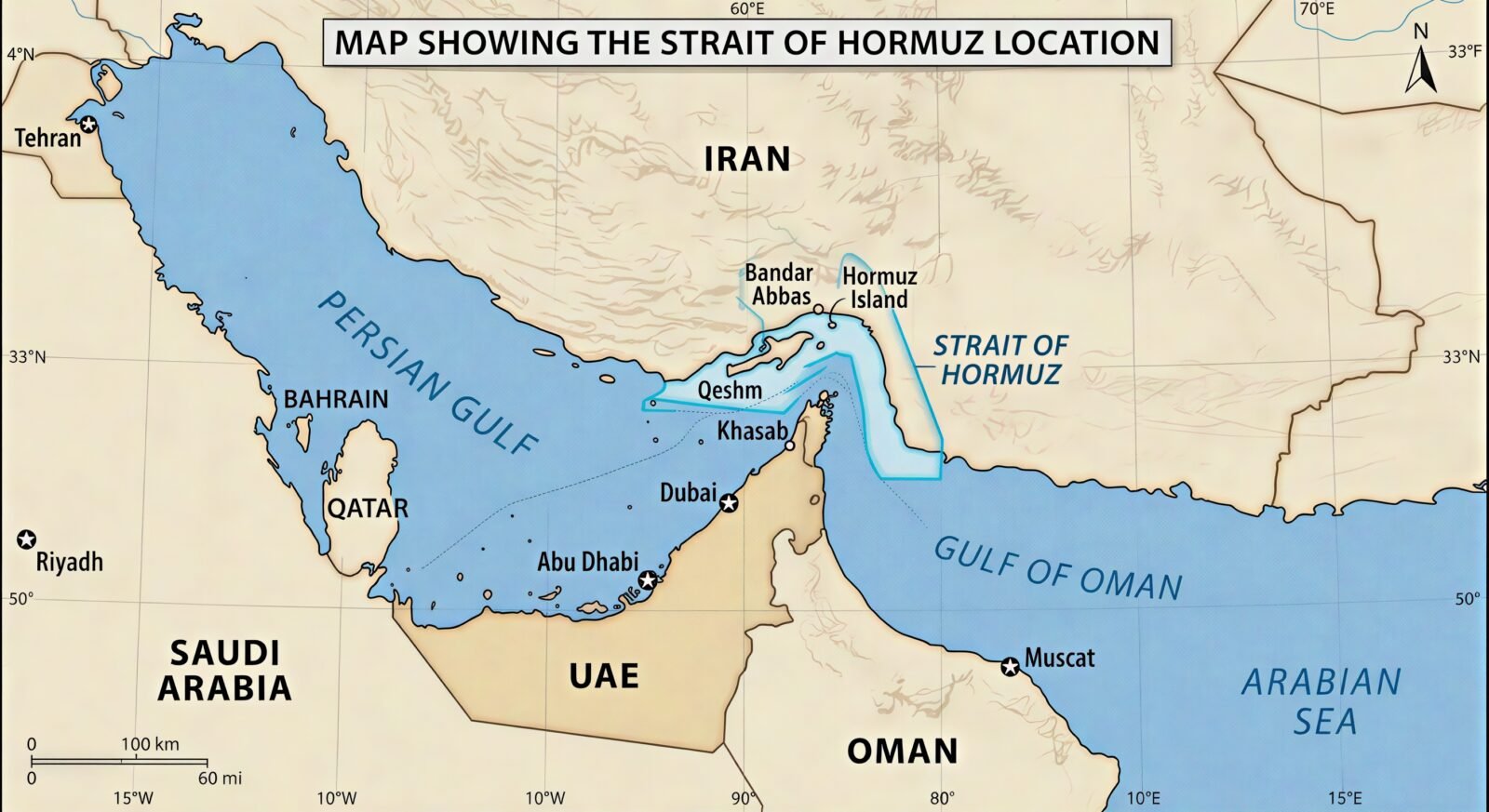
The conventional wisdom floating through global media right now is predictable. It paints Mohammad Bagher Ghalibaf’s recent declaration—that the Strait of Hormuz stays shut until Washington fulfills a laundry list of demands—as a desperate act of economic self-immolation. The armchair analysts claim Tehran is holding a grenade with the pin pulled, threatening its own lifeline to force American concessions.
They are wrong. They are viewing a high-stakes game of geopolitical chess through the lens of a checkbook.
I have spent years watching regional actors maneuver around energy chokepoints, and the recurring error is the assumption that sovereign states with hardened economies prioritize short-term trade revenue over long-term strategic posture. The West is obsessed with the price of oil per barrel. Tehran is obsessed with the price of a future free from external strangulation.
The Fallacy Of The Economic Hostage
The dominant narrative insists that by keeping the Strait closed, Iran is strangling its own economy. This is a linear, Western-centric view of power. It assumes that if a state cannot export its primary commodity, its government will naturally collapse under the weight of fiscal reality.
Look at the history of sanctioned regimes. They do not fold; they adapt. They create black-market networks, internalize production, and foster a bunker-mentality economy. When Ghalibaf speaks, he is not pleading for economic relief; he is articulating a shift in the cost-benefit analysis of the entire region. He is signaling that Iran has already factored in the "lost" revenue of an idle oil export sector as a necessary down payment on sovereignty.
Imagine a scenario where the global reliance on a specific chokepoint is treated as a strategic liability rather than a necessity. The West treats Hormuz as a global artery. Iran treats it as a tactical tool. When one side treats an artery as a tool, the other side—the one that controls the knife—dictates the pulse of the entire world economy.
Redefining The Red Line
The media loves the term "red line." They use it to suggest a point of no return. But Ghalibaf’s red line is not a defensive barrier; it is an offensive posture. By tying the reopening of the waterway to the lifting of a naval blockade, the release of frozen assets, and the cessation of military threats, he has successfully tethered the global energy market to the internal political stability of the United States.
He is not just negotiating with Washington. He is effectively weaponizing the global thirst for oil against the very superpower that imposed the sanctions.
If Washington blinks, they lose the ability to project power via blockade. If Washington strikes, they invite a kinetic escalation that could permanently disable the transit capacity of the Strait. This is the definition of a "win-condition" for a state that perceives its current status as an existential crisis.
The Real Distortion
The "People Also Ask" crowd wants to know if this is a bluff. They want to know when the tankers will flow again. They are asking the wrong questions. The question isn't whether Iran can afford to keep the Strait closed. The question is whether the global financial markets can afford for it to stay closed for another six months.
We have seen this play before. Nations with nothing left to lose do not abide by the rules of free trade. They change the rules of the game to ensure the cost of maintaining the status quo becomes higher for their adversaries than the cost of their own isolation.
The mainstream reports emphasize Ghalibaf’s domestic appeal for unity. They frame it as a sign of weakness—a desperate plea for internal cohesion during hard times. They miss the reality: it is a mobilization. When a leader calls for "Sacred Unity" in the face of an external threat, they are preparing the population for a long-term endurance battle. They are not asking for permission; they are preparing the psychological landscape for a protracted conflict.
The Tactical Reality
The military and diplomatic fields are no longer separate. They have merged into a single theater of operations where economic policy is a form of electronic warfare. The blockade is not a passive wall; it is a live defensive system that requires constant, high-level attention from Western fleets. Every day that passage is denied, resources are diverted, focus is shattered, and the perception of American hegemony is eroded.
Do not be misled by talk of "failed negotiations" or "collapsed truces." These are not failures. They are the friction points of a deliberate strategy to grind down the adversary’s patience.
The next time you see a headline about energy markets shivering over the closure of an international waterway, stop looking at the price of oil. Look at the people who have stopped caring about the price of oil because they have found a way to stop the world from needing it at all.
Tehran has successfully transformed the Strait from a transit route into a tollbooth for American influence, and the only currency they accept is the total abandonment of the current containment policy. If the West refuses to pay, the tollbooth stays shut.
The game isn't about opening the strait. It’s about who gets to decide the terms of the next century. Iran just made their move, and they aren't waiting for a counter-offer.